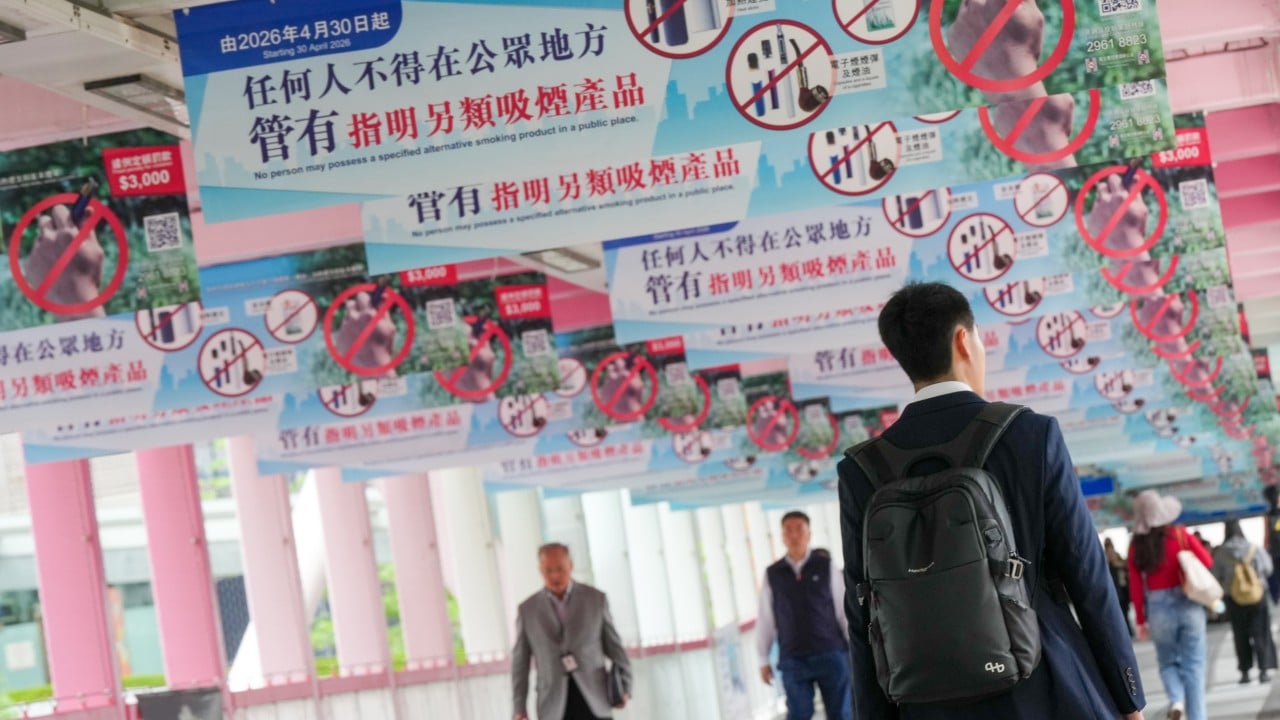
The persistent availability of e-cigarettes in Hong Kong, four years after the 2022 ban on alternative smoking products (ASPs), is not a failure of policing but a predictable outcome of Regulatory Arbitrage. When a jurisdiction imposes a total ban on a high-demand commodity without addressing the digital and logistical infrastructure of the modern supply chain, it creates a market vacuum that is instantly filled by decentralized, cross-border actors. The current scenario demonstrates a fundamental mismatch between 20th-century physical border controls and 21st-century distributed commerce.
The Triad of Enforcement Friction
To understand why the ban has failed to achieve total market eradication, one must analyze the three structural frictions that protect the underground e-cigarette economy: Digital Anonymity, Logistical Fragmentation, and Jurisdictional Disparity.
1. Digital Anonymity and the Social Commerce Pivot
The transition from physical retail storefronts to social media "dark markets" has rendered traditional inspections obsolete. Sellers have migrated to end-to-end encrypted platforms (Telegram, WhatsApp) and ephemeral social media content (Instagram Stories, TikTok). This shift creates a Discovery-Transaction Gap:
- Discovery: Occurs on public-facing platforms using coded language (e.g., "electronic juice" or "fruit mist") to bypass keyword filters.
- Transaction: Moves to private channels where payment is processed via peer-to-peer (P2P) transfers like PayMe or FPS, which are difficult to distinguish from legitimate personal transactions without individualized warrants.
2. Logistical Fragmentation (The "Last Mile" Problem)
The enforcement of a ban on small, high-value electronics is a volume-based losing battle. E-cigarettes and pods are physically indistinguishable from common consumer electronics (power banks, USB drives) when packaged.
- Micro-Parcel Proliferation: Instead of large shipping containers, the market relies on thousands of small, individual parcels. Customs and Excise Department (C&ED) personnel cannot inspect 100% of the daily inbound air and sea mail without collapsing the city’s logistics efficiency.
- Domestic Couriers: Once a bulk shipment successfully enters the territory—often misdeclared as general merchandise—the "last mile" delivery is handled by legitimate local courier services. These third-party logistics (3PL) providers are not legally required to inspect the contents of every sealed package, providing a "white label" cover for the final delivery to the consumer.
3. Jurisdictional Disparity (The Border Paradox)
Hong Kong’s ban exists in a "regulatory island" state. Mainland China, the world’s primary manufacturer of e-cigarettes, maintains a regulated legal market for exports. This creates a perpetual supply pressure at the border. As long as production remains legal and subsidized 30 kilometers away in Shenzhen, the cost of procurement for a Hong Kong-based smuggler remains low enough to absorb the risk of occasional seizures.
The Economic Incentives of the Black Market
The prohibition has inadvertently optimized the profit margins for illicit distributors. By removing legal competition, the government has granted a monopoly to the most risk-tolerant actors.
The Risk-Premium Pricing Model
In a legal market, price is driven by competition and tax. In a prohibited market, price is driven by the Risk Premium. Current street prices for e-cigarette pods in Hong Kong reflect a significant markup over the Shenzhen wholesale price. This margin covers:
- Seizure Loss Buffers: Factoring in a 10-15% loss rate at customs.
- Platform Rotation Costs: The time spent creating new social media accounts when old ones are banned.
- Legal Contingency: "Hazard pay" for the couriers and operators.
Because the demand for nicotine is relatively inelastic—meaning users do not significantly reduce consumption when prices rise—the increased costs are passed directly to the consumer. This ensures the business remains viable even under increased enforcement pressure.
Analyzing the Demand Side: The Substitution Effect
The government's primary goal was to prevent the "gateway effect" among youth and reduce overall nicotine dependency. However, the data indicates a Substitution Effect rather than a cessation effect.
The Return to Combustible Tobacco
A significant portion of ASP users are former smokers who switched to vaping for perceived harm reduction. When the legal supply of ASPs was severed, these users faced two choices: navigate the illicit market or return to legal, taxed, combustible cigarettes.
- The Revenue Irony: As e-cigarette enforcement increases, the tobacco tax revenue from traditional cigarettes remains a stable pillar of the fiscal budget. This creates a perceived conflict of interest where the state bans a less-taxed alternative while profiting from the more harmful, legal incumbent.
- Quality Variance: In the absence of a regulated ASP market, consumers are exposed to products with no quality control. Legal ASPs in other jurisdictions undergo testing for heavy metals and chemical purity. The Hong Kong black market provides "gray market" products from mainland China that may not meet export standards, potentially increasing the acute health risks to the population.
Strategic Limitations of the Current Policy
The Department of Health and C&ED are fighting a decentralized network using a centralized strategy. This creates several bottlenecks:
- Intelligence Lag: By the time an illicit Instagram account is flagged and investigated, the operator has already migrated to a new handle.
- Evidence Collection: Proving "intent to sell" for individuals caught with small quantities is legally taxing. Most seizures result in small-scale fines rather than the dismantling of the supply nodes.
- The Whack-A-Mole Effect: Increasing pressure on one channel (e.g., postal services) simply shifts the volume to another (e.g., speedboat smuggling or land-based vehicular concealment).
The Path Toward Regulatory Realism
For the Hong Kong government to effectively manage the "persistent sales" of e-cigarettes, the strategy must shift from Interdiction to Network Disruption and Demand Management.
1. Financial Intelligence Integration
Instead of inspecting packages, authorities should focus on the money trail. High-frequency, small-value P2P transfers to accounts linked to known "vape" keywords should trigger automated flagging for banking institutions. Disrupting the ability to receive payment is more effective than seizing physical inventory.
2. Platform Liability
The government must move beyond "requesting" social media platforms to remove content. Implementing strict liability for platforms that host ASP sales advertisements—similar to anti-money laundering (AML) requirements—would force platforms to deploy more aggressive AI-driven filtering for the Hong Kong region.
3. Decoupling Vaping from Smoking Policy
The "all-tobacco-is-the-same" approach ignores the behavioral economics of addiction. A more nuanced framework would involve:
- Medicalization: Allowing ASPs to be sold via prescription as smoking cessation tools, thereby moving the demand into a controlled, taxable, and monitored channel.
- Tiered Enforcement: Focusing maximum resources on the "entry points" for youth (flavors and marketing) while allowing a regulated path for adult addicts.
The current prohibition has achieved the opposite of its intent: it has deregulated the market, removed quality oversight, and handed the profit to criminal syndicates. The "persistence" of sales is not a sign of weak will, but a sign of a flawed economic assumption. To break the cycle, the administration must recognize that in a globalized digital economy, a total ban is effectively a transfer of control from the state to the shadow market. The next logical step is a transition to a high-friction, high-tax regulated model that prioritizes public health data over the optics of total prohibition.