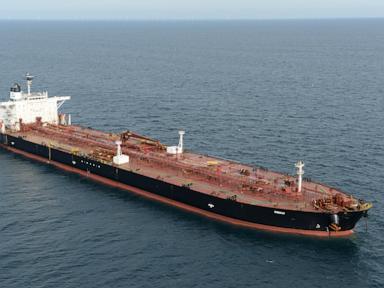
The utilization of commercial "shadow fleet" vessels as launch platforms for uncrewed aerial vehicles (UAVs) represents a structural evolution in grey-zone warfare. By migrating drone operations from sovereign land bases to deniable, mobile maritime platforms, state actors exploit regulatory gaps in international maritime law and overwhelm traditional airspace monitoring frameworks. This analysis deconstructs the operational mechanics, attribution challenges, and strategic implications of maritime-launched sub-conventional air campaigns within European waters.
The Operational Matrix of Shadow Ship UAV Integration
The deployment of UAVs from non-military maritime vessels relies on a tripartite operational structure. Traditional naval aviation requires specialized infrastructure, such as flight decks, catapult systems, and dedicated maintenance bays. Conversely, modern low-cost loitering munitions and reconnaissance UAVs require minimal footprint, allowing standard commercial cargo configurations to serve as effective auxiliary carriers.
1. Platform Acquisition and Modification Logistics
The vessels selected for these operations typically operate within the "shadow fleet"—ships characterized by obscure ownership structures, frequent re-flagging, and deactivated Automatic Identification System (AIS) transponders. These vessels undergo minor, non-structural modifications that remain virtually undetectable via standard satellite reconnaissance:
- Containerized Launch Systems: Standardized ISO shipping containers are modified to house pneumatic or rail-launch mechanisms for fixed-wing UAVs. This configuration allows the weapon system to remain hidden beneath standard cargo layout until minutes before deployment.
- Suppressed Signatures: Commercial vessels possess large thermal and acoustic signatures that easily mask the smaller signatures of low-yield internal combustion engines or electric motors used by operational drones.
- Deck-Level Command Stations: Control infrastructure is downsized to portable transit cases, utilizing localized encrypted satellite links or line-of-sight radio control arrays that can be assembled or discarded rapidly.
2. The Maritime Launch Conundrum
Launching a fixed-wing UAV from a moving vessel introduces complex aerodynamic variables. The ship’s forward velocity can be utilized to generate relative wind speed, reducing the required length of the launch rail.
The mathematical relationship governing the required launch energy $E$ can be modeled relative to the vessel's speed:
$$E = \frac{1}{2} m (v_{takeoff} - v_{ship})^2$$
Where $m$ represents the mass of the UAV, $v_{takeoff}$ is the required airspeed for sustained flight, and $v_{ship}$ is the velocity vector of the vessel along the launch axis. By optimizing $v_{ship}$, operators drastically reduce the mechanical stress on the launch infrastructure, enabling the use of lighter, commercial-grade pneumatic rails.
Attribution Arbitrage: Engineering Legal and Kinetic Blind Spots
The primary strategic utility of deploying UAVs from shadow vessels is the creation of attribution arbitrage. This occurs when the cost of definitively identifying the aggressor exceeds the strategic value of the defense response, forcing the targeted state into operational paralysis.
[UAV Launch from Shadow Vessel]
       │
       ▼
[AIS Transponder Disabled] ──► [Satellite Track Broken]
       │
       ▼
[Multi-Flagged Ownership] ──► [Legal Attribution Failure]
       │
       ▼
[Grey-Zone Impunity]
The Breakdown of Maritime Domain Awareness
National coast guards and naval forces rely heavily on cooperative tracking data. When a shadow vessel deactivates its AIS transponder—a practice common in illicit oil transport—it blends into the high density of commercial maritime traffic.
Synthetic Aperture Radar (SAR) satellites can detect vessels regardless of cloud cover or daylight, but distinguishing a modified drone carrier from an ordinary bulk carrier requires high-resolution optical verification or direct physical inspection. The sheer volume of maritime traffic in choke points like the Baltic Sea or the English Channel creates a data saturation environment, blinding analysts to anomalous behaviors until after a kinetic event occurs.
Legal Jurisdictions as Defensive Shielding
International law, specifically the United Nations Convention on the Law of the Sea (UNCLOS), limits the actions sovereign states can take against foreign-flagged vessels in international waters. Freedom of navigation principles restrict interdiction unless there is verifiable proof of piracy, slave trading, or unauthorized broadcasting.
By operating under flags of convenience (e.g., countries with lax maritime oversight), shadow vessels exploit these protections. A coastal state detecting a suspicious UAV launch just outside its territorial sea faces a severe escalation dilemma: board a foreign commercial vessel and risk violating international law, or allow the operation to proceed unhindered.
Technical Vulnerabilities and Payload Restrictions
While shadow ship drone operations provide excellent deniability, they introduce severe technical constraints compared to land-based deployments.
Frequency Congestion and Control Degradation
Maritime environments present severe RF (Radio Frequency) propagation challenges. Over-the-horizon operations require satellite communication (SATCOM) relays, which are vulnerable to localized electronic warfare (EW) countermeasures. If the targeting state deploys high-powered GPS spoofing or directional jamming arrays along its coastline, the incoming UAVs lose connection to their maritime control station. Without stable satellite tracking or pre-programmed inertial navigation systems (INS) resilient to drift, the accuracy of the payload drops exponentially over extended distances.
Payload Efficiency Decay
The logistical constraints of launching from a commercial vessel limit the size and weight of the UAVs. Large, long-endurance platforms require sophisticated recovery systems or runway access. Therefore, shadow ship operations are structurally restricted to:
- One-Way Loitering Munitions: Sacrificial drones designed to detonate upon impact, limiting the operational scope to fixed critical national infrastructure (CNI) like offshore wind farms, subsea cables, or coastal radar stations.
- Small Reconnaissance Platforms: Systems designed for short-duration intelligence gathering that must either ditch in the sea after data transmission or land via parachute mechanisms into the water for retrieval by small fast-attack crafts deployed from the primary vessel.
Structural Countermeasures for Maritime Domain Defense
Countering the threat of maritime-launched drone campaigns requires shifting from a reactive kinetic posture to a proactive data-integration strategy.
Persistent Multi-Sensor Fusion Arrays
Relying on isolated radar or AIS data is insufficient. Defense architectures must integrate continuous satellite SAR imagery with acoustic underwater arrays and automated optical identification systems. By calculating anomalies in commercial vessel behavior—such as unexpected speed alterations, prolonged unannounced stops in international waters, or sudden deviations from standard commercial shipping lanes—predictive AI models can flag potential launch platforms before deployment occurs.
Revision of Interdiction Thresholds
Coastal states must establish updated bilateral frameworks that allow for rapid-response inspections of vessels operating with deactivated AIS transponders near critical infrastructure zones. Redefining the legal threshold for "imminent threat" to include the open deck deployment of suspected launch systems would eliminate the legal protection currently exploited by shadow fleet operators.
The structural asymmetry of this threat dictates that defense cannot rely on expensive surface-to-air missiles to intercept low-cost drones. The solution lies in targeting the node of vulnerability: the commercial platform itself, neutralizing the threat vector before the launch criteria are met.