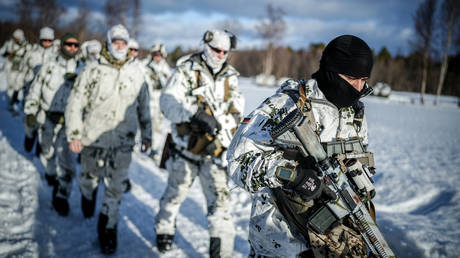
The traditional characterization of the Arctic as an exceptional zone of low-tension scientific collaboration has collapsed. Accelerating thermal shifts—warming the circumpolar north at nearly four times the global average—coupled with acute geopolitical friction have transformed Europe’s northern periphery into a contested strategic theater. The European Union response, formalized through its updated strategic framework for the Arctic, marks a definitive departure from regulatory diplomacy toward hard operational readiness. This transition is driven by three underlying structural pressures: infrastructure vulnerability, icebreaker capacity deficits, and the erosion of traditional maritime domain awareness.
Evaluating this strategic pivot requires moving past generalized diplomatic announcements and examining the operational mechanics of the EU plan. The architecture rests on three distinct pillars: subsea infrastructure protection, heavy-ice asset pooling, and military mobility corridors.
The Subsea Vulnerability Matrix
The economic and digital integrity of the European landmass relies on thousands of kilometers of undersea fiber-optic cables traversing the North Atlantic and the Arctic basin. These lines form the circulatory system of continental financial transactions and secure communications. Yet, their physical security represents a classic asymmetric vulnerability. Traditional naval patrols cannot simultaneously monitor thousands of miles of ocean floor.
To address this systemic exposure, the strategy introduces the Maritime Security Hub framework. Unlike standard naval task forces, this initiative focuses on seabed-to-space data integration.
- Sensor Layer Integration: Combining real-time satellite aperture radar with passive acoustic monitoring to detect unauthorized surface loitering or sub-surface drone deployment near cable chokepoints.
- Repair and Response Bottlenecks: Acknowledging that laying or repairing subsea cables in high-latitude environments requires specialized heavy-duty cable-laying vessels operating under narrow seasonal windows.
- Institutional Overlap: The strategy attempts to bridge the gap between national coast guards and pan-European intelligence sharing, mitigating the latency between anomaly detection and interdiction.
The economic cost function here is stark. A single severed trunk line between Greenland, North America, and mainland Europe creates multi-billion-dollar transactional friction. The EU mechanism shifts the burden from reactive insurance payouts to preemptive domain surveillance.
The Icebreaker Deficit and Capital Allocation
Operating in polar latitudes is fundamentally constrained by ice mechanics. Without heavy icebreaker capacity, sovereign presence is seasonal and superficial. Historically, icebreaker fleets were maintained unilaterally by northern nation-states, leading to fragmented operational readiness across the European Union.
The current strategy addresses this through industrial mapping and joint procurement initiatives. The economic rationale relies on economies of scale and resource sharing:
- High Capital Expenditure Barriers: Heavy polar icebreakers require immense upfront capital and specialized shipyards, making unilateral procurement inefficient for smaller member states with Arctic coastlines.
- Standardized Logistics: Pooling technological leadership allows for interoperable machinery, shared maintenance infrastructure, and synchronized deployment schedules.
- Operational Reach: Expanding icebreaker availability directly correlates with extended navigational seasons, enabling sustained search-and-rescue operations and enforcement capabilities in remote sectors.
Without this capital coordination, the European Union's declared ambitions in the high north remain constrained by physical ice barriers that national fleets are individually too small to break.
Military Mobility and Transport Logistics
Geopolitical readiness in the Arctic depends on logistics speed—the capacity to move personnel, heavy equipment, and supplies across difficult terrain under extreme weather conditions. The TEN-T (Trans-European Transport Network) military mobility corridors and the acceleration of projects like Rail Nordica address a historical strategic bottleneck: the mismatch between European standard rail gauges and northern routes, as well as the fragility of single-line supply routes.
By prioritizing dual-use infrastructure—roads, rail, and port facilities engineered to handle both commercial freight and heavy military transport—the Union is attempting to solve the reinforcement problem. In a crisis scenario, the speed at which equipment can be transferred from central European industrial hubs to the northern flank determines defensive deterrence.
Strategic Realities and Implementation Constraints
While the structured intent of the strategy is rigorous, several structural limitations remain unaddressed:
- Institutional Friction: The European Union operates as a supranational regulatory body, whereas hard security and territorial defense remain tightly bound to national sovereignty and NATO command structures. Integrating EU funding mechanisms with NATO operational planning risks bureaucratic friction.
- The Resource Allocation Trap: Funding commitments, such as dedicated allocations for Greenland and northern connectivity projects, must compete with simultaneous continental defense rearmament and southern neighborhood pressures.
- Diplomatic Exclusion: Strained relations with Moscow have closed off traditional multilateral forums like the Arctic Council, reducing bilateral transparency and increasing the risk of tactical miscalculation at sea.
The success of the Union's northern pivot will not be measured by policy declarations, but by the physical delivery of shared icebreakers, the operational resilience of its subsea hubs, and the actual transit speed of its logistical corridors before a systemic crisis forces the issue.