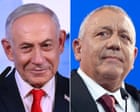
Israeli parliamentary governance operates under a single, unforgiving mathematical constraint: the 61-seat threshold in a 120-member Knesset. Framing the political environment as a binary choice between Benjamin Netanyahu remaining in power or the formation of a Palestinian-backed coalition reduces a complex multi-variable optimization problem into a false dichotomy. In reality, coalition viability in Israel is governed by proportional representation mechanics, ideological veto points, and the structural participation of Arab-majority parties—specifically the Joint List or Ra'am (the United Arab List)—which function either as active coalition partners, external confidence-and-supply providers, or tactical blockers.
To understand the actual strategic options available to party leaders, one must strip away partisan rhetoric and analyze the institutional mechanisms of the Knesset. The electoral system uses a closed-list proportional representation model with a 3.25% electoral threshold. Because the entire country acts as a single electoral district, seat allocation directly reflects national vote share among parties clearing that threshold. No single party has ever won an outright majority of 61 seats in Israeli history. Every government is therefore a coalition, and every coalition is an exercise in minimizing ideological friction while maximizing seat count.
The Structural Anatomy of the 61-Seat Threshold
When political analysts reduce Israeli electoral outcomes to "Netanyahu versus a Palestinian-backed government," they obscure the three distinct mathematical paths required to reach 61 mandates. The Knesset does not require a positive majority to remain in power once formed, only the absence of a constructive vote of no confidence—where an alternative government commands 61 votes. During the initial formation phase, however, a prospective Prime Minister must secure an affirmative majority.
The arithmetic breaks down into three competing blocs, though their boundaries shift based on tactical alliances:
- The Right-Religious Bloc: Anchored by Likud, ultra-Orthodox (Haredi) parties (Shas and United Torah Judaism), and Religious Zionist factions. Historically, this bloc relies on high voter turnout among disciplined demographic segments and minimal vote wastage.
- The Center-Left and Anti-Netanyahu Right Bloc: A heterogeneous grouping united primarily by opposition to Netanyahu's continued tenure rather than a shared ideological platform. It spans secular centrists, traditional labor Zionists, and hawkish right-wing defectors who object to Netanyahu on governance or legal grounds.
- The Arab-Majority Parties: Historically consolidated under the Joint List (comprising Hadash, Ta'al, Balad, and previously Ra'am) before fracturing into competing strategic approaches. These parties generally represent between 10 and 15 seats, functioning as the decisive swing variable in Knesset arithmetic.
The core bottleneck in Israeli politics occurs when neither the Right-Religious bloc nor the Zionist Center-Left bloc can independently reach 61 seats. When the Right-Religious bloc stalls at 58 to 60 seats, and the Zionist opposition sits at 45 to 50 seats, the remaining 10 to 15 seats held by Arab parties become the mathematical fulcrum of the entire legislature. Without their active participation, passive abstention, or fragmentation, neither side can form a stable executive branch, triggering repeated electoral cycles.
The Operational Mechanics of Arab-Majority Party Participation
Describing any government reliant on Arab Knesset members (MKs) as a "Palestinian-backed coalition" conflates distinct legal, political, and operational realities. Arab citizens of Israel hold Israeli citizenship and vote in national elections; their representatives are Israeli parliamentarians operating within the constitutional framework of the state, even when advocating for Palestinian national rights or profound structural reforms to Israel's identity as a Jewish and democratic state.
In operational terms, there are three distinct models for how Arab-majority parties interact with coalition formation, each carrying vastly different governance costs:
- Full Coalition Membership: An Arab party enters the government, receives ministerial portfolios, sits in the cabinet, and shares collective responsibility for state policy, including military and security decisions. Historically, this was considered taboo by both Zionist parties and Arab factions—the former due to national security concerns, the latter due to unwillingness to endorse Israeli military actions in the West Bank and Gaza.
- External Confidence-and-Supply: The party remains outside the cabinet, holds no ministries, and avoids collective responsibility for security policy, but votes with the government on budget bills and against no-confidence motions in exchange for targeted municipal funding and legislative concessions. This model was famously utilized by Yitzhak Rabin’s government in the 1990s with Hadash and the Arab Democratic Party, and formalized in a coalition agreement by the Bennett-Lapid government with Ra'am in 2021.
- Tactical Blocking (The Obstructionist Model): Arab parties refuse to join or support any Zionist-led government, voting against all prospective coalitions. While this preserves ideological purity, it effectively paralyzes the opposition to Netanyahu, forcing repeated elections or compelling anti-Netanyahu right-wingers to defect back to Likud to avoid political oblivion.
The divergence between Ra'am (led by Mansour Abbas) and the remaining Joint List factions (Hadash-Ta'al and Balad) illustrates the strategic tension between these models. Ra'am adopted a pragmatic, transactional approach focused on domestic resource allocation—securing billions of shekels for infrastructure, crime reduction, and housing in Arab municipalities. Conversely, Balad maintained an anti-Zionist ideological posture, rejecting integration into Israeli governance structures entirely. Treating these factions as a monolithic "Palestinian-backed" bloc ignores the fundamental strategic schism that determines whether a 61-seat coalition is even theoretically possible.
The Cost Function of Coalition Maintenance
Forming a 61-seat government is only the initial hurdle; maintaining it against internal defections and external shocks imposes severe operational costs. The stability of any Israeli coalition is inversely proportional to its ideological variance.
For a Right-Religious coalition led by Netanyahu, ideological variance is relatively low on socio-economic and state-religion issues. Likud and the Haredi parties share a stable transactional relationship: Likud secures political power, while Haredi parties secure funding for religious institutions, military draft exemptions, and control over the Chief Rabbinate. The friction in this bloc arises primarily from the inclusion of far-right ultranationalist factions, whose demands regarding judicial overhauls, West Bank settlement expansion, and Temple Mount status create diplomatic friction with the United States and alienate moderate Likud voters.
Conversely, an alternative coalition that relies on Arab parties to unseat Netanyahu faces extreme ideological variance. To reach 61 seats without Netanyahu, a coalition must simultaneously house right-wing nationalists (who oppose a Palestinian state and favor aggressive military posture), secular centrists (who demand military conscription for Haredim and civil reforms), left-wing social democrats, and Islamist or Arab-nationalist parliamentarians.
The cost function of this heterogeneous coalition manifests in three predictable failure modes:
- Legislative Paralysis on Core Ideological Issues: Because any single faction of three or four MKs can collapse the government by withdrawing its support, the coalition must enforce a strict moratorium on controversial ideological legislation. It cannot advance peace negotiations, nor can it annex territory. Governance is reduced entirely to passing a state budget and managing day-to-day administrative functions.
- Asymmetric Vulnerability to Security Escalations: A military confrontation in Gaza, the West Bank, or Lebanon places unbearable strain on a coalition reliant on Arab MKs. Security operations force Arab parliamentarians to choose between collapsing the government—thereby returning Netanyahu to power and forfeiting municipal budgets—or remaining aligned with a cabinet authorizing military strikes against Palestinians. Right-wing members of the same coalition face the mirror-image pressure from their own base, which demands uncompromising military action and views reliance on Arab votes during wartime as a security liability.
- The Defection Incentive: In a razor-thin 61-seat coalition, individual backbenchers acquire disproportionate leverage. A single dissenting MK can extort disproportionate budget allocations or policy concessions, or defect entirely to the opposition in exchange for a guaranteed ministerial post and a safe spot on the Likud electoral slate in the next election. This dynamic destroyed the 2021–2022 Bennett-Lapid coalition, which collapsed not because of Arab party withdrawal, but because right-wing MKs inside Yamina defected under relentless ideological pressure from the opposition.
The Wasted Vote Variable and Electoral Threshold Dynamics
A critical cause-and-effect mechanism often overlooked in surface-level political commentary is the impact of the 3.25% electoral threshold on seat distribution. Because seats are allocated only to parties passing this threshold, votes cast for parties that fall short are effectively discarded, inflating the seat count of the remaining parties proportionally.
In multiple recent election cycles, the outcome was decided not by massive shifts in public opinion, but by technical failures in list consolidation. When small factions on the center-left (such as Meretz or Labor) or within the Arab sector (such as Balad running independently from Hadash-Ta'al) fail to clear the 3.25% threshold, hundreds of thousands of anti-Netanyahu votes vanish from the Knesset arithmetic.
This creates a mathematical distortion: the Right-Religious bloc can secure a 61-to-64-seat majority in the Knesset while winning less than 50% of the total popular vote. Netanyahu’s primary strategic advantage over the past decade has not been an expanding base of popular support, but superior discipline in preventing vote wastage within his own bloc—actively engineering mergers between smaller right-wing factions to ensure every ballot translates into Knesset mandates, while his opponents frequently fracture and waste votes below the threshold.
Strategic Limits and Tactical Realities
The framing of Israel’s political trajectory as a stark choice between Netanyahu and a Palestinian-backed coalition serves a specific tactical purpose in political messaging, but it fails as an analytical model. It obscures the reality that neither configuration resolves the underlying structural deadlocks of the Israeli political system.
A Netanyahu-led Right-Religious coalition achieves high internal cohesion at the expense of deep institutional polarization, friction over judicial independence, and escalating tension regarding the exemption of ultra-Orthodox men from mandatory military service—an issue that becomes acute during prolonged multi-front military conflicts. Meanwhile, an alternative coalition dependent on Arab-majority parties achieves the tactical objective of removing Netanyahu, but remains structurally fragile, incapable of resolving core national security questions, and perpetually vulnerable to collapse during security crises or right-wing defections.
Evaluating Israeli political outcomes requires tracking three concrete operational metrics rather than partisan slogans:
- Bloc Consolidation vs. Vote Wastage: Whether rival factions successfully negotiate technical electoral mergers prior to list submission deadlines to clear the 3.25% threshold.
- Haredi Conscription Legislation: Whether the tension between Likud and the ultra-Orthodox parties over military draft laws fractures the internal cohesion of the Right-Religious bloc, which remains the only realistic path for the opposition to peel away coalition partners without relying on Arab-majority parties.
- Arab Voter Turnout: Whether disillusionment with both political paralysis and the failures of parliamentary integration depresses turnout in Arab municipalities below 45%—which mathematically guarantees a Right-Religious majority—or surges above 55%, which mathematically denies Netanyahu 61 seats regardless of right-wing consolidation.
Until electoral reforms alter the proportional representation threshold or shift the balance of power between the executive and legislative branches, Israeli coalition formation will remain bound by these exact arithmetic constraints. Any strategic forecast that ignores the mechanics of vote wastage, confidence-and-supply tolerances, and Haredi legislative demands will consistently misread the trajectory of Israeli governance.