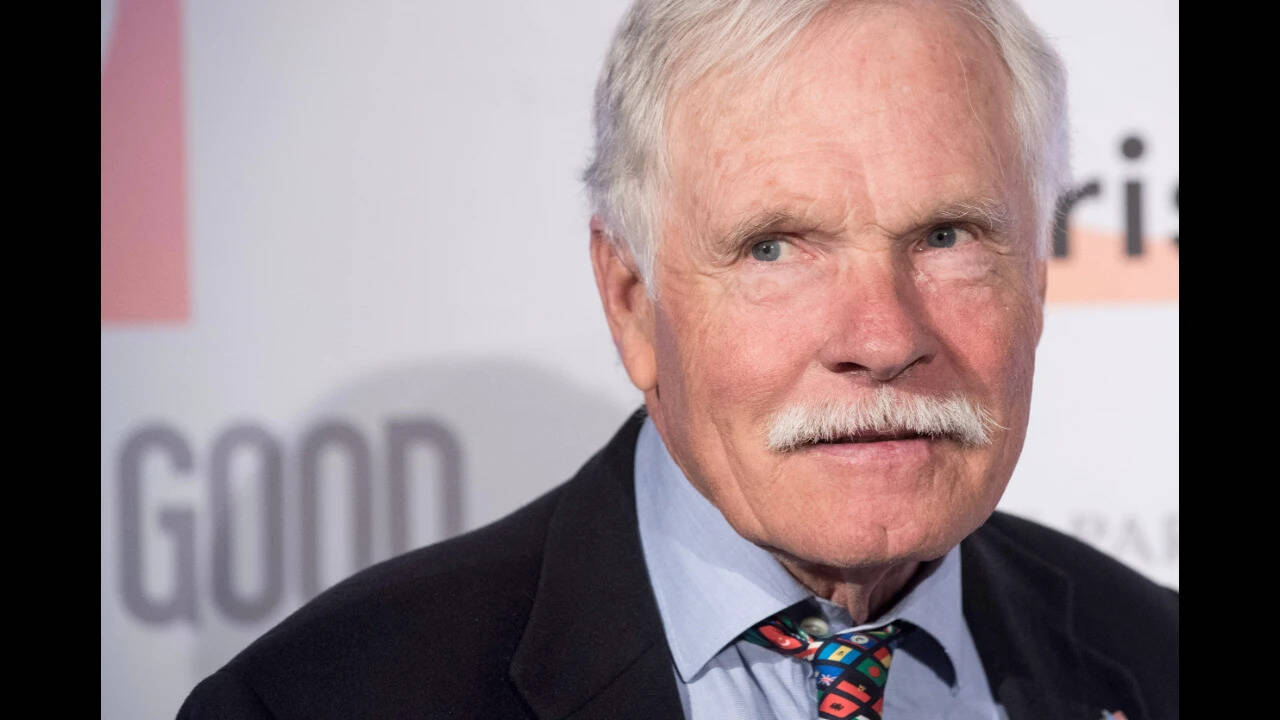
Institutional philanthropy rarely scales through linear capital accumulation; it scales through asymmetric catalytic triggers that alter the risk tolerance of ultra-high-net-worth allocators. The financial trajectory of the United Nations Foundation—initiated by Ted Turner’s 1997 $1 billion pledge and expanded to $4 billion in deployed and mobilized capital—demonstrates how an extreme disparity in donor net worth can serve as the primary behavioral catalyst for mega-giving. Specifically, Oseola McCarty’s 1995 endowment of $150,000 to the University of Southern Mississippi, accumulated over decades as a domestic laundress, functioned as a psychological benchmark that reframed the opportunity cost of wealth retention for a billionaire media executive.
To understand how a six-figure retail gift catalyzed a ten-figure institutional commitment and a subsequent 4x capital multiplier, analysts must strip away human-interest sentimentality and examine the underlying mechanics of donor psychology, capital structure, and institutional co-investment.
The Behavioral Economics of Relative Sacrifice
Standard philanthropic modeling focuses on tax efficiency, estate planning, and reputational return. These variables fail to explain sudden, non-linear shifts in giving velocity, such as Turner’s decision to commit roughly one-third of his net worth in a single announcement. To model this behavior accurately, we apply the Relative Sacrifice Ratio (RSR), defined as the proportion of liquid and illiquid net worth a donor permanently relinquishes relative to their remaining margin of financial safety.
- The Baseline Allocator (Oseola McCarty): McCarty’s $150,000 gift represented approximately 60% of her total life savings. Her remaining capital left zero buffer against catastrophic healthcare or living expenses. Her RSR approached absolute maximum utility sacrifice.
- The Ultra-High-Net-Worth (UHNW) Allocator (Ted Turner): Prior to 1997, Turner’s philanthropic output represented a negligible fraction of his Time Warner equity. Even after committing $1 billion over a decade, his remaining net worth exceeded $2 billion, leaving his standard of living, operational control, and liquidity entirely insulated.
When an UHNW individual observes a high-RSR event, it introduces acute cognitive dissonance regarding wealth utility. In economic terms, McCarty’s gift exposed the diminishing marginal utility of Turner’s excess capital. While the first $100 million of net worth buys absolute financial security and autonomy, the third billion functions purely as an abstract scorecard. By publicly benchmarking his own giving against a donor who sacrificed functional security, Turner resolved this dissonance by shifting his capital allocation strategy from wealth accumulation to institutional legacy building.
Structural Architecture of the UN Foundation Multiplier
A $1 billion pledge does not automatically translate into $4 billion in deployed capital. Achieving a 4x expansion requires a deliberate financial architecture designed to solve specific structural bottlenecks within multilateral organizations.
In 1997, the United Nations faced severe liquidity constraints, primarily driven by unpaid assessments from major member states, most notably the United States. The UN’s bureaucratic charter prevented it from efficiently accepting, managing, or deploying private retail and institutional capital without triggering political friction among member states.
Turner’s team bypassed this institutional paralysis by creating a distinct legal and operational buffer: the United Nations Foundation (UNF), structured as a U.S. public charity rather than a private family foundation. This classification choice dictated the entire capital-raising trajectory:
- Tax Deductibility Optimization: Operating as a 501(c)(3) public charity allowed external institutional and individual donors to receive maximum tax deductions for contributions, whereas a private foundation imposes stricter deduction limits on donors.
- Co-Investment De-Risking: By anchoring the entity with $1 billion in committed equity (structured as annual tranches of Time Warner stock), Turner absorbed the foundational setup costs and administrative overhead. External co-investors knew their capital would go directly toward programmatic execution rather than bureaucratic formation.
- Agility Over Bureaucracy: The UNF operated outside the UN’s consensus-driven procurement rules. It could deploy rapid-response grants, fund high-risk pilot programs, and contract directly with non-governmental organizations, later handing proven operational models over to UN agencies for global scaling.
Deconstructing the $1 Billion to $4 Billion Expansion Mechanics
The progression from Turner’s initial $1 billion commitment to $4 billion in total mobilized resources relies on four distinct capital-stacking mechanisms. Media narratives often conflate Turner’s personal checkbook with the foundation's total balance sheet; in reality, the $3 billion delta represents external capital attracted by the initial anchor investment.
1. Bilateral and Multilateral Matching Funds
Institutional donors—including the Bill & Melinda Gates Foundation, the Rockefeller Foundation, and sovereign development agencies—rarely fund unproven delivery mechanisms in isolation. The UNF utilized Turner’s capital as first-loss equity. In global health initiatives, such as the Measles & Rubella Initiative or polio eradication campaigns, UNF capital funded initial cold-chain logistics and baseline surveillance. Once operational viability was proven, multilateral bodies like the World Health Organization (WHO) and UNICEF, alongside sovereign governments, injected matching funds at multiples ranging from 3:1 to 10:1.
2. Asset Appreciation and Tranche Timing
Turner’s pledge was denominated in dollars ($1 billion) but funded via appreciated shares of Time Warner. Between 1997 and the peak of the telecommunications and media boom in 2000, rapid equity appreciation allowed Turner to satisfy annual tranche obligations using fewer shares than originally projected. Conversely, during the post-2000 tech and media downturn (following the AOL-Time Warner merger), the sharp decline in share price forced Turner to liquidate significantly larger equity positions to meet his fixed dollar commitments, demonstrating the vulnerability of equity-backed pledges to market volatility.
3. Cause-Specific Special Purpose Vehicles (SPVs)
Rather than pooling all external funds into a generalized endowment, the UNF created targeted programmatic vehicles—such as the Clean Cooking Alliance, the Shot@Life campaign, and the Girl Up initiative. This modular approach allowed corporate sponsors and mid-tier foundations to ring-fence their capital. A pharmaceutical company or energy conglomerate could fund a specific supply-chain intervention without assuming reputational or financial exposure to unrelated UN political controversies.
4. Advocacy-Driven Sovereign Appropriations
A substantial portion of the $4 billion figure accounts for indirect capital mobilization—specifically, public sector funds unlocked through targeted legislative advocacy. Through its sister organization, the Better World Campaign, the foundation deployed private capital to lobby the U.S. Congress for the repayment of UN arrears and the preservation of annual peacekeeping and development appropriations. Spending $10 million on sustained policy advocacy that secures $500 million in federal appropriations yields a 50x return on philanthropic capital, shifting the foundation's role from a direct check-writer to a political-capital broker.
Operational Limitations and Structural Vulnerabilities
While the catalytic anchor model successfully multiplied Turner’s initial capital, relying on this framework introduces specific operational risks and systemic limitations that institutional strategists must account for.
The Single-Asset Concentration Risk
Tying a multi-year philanthropic commitment to a single publicly traded stock exposes the receiving institution to severe sequence-of-returns risk. When AOL-Time Warner equity lost over 70% of its value in the early 2000s, the foundation had to recalibrate its long-term grantmaking velocity. Unlike an endowment diversified across fixed income, public equities, and alternative assets, a single-stock pledge forces the philanthropist to either sell shares at depressed valuations—destroying remaining net worth—or renegotiate payout timelines, which stalls programmatic momentum on the ground.
Mission Drift Through Co-Investor Demands
When a foundation relies on external partners for 75% of its total deployed capital ($3 billion of the $4 billion), the anchor donor inevitably cedes strategic control. External institutional donors bring rigid metrics, distinct geographic priorities, and specific reporting mandates. Over time, the receiving foundation risks transforming from a focused strategic allocator into a pass-through fiscal sponsor, executing the priorities of its largest co-investors rather than the original thesis of its founder.
The Attribution Fallacy in Mobilized Capital
Reporting "mobilized" or "leveraged" capital often blurs the line between causation and correlation. When a sovereign government allocates $200 million to a climate adaptation fund alongside a $20 million grant from a private foundation, counting the entire $220 million toward the foundation's impact total inflates the perceived efficiency of private capital. In many instances, sovereign appropriations were already budgeted through independent legislative pipelines, meaning the private capital functioned as a branding wrapper rather than a true financial catalyst.
Replicating the Catalytic Anchor Playbook
For family offices, institutional foundations, and capital allocators seeking to replicate the Turner-UNF multiplier effect without incurring its structural vulnerabilities, execution requires strict adherence to four operational protocols:
- Separate the Psychological Trigger from the Financial Vehicle: High-RSR narratives (like McCarty’s gift) are effective for unlocking donor intent and generating earned media, but they cannot sustain institutional operations. Once the pledge is secured, immediately transition governance to professional capital allocators who structure payouts around fixed-income floors rather than volatile single-stock holdings.
- Establish a Public Charity Buffer: If the objective is to mobilize external capital alongside an anchor gift, avoid the private foundation structure. Incorporate as a public charity or utilize a donor-advised fund (DAF) consortium to maximize tax incentives for incoming co-investors and eliminate excise taxes on investment income.
- Deploy Capital Exclusively in First-Loss or Bottleneck Positions: Do not use anchor funds to pay for ongoing operational overhead that governments or multilateral bodies are chartered to fund. Restrict anchor capital to high-friction gaps—such as initial R&D, regulatory clearance, or last-mile logistics—where a small injection of risk-tolerant money unlocks massive, risk-averse institutional balance sheets.
- Enforce Strict Sunset Clauses on Co-Invested Vehicles: Prevent permanent bureaucratic bloat and mission drift by attaching hard 5-to-10-year sunset clauses to all special purpose vehicles. Force every programmatic initiative to either achieve self-sustaining sovereign funding or wind down operations, ensuring the anchor capital remains permanently catalytic rather than perpetually subsidizing operational deficits.