The closing stretch of the 2026 United States midterm elections exposed a structural divergence in campaign resource allocation, coalition mobilization, and legal warfare across three distinct electoral theaters: Ohio, Georgia, and Alaska. Standard chronological live-blog reporting treats these developments as isolated campaign stops and breaking scandals. When evaluated through political science frameworks—specifically coalition maintenance, turnout elasticity, and institutional friction—the late-October dynamics reveal the exact mechanics that preceded the Democratic Party's eventual capture of both the House of Representatives and the Senate in November 2026.
The Three-Theater Resource Allocation Matrix
Modern nationalized midterm campaigns operate under strict time and capital constraints, forcing party surrogates to choose between defensive base consolidation and offensive coalition expansion. In the final week of October 2026, Republican and Democratic leadership executed opposite geographic strategies.
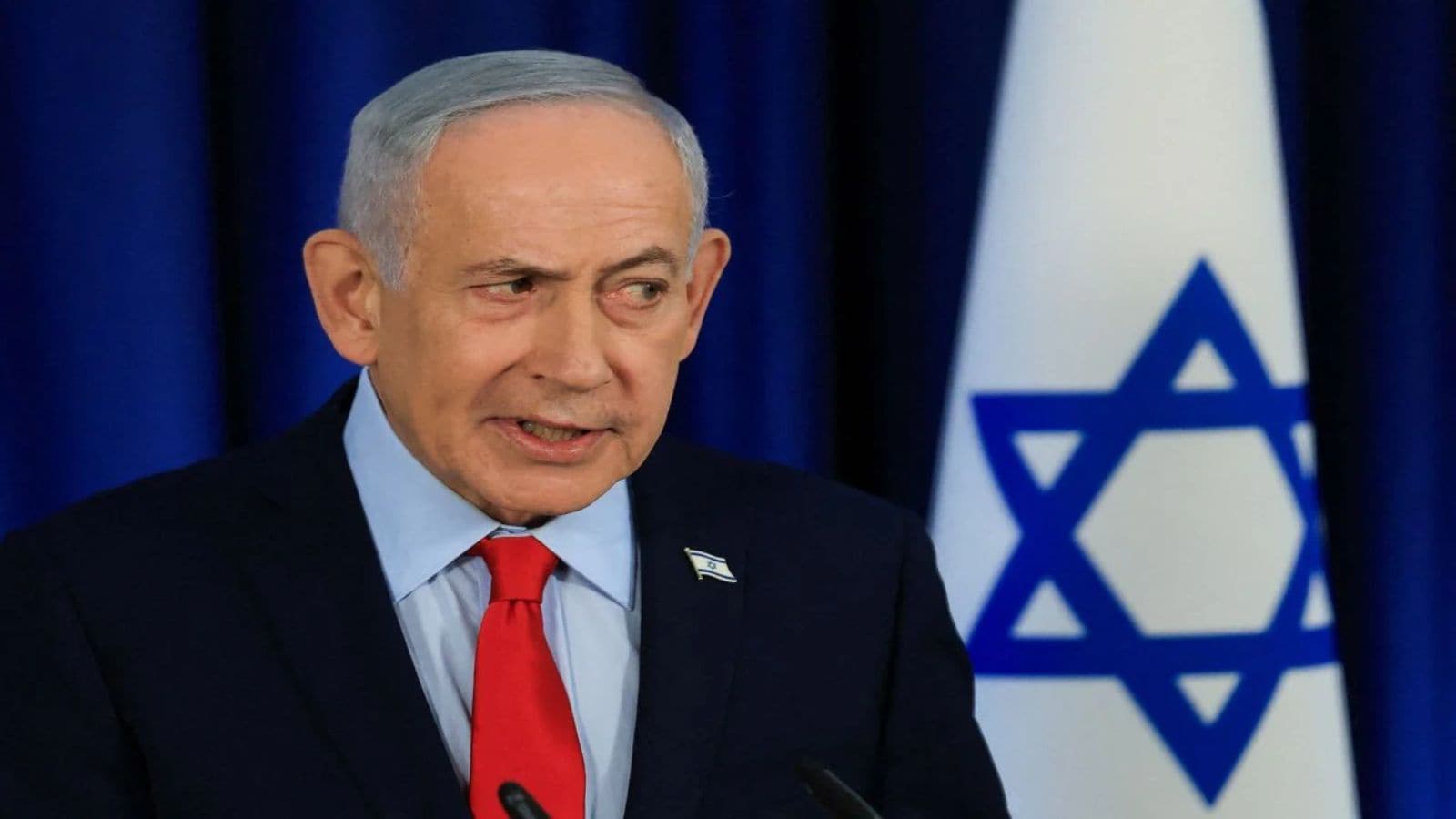
- Defensive Base Consolidation (Ohio): President Donald Trump deployed to Chillicothe, Ohio, to bolster Republican Senate incumbent Jon Husted against Democratic challenger Sherrod Brown, alongside Republican gubernatorial candidate Vivek Ramaswamy against Democrat Amy Acton. Rather than expanding into swing districts, this deployment aimed to prevent turnout drop-off in a state that had trended Republican in recent presidential cycles.
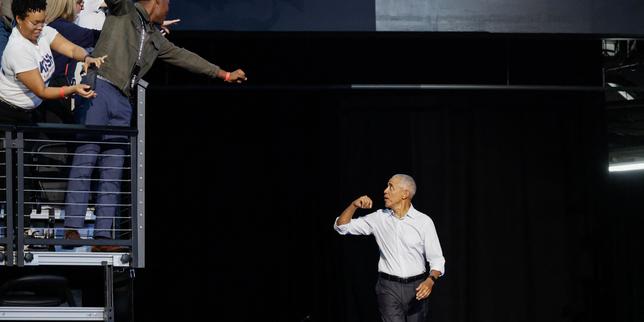
- Offensive Coalition Mobilization (Georgia): Former President Barack Obama campaigned in Morrow, Georgia, near Atlanta, alongside Democratic Senate incumbent Jon Ossoff and gubernatorial candidate Keisha Lance Bottoms. This strategy targeted high-density suburban and urban voting blocs where turnout elasticity determines statewide margins.
- Institutional and Legal Containment (Alaska): Simultaneously, the battle for the Alaska Senate seat between Republican incumbent Dan S. Sullivan and Democratic challenger Mary Peltola shifted from traditional retail politics to pre-emptive judicial and investigative intervention.
According to Associated Press reporting from October 28, 2026, these parallel events occurred within hours of one another, illustrating how both parties compartmentalized their closing arguments to match regional voter sensitivities.
The Mechanics of Surrogate Messaging and Referendum Dynamics
Political science research consistently establishes that midterm elections function primarily as referenda on the sitting president's job approval and macroeconomic conditions. During the October 2026 closing stretch, the rhetorical strategies of both Donald Trump and Barack Obama reflected an acute awareness of this referendum dynamic, though each attempted to manipulate the framing differently.
Trump's Localization and Grievance Framing in Ohio
In Chillicothe, President Trump faced the classic incumbent-party dilemma: keeping low-propensity base voters engaged when the president himself is not on the ballot. Reporting from the Associated Press indicates that Trump's remarks focused heavily on personal loyalty, candidate aesthetics—frequently praising Senator Jon Husted's college football physique—and direct counter-attacks against Obama regarding White House renovations and maintenance.
From an operational standpoint, this messaging serves a specific function:
- Identity Reinforcement: By framing the election around personal allegiance and cultural grievances rather than legislative minutiae, the surrogate attempts to transfer personal approval directly to down-ballot candidates like Husted and Ramaswamy.
- Externalizing Policy Friction: At the same time, Trump had to manage voter anxiety surrounding elevated consumer prices and an active military conflict with Iran. Speaking to reporters, Trump characterized a temporary pause in the Iran conflict as an attempt by Tehran to gain post-election leverage, warning that military strikes could resume immediately after Election Day.
This approach carries a structural limitation. While grievance framing maximizes enthusiasm among core partisans, it offers minimal persuasion value for independent or moderate suburban voters experiencing economic strain. Furthermore, internal friction within the Ohio GOP—specifically Republican criticism of Ramaswamy's campaign advertisements featuring Amy Acton's estranged mother—diluted message discipline during a critical persuasion window.
Obama's Institutional Competency Framing in Georgia
In Morrow, Georgia, Barack Obama executed a contrasting rhetorical strategy designed to nationalize the election around governance standards and economic reliability. According to Associated Press coverage, Obama dismissed Republican leadership as "not serious people" lacking solutions to practical problems, contrasting their rhetoric with relatable middle-class touchstones. Senator Jon Ossoff reinforced this framing by invoking moral accountability and characterizing the administration's conduct as corrupt.
This messaging targets a specific demographic mechanism:
- Suburban De-alignment: College-educated suburban voters in metropolitan areas like Atlanta exhibit high sensitivity to institutional norms and political stability. Framing the opposition as erratic lowers the barrier for ticket-splitting among center-right independents.
- Turnout Thresholds: In statewide Georgia contests, Democratic victory depends on hitting precise turnout benchmarks in the Atlanta metro core to offset rural Republican margins. High-profile surrogate appearances function as earned-media multipliers that remind sporadic Democratic voters of the election date.
The constraint of this strategy lies in its geographic ceiling. Competency and institutional-norm messaging resonates strongly in metropolitan hubs like Atlanta, but it struggles to penetrate rural counties where economic grievances and cultural alignment dominate voter decision-making.
Ballot Confusion Mechanics and Pre-Emptive Litigation in Alaska
While Ohio and Georgia represented traditional persuasion and turnout battles, the Alaska Senate race demonstrated how electoral rules—specifically ranked-choice voting and ballot access—create vulnerabilities to spoiler dynamics and legal escalation.
The Identical-Name Spoiler Mechanism
In Alaska's Senate contest, Republican incumbent Dan S. Sullivan faced Democratic challenger Mary Peltola alongside a third candidate, Daniel J. Sullivan, Jr.. In any electoral system, the presence of two candidates sharing an identical first and last name introduces cognitive friction for voters, risking ballot spoilage or accidental vote splitting.
Following a New York Times investigation detailing discussions among Democratic operatives regarding the recruitment of spoiler candidates—including the second Dan Sullivan—to siphon votes from the Republican incumbent, the race became a focal point of national legal scrutiny. Both Mary Peltola's campaign and the Democratic Senatorial Campaign Committee (DSCC) formally denied any involvement in recruiting Daniel J. Sullivan, Jr..
Asymmetric Escalation: Criminal Referral Rhetoric and DOJ Intervention
The response to the New York Times report illustrated a sharp escalation in how executive authority and campaign rhetoric intersect during active elections:
- Executive Legal Action: Prior to his Ohio rally, President Trump directed the Department of Justice to file a pre-emptive lawsuit contesting the potential outcome of the Alaska Senate race should Peltola win, arguing that the ballot confusion invalidated the integrity of the contest.
- Criminal Prosecution Calls: Speaking to reporters aboard Air Force One, Trump accused Democrats of orchestrating "voter fraud at the highest level," called on Peltola to resign from the race, and suggested she should face criminal prosecution.
- Voter Education Counter-Measures: Recognizing that litigation alone could not resolve ballot confusion before Election Day, Trump issued detailed written instructions urging Alaska voters to carefully distinguish between the incumbent ("SULLIVAN, DAN S. (REGISTERED REPUBLICAN) INCUMBENT") and the challenger on the ballot.
This sequence highlights a critical distinction between known facts and contested allegations. It is an established fact that two candidates named Dan Sullivan appeared on the Alaska Senate ballot, that the New York Times reported on operative discussions regarding spoiler recruitment, and that the DOJ filed a pre-emptive legal challenge. Conversely, direct coordination by Peltola's campaign remained an unproven allegation firmly denied by her team, turning the controversy into a battle over voter perception rather than a adjudicated legal finding prior to November 3.
Empirical Validation: How October Dynamics Translated to November Outcomes
Evaluating the October 28 campaign stops against the certified November 2026 election results confirms the predictive power of structural fundamentals over late-cycle rhetorical pivots.
According to post-election data compiled by the Council on Foreign Relations (CFR) and The Washington Post, the 2026 midterms generated near-record participation, with at least 123.5 million ballots cast—representing 49.1 percent of the voting-eligible population, the highest midterm turnout rate since 2018. Within that high-turnout environment, the structural vulnerabilities visible in late October produced decisive shifts:
- The Referendum Effect Overcame Defensive Deployments: Despite Trump's late push in Chillicothe, voter discontent over consumer prices and the conflict with Iran drove broad Democratic gains. In Ohio, Democrat Sherrod Brown defeated incumbent Republican Senator Jon Husted, and Democrat Amy Acton defeated Vivek Ramaswamy in the gubernatorial race. Defensive base mobilization proved insufficient when independent voters broke toward House Democrats by a 20-point margin and suburban voters shifted by 24 points.
- Turnout Elasticity Held in Battlegrounds: In Georgia, the coalition mobilization strategy reinforced by Obama's Atlanta-area appearance held, contributing to a national wave in which Democrats secured control of both the House (clinching a majority above 218 seats) and the Senate, while flipping governorships in Georgia, Ohio, Texas, Iowa, and Nevada.
- Delayed Resolution in Alaska: Unlike the decisive calls in Ohio and Georgia, the Alaska Senate contest remained uncalled immediately following election night, validating the premise that ranked-choice tabulation combined with identical-name ballot friction and pre-emptive litigation creates severe post-election bottlenecks.
Operational Blueprint for Political Strategists and Analysts
Tracking real-time political news requires filtering out performative campaign rhetoric to isolate structural indicators. When evaluating late-stage electoral dynamics in future cycles, apply the following diagnostic framework:
- Audit Surrogate Geography Against Baseline Partisanship: When an incumbent president's party deploys top surrogates to states carried comfortably in the prior presidential cycle (such as Ohio in 2026), treat the visit as an indicator of internal polling distress rather than offensive expansion.
- Weight Macroeconomic and Foreign Policy Friction Above Rally Sentiment: Crowd enthusiasm at late-October rallies does not offset structural disapproval driven by inflation or active military entanglements. Prioritize generic ballot polling among independent and suburban cohorts over base turnout projections.
- Separate Ballot Mechanics from Legal Rhetoric: In jurisdictions utilizing ranked-choice voting or open primaries, monitor candidate filing lists months before Election Day. Pre-emptive litigation and criminal referral rhetoric serve primarily to prime post-election challenges and mobilize partisan donors, whereas actual electoral outcomes depend on voter education efforts designed to prevent accidental ballot spoilage.
For analysts and campaign practitioners preparing for the 2028 cycle, the definitive strategic takeaway from 2026 is clear: late-cycle surrogate blitzes and aggressive legal posturing cannot insulate down-ballot candidates from unresolved macroeconomic dissatisfaction or foreign policy instability. Campaign capital must be allocated toward durable persuasion infrastructure in suburban swing districts at least six months prior to Election Day, as defensive base consolidation in the final ten days yields diminishing returns once independent voter sentiment has hardened.
To further explore the post-election dynamics, consider reviewing Obama and Trump make closing stretch appeals to midterm voters, which captures the contrasting rhetorical styles deployed during the final week of the 2026 campaign.