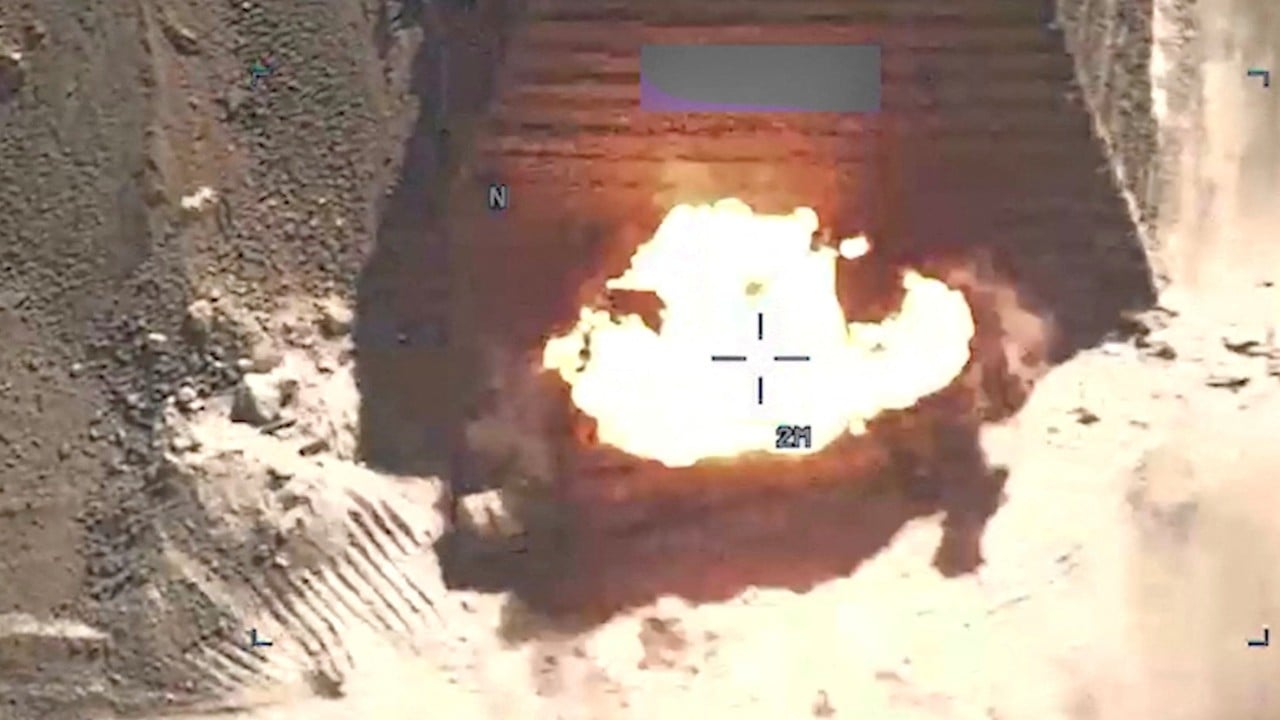
The escalation between the United States, Iran, and Houthi forces in Yemen does not represent an isolated series of tactical exchanges; it marks the activation of a dual-chokepoint interdiction doctrine designed to alter global energy supply chain economics. When the Houthis declared a naval embargo against Saudi Arabia targeting the Bab el-Mandeb Strait while Iranian Revolutionary Guard Corps (IRGC) forces escalated interdictions in the Strait of Hormuz, the operational dynamics shifted from localized sea-lane disruption to systemic energy flow suppression. By examining the operational mechanisms of dual-strait access restriction, asymmetric cost-imposition, and regional energy routing vulnerabilities, we can model the real structural impact on international security and energy markets.
The Dual-Chokepoint Interdiction Framework
Global seaborne oil trade relies heavily on two primary regional maritime choke points: the Strait of Hormuz and the Bab el-Mandeb Strait. Historically treated by defense planners as separate operational theaters, these waterways now function as an integrated asymmetric nexus.
                   +-----------------------------------+
                   |     IRGC Interdiction Campaign     |
                   |       (Strait of Hormuz - East)    |
                   +-----------------+-----------------+
                                     |
                                     v
                   +-----------------------------------+
                   | Global Energy Supply Compression  |
                   |  (Crude Transit Restricted)       |
                   +-----------------+-----------------+
                                     |
                                     v
+------------------------------------+------------------------------------+
|                                                                         |
v                                                                         v
+----------------------------------+    +----------------------------------+
| Saudi Bypass via East-West Pipe  |    | Houthi Counter-Blockade Campaign |
|  (Riyadh to Yanbu Red Sea Port)  |    |  (Bab el-Mandeb Strait - West)   |
+-----------------+----------------+    +-----------------+----------------+
                  |                                       |
                  +-------------------+-------------------+
                                      |
                                      v
                   +-----------------------------------+
                   | Systemic Maritime Supply Failure  |
                   |  (Complete Regional Containment)  |
                   +-----------------------------------+
Prior to kinetic disruptions, approximately 20% of global petroleum liquids transited the Strait of Hormuz, while the Bab el-Mandeb Strait facilitated roughly 12% of total seaborne traded oil and 30% of global container shipping. When access to Hormuz is restricted by IRGC surface interdiction and direct strikes, Saudi Arabia relies on its East-West Crude Oil Pipeline (Petroline) to pivot volume away from the Persian Gulf, transporting up to 5 million barrels per day across the Arabian Peninsula to its Red Sea terminal at Yanbu.
The Houthi declaration of a maritime blockade against Saudi Arabia directly targets this exact contingency mechanism. By threatening Yanbu-loaded tankers transiting south through the Bab el-Mandeb or north toward the Suez Canal, the asymmetric alliance eliminates the primary mitigation route for Gulf oil producers. The dual-chokepoint strategy effectively locks up to 17% of global seaborne crude supply within localized geographical bounds, forcing global energy buyers into long-distance cape-routing protocols around the African continent.
The Cost-Imposition Asymmetry Function
The operational disparity between the offense and defense in maritime interdiction creates a compound cost imbalance. Anti-access/area-denial (A2/AD) strategies deployed by non-state actors like the Houthis rely on extremely favorable economic ratios against state-backed naval coalitions.
Offense Cost Structure (Houthi/IRGC):
  [Unmanned Aerial Vehicle (UAV)] : ~$20,000 - $50,000
  [Anti-Ship Cruise Missile (ASCM)]: ~$100,000 - $500,000

Defense Cost Structure (US Navy/Coalition):
  [SM-2 / SM-6 Interceptor]      : ~$2,000,000 - $4,300,000
  [Ship Operations Per-Day]      : ~$150,000 - $300,000
This structural imbalance extends beyond direct ordnance expenditure to systemic commercial costs borne by global logistics networks:
- Insurance Premium Spikes: War-risk premiums for transit through high-threat zones escalate from a baseline of ~0.05% of hull value up to 1.0% or higher during active kinetic campaigns, adding hundreds of thousands of dollars in baseline operating expenditures per transit.
- Routing Distance Expansion: Diverting a vessel around the Cape of Good Hope adds approximately 3,500 to 4,000 nautical miles to a standard Asia-Europe or Gulf-Europe voyage, expanding transit times by 10 to 14 days.
- Capital tied up in Transit: Extended transit times reduce effective global fleet capacity, artificially constricting the supply of Suezmax and Very Large Crude Carrier (VLCC) tonnage and driving up charter rates.
Persistent military strikes against launch sites and command infrastructure degrade inventory levels but fail to neutralize low-footprint, mobile launcher platforms hidden within mountainous terrain. Consequently, tactical suppression missions generate diminishing returns unless paired with full-spectrum maritime interception of component resupply routes.
Mechanics of Escalation: The Kinetic Feedback Loop
The security spiral operating between Washington, Tehran, and Sanaa follows a predictable action-reaction sequence driven by strategic deterrence failures.
- Primary Interdiction: IRGC forces execute kinetic actions against commercial shipping or regional infrastructure, triggering localized maritime closures.
- State-Level Retaliation: US forces deploy precision standoff strikes against command facilities, radar arrays, and launch infrastructure.
- Proxy Activation: Iran prompts non-state partners—specifically the Houthis—to activate secondary maritime fronts, expanding the threat matrix to secondary sea lines of communication.
- Symmetrical Target Expansion: Regional targets escalate from naval vessels to state energy infrastructure, airport logistics centers, and alternative export hubs.
This structural loop accelerates because both sides operate under asymmetrical objective functions. The US coalition seeks maritime stabilization and open commerce normalization via target degradation. Conversely, the IRGC-Houthi axis seeks leverage expansion by generating unpredictable market volatility, betting that global economic friction will eventually outpace western political tolerance for sustained naval deployment.
Strategic Assessment Matrix
To understand the systemic vulnerabilities across active transport routes, energy infrastructure must be evaluated on accessibility, fallback options, and threat profile.
| Route / Asset | Primary Volumetric Capacity | Fallback Feasibility | Primary Threat Vector | Economic Risk Level |
|---|---|---|---|---|
| Strait of Hormuz | ~20-21 Million bpd | Severely limited; regional pipelines max at ~6.5M bpd | IRGC Anti-Ship Missiles, Fast Attack Craft, Sea Mines | Critical (Global Energy Supply Shock) |
| Bab el-Mandeb Strait | ~6.2-7.0 Million bpd | Cape of Good Hope rerouting (+12 days) | Houthi ASCMs, Suicide Drones, Unmanned Surface Vessels | High (Container & Energy Shipping Distortions) |
| Saudi East-West Pipeline (Petroline) | ~5.0 Million bpd (Terminal at Yanbu) | Dependent on Red Sea clear passage | Long-Range Ballistic Missiles, Loitering Munitions | Elevated (Bypass Route Vulnerability) |
| Suez Canal Transit | ~12% of total global seaborne trade | None (Direct connection to Mediterranean requires Red Sea) | Upstream Chokepoint Closure at Bab el-Mandeb | High (European Import Bottlenecks) |
Strategic Operational Playbook
Mitigating dual-chokepoint escalation requires moving away from reactive point-defense interception toward integrated maritime domain enforcement.
First, coalition forces must shift from individual warship escorts to structured convoy operations paired with forward electronic warfare bubbles. Counter-drone and counter-missile engagements must rely heavily on direct-energy systems, electronic spoofing, and hyper-velocity projectiles to rebalance the interceptor-to-threat cost curve away from multimillion-dollar kinetic missiles.
Second, energy-importing states must immediately activate coordinated strategic petroleum reserve (SPR) releases anchored directly to global shipping transit delays rather than price targets alone. Establishing predictable reserve release mechanisms reduces the leverage held by proxy forces attempting to shock spot prices through rhetoric and selective interdiction.
Third, freedom-of-navigation operations must focus on disrupting maritime supply chains at the source by cutting component trafficking networks across the Arabian Sea. Interdicting unregistered dhows and intelligence-gathering platform vessels operating in international waters cuts off the targeting feedback loop that enables asymmetric targeting of commercial shipping lanes.


