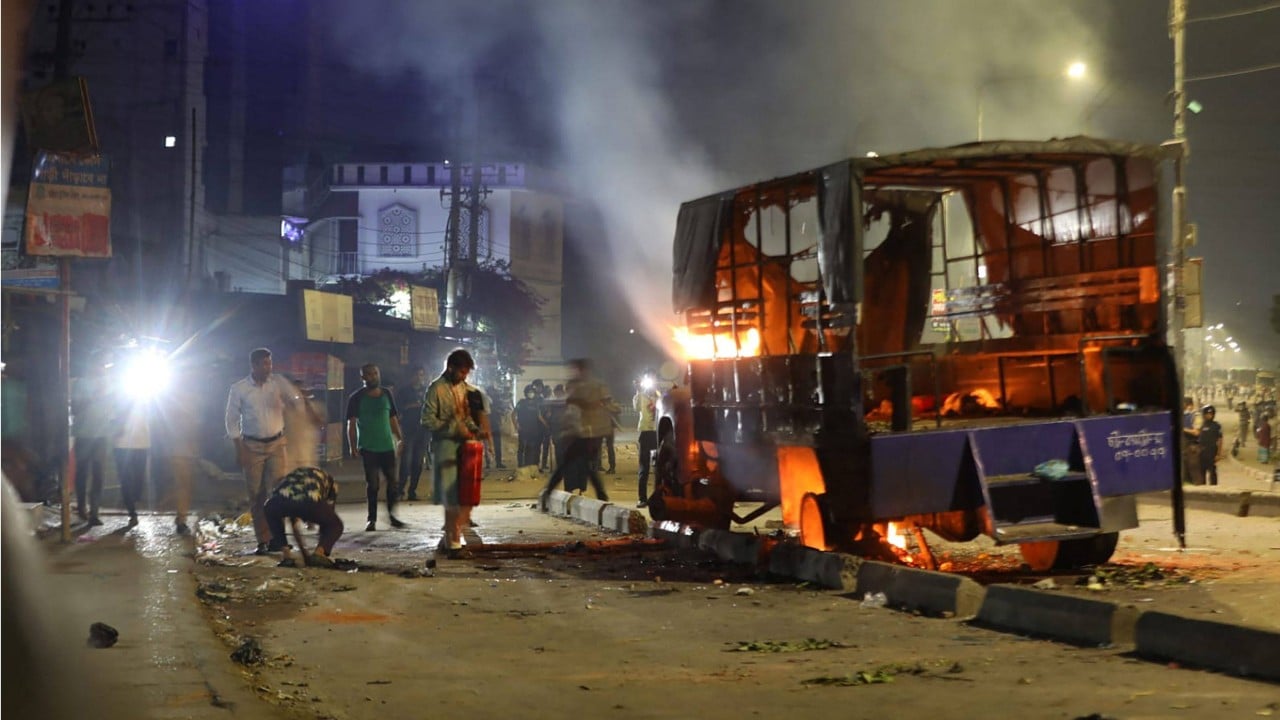
When thousands of furious people surround a police van to drag out a rape suspect, they aren't just angry at a horrific crime. They've completely lost faith in the system. That's exactly what happened in the port city of Chattogram, where a massive crowd of 5,000 demonstrators fought a six-hour street battle against law enforcement.
The spark was the brutal attack on a four-year-old girl, who's currently fighting for her life in a local hospital. Locals initially caught the suspect, Monir Hossain, and intended to hand him over to the authorities. But as the crowd swelled, the collective realization set in that turning him over to the state might mean he walks free. The mob tried to take justice into their own hands, torched a police vehicle, and faced waves of tear gas and police reinforcements.
This isn't an isolated burst of rage. It's the boiling point of a society that feels completely abandoned by its legal architecture.
The Shocking Statistics Fueling Public Rage
People are taking to the streets because the numbers show a terrifying upward trend. Statistics in Bangladesh reveal that violence against women and children is spiraling out of control. Reported cases climbed dramatically from 1,181 in February to 1,425 in March, hitting an alarming 2,011 cases in April alone.
Just days before the Chattogram explosion, the capital city of Dhaka was brought to a standstill. Residents blocked major thoroughfares for hours after a seven-year-old girl was allegedly raped and murdered. While newly appointed Prime Minister Tarique Rahman met with the victim's family and promised swift justice, citizens have heard these empty political promises before. The anger isn't fading because the danger feels immediate and systemic.
Why Nobody Trusts the System
If you want to understand why a crowd will fight the police for six hours to get to a suspect, look at the country's dismal conviction rates. Data from the Bangladesh Supreme Court and the non-profit organization BRAC shows that the conviction rate for these horrific crimes stands at a microscopic 3 percent.
Think about that. A staggering 70 percent of the accused are eventually released without consequence. The reality on the ground is grim.
- Glacial Judicial Delays: Cases drag on for years, exhausting victims' families emotionally and financially.
- Systemic Impunity: Powerful local actors frequently intervene to shield perpetrators from consequences.
- Severe Victim Blaming: Survivors face intense social stigma, and legal processes historically permitted invasive and degrading character assassinations in court.
- Zero Witness Protection: Bangladesh lacks a functional witness protection law. If you testify against a dangerous predator, you're entirely on your own.
Human rights groups like Ain o Salish Kendra point out that the sheer absence of visible accountability is what drives vigilante justice. When people know the courts will likely let a criminal walk, the temptation to bypass the courtroom entirely becomes overwhelming.
Moving Beyond Tear Gas and Broken Promises
Suppressing crowds with tear gas won't fix the underlying rot. If the administration wants to clear the streets permanently, it needs to completely overhaul how sexual violence is handled from the moment a crime is reported.
First, the government must implement fast-track tribunals that actually work, ensuring cases are resolved in months rather than decades. Second, police stations need specialized, well-trained units to handle sensitive cases without shaming the victims or bungling the initial collection of evidence. Finally, the broken 3 percent conviction rate must be treated as a national emergency. True safety won't come from heavy-handed policing of protestors; it will only come when the public sees that predators are actually held accountable behind bars.


