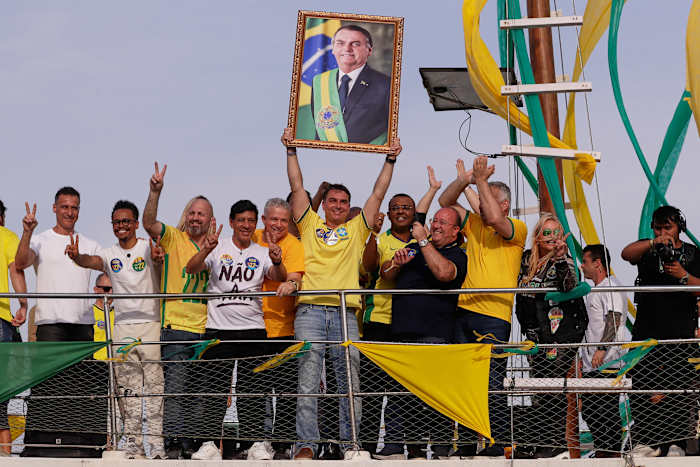
Everyone is panicking over a few synthetically generated audio clips and manipulated video snippets. Courts across the globe are rushing to draft emergency regulations, drafting sweeping edicts to penalize campaigns that dare deploy generative models. Brazil’s electoral tribunal recently threw down the hammer after a case involving Senator Flávio Bolsonaro, setting what legal scholars breathlessly call a global benchmark for keeping synthetic media out of democratic races.
It makes for great theater. It is also entirely useless. For a different view, check out: this related article.
I have spent years watching institutions try to regulate code with the intellectual agility of a medieval church banning the printing press. Legislators think they can put a digital genie back into a decentralized bottle by threatening fines and disqualifications. They are chasing shadows while the architecture of communication has already permanently shifted.
The lazy consensus says that if we just craft strict enough penalties, penalize the platforms hard enough, and mandate strict digital watermarking, voters will be protected from malicious deception. That viewpoint is not just naive. It is actively dangerous because it lulls the public into a false sense of security while ignoring how human persuasion actually functions. Further analysis regarding this has been provided by Ars Technica.
The Flaw in the Panic
Let us examine the core premise driving these emergency decrees: that synthetic media possesses an unprecedented, hypnotic power to force voters into believing utter fabrications en masse.
This argument treats the electorate as lobotomized spectators waiting to be brainwashed by a clever audio file. It ignores basic human psychology and decades of media effects research. People do not believe misinformation because it looks or sounds technically pristine; they believe it because it aligns with what they already want to think.
When a voter encounters an embarrassing clip of a politician, their reaction is rarely an objective assessment of fidelity. Confirmation bias does the heavy lifting long before computer vision forensics can determine if an artifact exists in the seventh video frame. If the clip targets a candidate they already despise, they accept it as truth. If it targets their champion, they dismiss it as a fabrication, regardless of its actual provenance.
Regulators assume that stopping the synthetic artifact solves the problem of deception. That is like trying to stop a forest fire by outlawing matches while leaving the ground covered in dry brush. Fake news, character assassination, and dirty tricks existed long before generative networks. Bad actors do not need neural networks to lie to you. They have been doing it with selective video edits, out-of-context quotes, and plain old fabrication for centuries.
The Technical Reality Check
The enforcement mechanism being championed by judicial bodies relies on a fundamental misunderstanding of software distribution. You cannot stop open-source weights from running on local hardware.
Imagine a scenario where a political operative wants to distribute a damaging, synthetic audio clip of a candidate admitting to corruption. Do they upload it to a centralized platform where content moderators can flag it within minutes? Of course not. They seed it through encrypted messaging apps, peer-to-peer networks, and decentralized forums where centralized moderation is mathematically impossible.
Watermarking is hailed as the silver bullet. Tech giants sign voluntary agreements to stamp hidden metadata into AI-generated content. But open-source models do not care about voluntary agreements. Anyone with a mid-tier graphics card can download an unaligned model, strip out safety filters, and generate whatever content they want without a trace of provenance metadata.
When you criminalize or restrict the generation of political media, you achieve two things, neither of which helps democracy. First, you drive bad actors underground, ensuring that illicit content is created without safety guardrails. Second, you hand incumbent politicians a blunt weapon to label any embarrassing, genuine piece of media as a "malicious deepfake."
I have seen legal teams weaponize ambiguity to suppress embarrassing truths. When a politician gets caught on a live hot mic saying something indefensible, their first defense is rarely a denial of content. It is a claim that the recording is an AI-generated forgery. By creating a widespread cultural hysteria around synthetic media, courts have accidentally provided every corrupt official with a permanent get-out-of-jail-free card. Any authentic leak can now be dismissed as a synthetic hoax.
The Wrong Question Being Asked
People constantly ask: How do we detect and remove every deepfake before it reaches a voter?
That is the wrong question. It assumes a state of zero friction where absolute truth can be filtered and delivered from on high by an impartial arbiter. That world does not exist.
The right question is: How do we build an information ecosystem where no single piece of media carries enough unverified weight to swing an election?
Resilience beats restriction every single time. Instead of spending millions of dollars on bureaucratic tribunals and impossible detection algorithms, we should be teaching cryptographic provenance for high-stakes media while simultaneously hardening public skepticism.
Cryptographic signing at the capture device level—anchored in hardware like secure enclaves in modern cameras—offers a path forward for authenticity. If a news organization or official campaign publishes media, it can be cryptographically chained to a trusted root. But notice what this does: it focuses on proving what is real, rather than fruitlessly trying to police what is fake.
Trying to purge the internet of bad pixels is a fool's errand. The moment you block one vector, generation tools evolve, decentralize, and bypass your filters.
Stop looking to judges to save your democracy from bad algorithms. They do not understand the tech, they cannot enforce the borders, and their rulings only protect the powerful from accountability. Build better bullshit detectors instead.
Delete the compliance committees. Shut down the speech tribunals. Let the noise ring out, and let the public learn how to swim in the current they created.