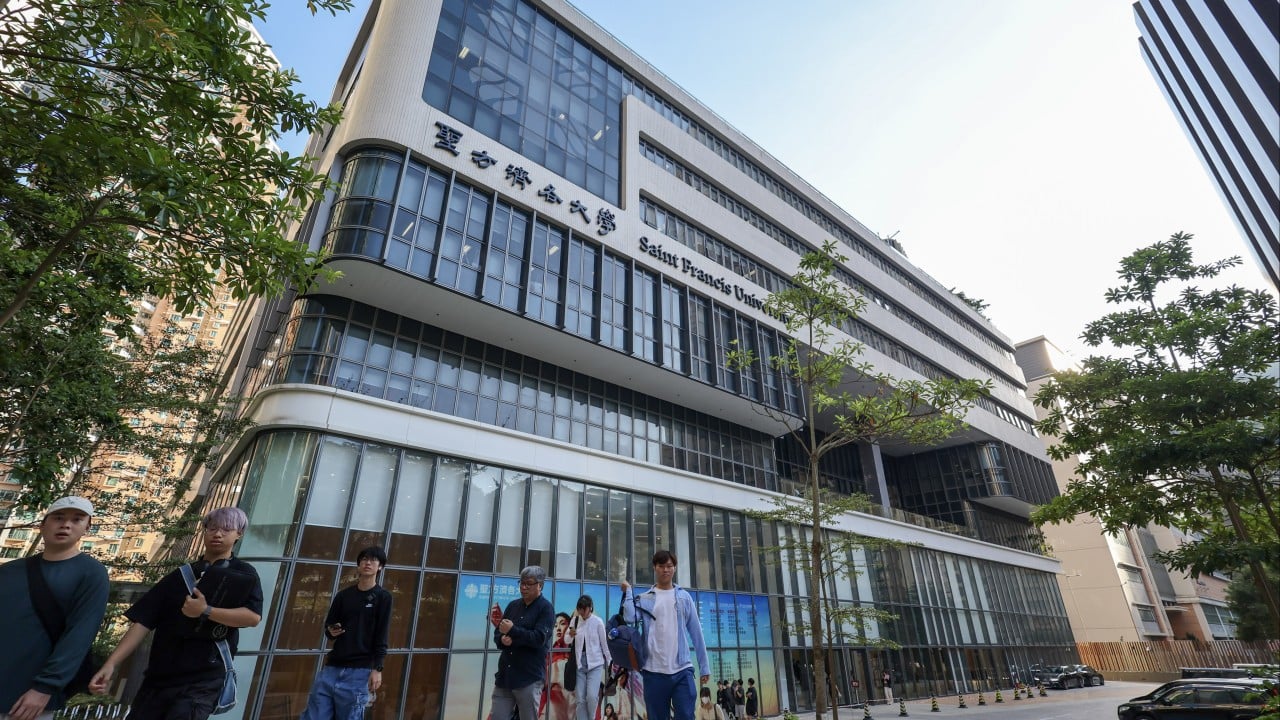
Every time a university president steps to a microphone in Hong Kong to demand public subsidies for shared campus infrastructure in the Northern Metropolis, a developer quietly counts their money. The lazy consensus says higher education institutions need massive government capital injections to build collaborative hubs, joint research laboratories, and shared student housing complexes near the border. The argument sounds reasonable on paper. Resources are scarce, land is expensive, and synergy sounds great in a PowerPoint presentation.
It is completely wrong.
When universities rely on state handouts to fund shared facilities, they do not create an innovation district. They create a high-tech bureaucratic dormitory. I have watched institutions spend three years arguing over who pays for the electricity in a shared cleanroom while nimble private competitors launch commercial products down the road. Pushing the bill to the taxpayer does not solve structural inefficiency. It institutionalizes it.
The Shared Site Delusion
The core premise behind the university lobbying campaign rests on a flawed economic model. Proponents argue that clustering multiple institutions into shared mega-sites reduces capital expenditure and fosters cross-disciplinary breakthroughs.
Physics does not care about administrative convenience.
When you force three different universities with mismatched governance structures, conflicting intellectual property regimes, and siloed administrative boards to share a single physical site using public funds, you introduce friction, not freedom. Committees replace creativity. Procurement rules mandated by government oversight bodies stretch a six-month equipment purchase into a two-year compliance nightmare.
Private enterprise discovered this decades ago. If you want high-performance collaboration, you do not build a government-funded commune of academics. You build an ecosystem where capital follows utility. When universities must finance their own physical footprint through industry partnerships, venture commercialization, and specialized degrees that actually serve the market, they make different decisions. They stop building ivory towers with glass atriums and start building functional spaces that generate revenue.
Following The Wrong Metrics
Ask any bureaucrat what success looks like in the Northern Metropolis educational zone, and they will give you a predictable list of metrics. Square footage completed. Number of cross-institutional research papers published. Memorandums of understanding signed between Hong Kong universities and mainland institutions.
These metrics measure activity, not value.
Publishing a paper written by five different professors across three shared university sites does not diversify Hong Kong’s economy. Filing patents that sit in a dusty university vault while Shenzhen startups commercialize competing technology is an expensive hobby masquerading as regional integration.
The real question is not how much money the government should allocate to concrete and steel for shared campus sites. The real question is why higher education institutions in this city remain uniquely incapable of funding their own expansion through commercial spin-offs and equity stakes in their own research. In any other advanced market, a university with billions in endowment and state-backed land grants would leverage its balance sheet to build what it needs. Here, the default reflex is always an outstretched hand to the public treasury.
The Shenzhen Contrast
Look across the border. While Hong Kong academics draft white papers begging for capital grants to build shared administrative buildings, Shenzhen’s tech corridor operates on a ruthlessly Darwinian model. Hardware accelerators, corporate research labs, and private universities operate under strict performance incentives. If a lab does not produce commercial value or secure private backing within a defined window, it pivots or closes.
Hong Kong wants the output of Shenzhen without adopting the risk profile that produces it. You cannot have Silicon Valley dynamism with civil service safety nets.
When public funds underwrite real estate projects for universities, accountability evaporates. If a shared campus facility sits half-empty because enrolment projections were inflated to secure the initial budget allocation, nobody gets fired. The state absorbs the loss. Meanwhile, land that could have been auctioned to private enterprises capable of generating immediate high-wage employment sits tied up in academic committee meetings.
Dismantling The Subsidy Addiction
If higher education institutions actually believe their own marketing about the transformative potential of the Northern Metropolis, they should put skin in the game.
First, stop funding brick-and-mortar infrastructure through direct cash grants. If a university wants a shared research facility, let them issue bonds against their future endowment returns or partner directly with venture capital firms that take a stake in the commercial output. When capital has a cost, waste disappears overnight.
Second, dismantle the archaic intellectual property frameworks that trap university research in academic limbo. The reason Hong Kong universities struggle to fund their own expansions is that their tech transfer offices treat discovery like an archival exercise rather than a commercial product. Inventors get bogged down in institutional bureaucracy while venture capitalists look elsewhere.
Third, force academic institutions to compete for space rather than being gifted it. Allocate land based on commercial viability and private sector co-investment ratios. If an institution cannot prove that half of its funding comes from non-governmental sources, it does not get prime acreage in a strategic development zone.
The Northern Metropolis represents Hong Kong's last real chance to restructure its economic engine. Turning it into a subsidized retirement home for risk-averse academic administrators guarantees failure.
Stop writing checks. Start demanding ROI.