China spent two decades and hundreds of billions of dollars building an economic fortress in the Persian Gulf, betting that trade agreements, port leases, and diplomatic handshakes could guarantee uninterrupted crude oil. That bet has failed. As direct military conflict between the United States and Iran engulfs the region, Beijing is discovering a brutal truth about modern energy security—diplomatic goodwill does not stop anti-ship missiles, and infrastructure loans cannot clear mines from the Strait of Hormuz. For all its talk of a multipolar world order, China’s lifeline to Middle Eastern energy remains completely exposed to a war it neither started nor possesses the military reach to stop.
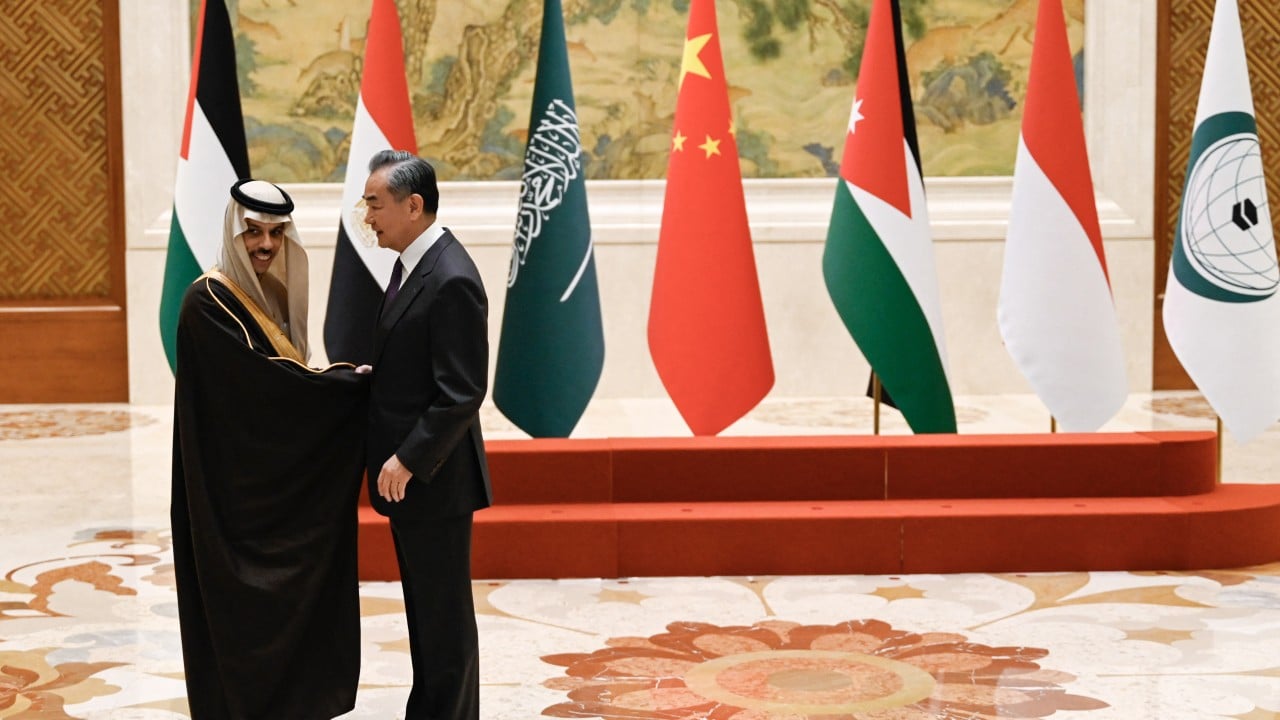
For years, foreign policy analysts in Washington and Beijing alike treated China’s expanding footprint in the Gulf as a masterclass in soft power. When Chinese brokers helped restore diplomatic ties between Saudi Arabia and Iran in 2023, state media hailed the arrival of a new era where economic development would replace military intervention. The logic seemed sound on paper. By becoming the largest customer for nearly every major Gulf producer and the primary financier for regional infrastructure, China believed it had bought itself an insurance policy against conflict.
War tore up that policy overnight.
The Illusion of Diplomatic Immunity
The fundamental flaw in Beijing’s strategy was assuming that regional actors would prioritize Chinese commercial interests over their own existential survival. When missiles fly across the Gulf, Tehran does not pause to check the bill of lading on a supertanker to see if the cargo is bound for Ningbo or Rotterdam. Nor does Washington adjust its naval blockade or air campaign to accommodate the refining schedules of state-owned giants like Sinopec and PetroChina.
In an active war zone, energy transit becomes binary. Either the sea lanes are open, or they are closed.
Beijing’s diplomatic capital in Tehran has proven remarkably thin when tested against the realities of kinetic warfare. While China buys the vast majority of Iran’s sanctioned crude—often routed through complex ship-to-ship transfers off the coast of Malaysia and relabeled to obscure its origin—that commercial dependency works both ways. Iran relies on Chinese cash to keep its economy breathing, yes. Yet when the Iranian regime faces direct military strikes from the United States, preserving its own survival overrides any desire to keep oil flowing smoothly to East Asia. Threatening or disrupting traffic through the Strait of Hormuz remains Tehran’s ultimate asymmetric weapon, regardless of who gets hurt in the economic fallout.
Chokepoints Don't Care About Balance Sheets
To understand why China is trapped, you have to look at basic geography and maritime logistics. Roughly half of China’s seaborne crude oil imports originate from the Persian Gulf. Almost every drop of that oil must pass through the Strait of Hormuz, a narrow waterway at the mouth of the Gulf that, at its tightest point, is just twenty-one nautical miles wide.
No amount of Belt and Road Initiative funding can widen that channel.
Even if a Chinese-flagged vessel isn't the direct target of a strike, commercial shipping grinds to a halt the moment insurance underwriters pull coverage. Maritime war-risk insurance premiums skyrocket within hours of a major military escalation. Tanker owners, whether based in Athens, Singapore, or Shanghai, will not send a hundred-million-dollar vessel carrying two million barrels of volatile crude into an active missile corridor if the hull isn't insured. China’s state-backed insurers can attempt to step into the breach for domestic fleets, yet that still leaves the problem of physical protection.
The People’s Liberation Army Navy (PLAN) has expanded at a breathtaking pace, boasting more hulls than the U.S. Navy. It operates a support base in Djibouti and routinely conducts anti-piracy patrols in the Gulf of Aden. What it does not have is the blue-water logistics network, air cover, or integrated missile defense architecture required to escort dozens of supertankers through a contested Persian Gulf while under threat from coastal batteries, drones, and submarines. Projecting power thousands of miles from home ports in a high-intensity conflict is an entirely different beast than chasing skiffs off the Horn of Africa.
The Pipeline Mirage
Whenever maritime chokepoints are discussed, someone inevitably points to overland pipelines as China’s escape hatch. It sounds plausible until you look at the math.
China has indeed spent billions constructing pipelines from Russia, Kazakhstan, and Myanmar to reduce its reliance on the Malacca Strait and the Persian Gulf. The East Siberia–Pacific Ocean (ESPO) pipeline brings substantial volumes of Russian crude directly into northeastern China. The China-Myanmar pipeline bypasses the Malacca bottleneck entirely, offloading crude at Kyaukphyu on the Bay of Bengal and pumping it up into Yunnan province.
Yet pipelines have hard physical limits. You cannot simply turn a dial and double the throughput of a steel tube buried underground.
The combined capacity of all China’s overland pipelines accounts for only a fraction of its total import needs, which regularly hover above eleven million barrels per day. Furthermore, the China-Myanmar pipeline still relies on tankers crossing the Indian Ocean to reach the Myanmar coast—tankers that must still load their cargo in the Persian Gulf if they are carrying Arab or Iranian crude. You haven't solved the Hormuz problem; you’ve merely shortened the sea voyage by a few days after the ship has already exited the danger zone.
The Hard Limits of the Russian Backstop
If Gulf oil is choked off, the obvious alternative for Beijing is to lean even harder on Moscow. Since the invasion of Ukraine reshaped global energy flows, Russia has become China’s top crude supplier, selling discounted barrels that have saved Chinese refiners billions of dollars.
Why not just buy more from Russia? Because the global oil market doesn't work like a grocery store where you simply switch brands when one aisle is closed.
First, Russian export infrastructure—specifically its Pacific ports like Kozmino and its pipeline networks—is already running near maximum capacity. Redirecting crude that currently flows from western Russian ports like Primorsk and Ust-Luga to India or Turkey would require sending tankers on a grueling, weeks-long journey through the Suez Canal (assuming the Red Sea isn't also a shooting gallery) or all the way around the Cape of Good Hope. That ties up the global shadow fleet and drives freight rates into the stratosphere.
Second, crude oil is not a uniform commodity. Refineries are billion-dollar chemistry sets calibrated to process specific grades of oil with distinct densities and sulfur contents. Many of China’s coastal mega-refineries were engineered specifically to run on medium-sour crude from Saudi Arabia, Iraq, and Kuwait. Swapping out millions of barrels of Arab Medium for lighter Russian grades forces refineries to adjust yields, run below optimal capacity, and sacrifice profit margins on the diesel, jet fuel, and petrochemicals the Chinese economy needs to function.
Third, relying entirely on Moscow hands Vladimir Putin massive pricing power over Beijing—a strategic vulnerability Xi Jinping has spent his entire presidency trying to avoid.
What Beijing’s Strategic Reserves Can—and Cannot—Do
For the past decade, China has quietly built up one of the largest Strategic Petroleum Reserves (SPR) on the planet. Satellite imagery of sprawling tank farms along the coast and massive underground caverns carved into rock formations reveals an obsessive drive to stockpile energy. Industry estimates generally place China’s total commercial and strategic inventories somewhere north of one billion barrels.
On paper, that sounds like an impenetrable cushion. If imports dropped by three million barrels a day due to a Gulf blockade, a billion-barrel stockpile could theoretically cover the shortfall for nearly a year.
Theory and operational reality rarely match in crisis management.
- Minimum Operating Levels: You cannot drain an oil tank to the absolute bottom. Sludge, water accumulation, and the physics of pumping mean that a significant percentage of any reserve—often twenty to thirty percent—must remain in the tanks simply to keep the system pressurized and functional.
- Drawdown Bottlenecks: Moving millions of barrels out of underground caverns and coastal storage facilities into inland refineries requires massive pumping capacity, rail cars, and coastal barges. The infrastructure designed to receive oil from supertankers isn't always optimized to distribute it backward into the domestic grid at emergency speeds.
- Psychological Panic: The moment Beijing begins aggressively drawing down its strategic reserves, global commodity traders will smell blood in the water. Brent and WTI crude futures will spike violently, driving up the cost of every single barrel China still manages to buy on the open market from West Africa, Brazil, or the Americas.
The Myth of the Yuan Oil Trade
For years, financial commentators have predicted that China would use its purchasing power to dismantle the petrodollar, forcing Gulf producers to accept the renminbi (RMB) for oil shipments and thereby insulating the trade from Western financial pressure. A handful of high-profile liquefied natural gas and crude transactions have indeed been settled in yuan via the Shanghai Petroleum and Natural Gas Exchange.
It turns out that currency denomination means nothing when the physical commodity is trapped behind a naval conflict.
Whether a cargo of Basra Heavy or Arab Light is priced in U.S. dollars, Chinese yuan, or gold bullion does not alter the physics of a sea mine or the blast radius of a drone strike. Currency swaps and alternative payment systems like CIPS protect against financial sanctions; they offer zero protection against kinetic warfare. In fact, as conflict escalates in the Middle East, global capital inevitably flees toward the liquidity and perceived safety of the U.S. dollar, reinforcing the very financial dominance Beijing hoped to erode.
Beijing’s Impossible Diplomatic Tightrope
The US-Iran conflict has exposed a glaring contradiction at the heart of China’s foreign policy. Beijing wants to be viewed by the Global South as a responsible superpower, a peacemaker that respects sovereignty and avoids the messy military entanglements that have bled Washington dry for decades. At the same time, its domestic economy—still heavily reliant on manufacturing, petrochemicals, and heavy industry—requires absolute stability in the most volatile region on Earth.
You cannot have it both ways.
If China stays on the sidelines, issuing boilerplate diplomatic statements urging "all parties to exercise restraint" while its energy lifeline burns, it signals to every partner in the Middle East that Beijing is a fair-weather friend. Saudi Arabia, the United Arab Emirates, and Qatar have spent years hedging their bets by courting China, signing massive defense and tech deals, and joining BRICS. Yet when ballistic missiles and drones threaten their oil terminals and desalination plants, Riyadh and Abu Dhabi do not call Beijing for air defense interceptors. They call Washington.
Conversely, if China were to intervene directly—by deploying naval assets to force open sea lanes or providing overt military material to Tehran—it risks stumbling into a direct military confrontation with the United States over a region thousands of miles from its own core security interests in the Western Pacific. For the Chinese Communist Party, risking a naval defeat in the Persian Gulf that could undermine its domestic legitimacy or weaken its position regarding Taiwan is an unthinkable gamble.
The Structural Shift in Global Energy
The fallout from this conflict will permanently alter how energy executives and state planners view supply chain security. For thirty years, the global oil market operated under an unspoken assumption: the United States Navy would guarantee the freedom of navigation through the world’s maritime chokepoints, allowing any nation—including America’s strategic rivals—to buy and ship energy freely.
That era is dead.
China’s frantic push into electric vehicles, solar panels, and wind turbines is often framed in the West purely as a climate initiative or an industrial export play. In Beijing, it has always been viewed primarily through the lens of national security. Every electric vehicle on a highway in Shenzhen and every gigawatt of solar capacity installed in Inner Mongolia reduces the number of supertankers that have to run the gauntlet through the Strait of Hormuz.
Yet the energy transition moves in decades, while wars erupt in days. China still burns roughly fifteen million barrels of oil every single day, and its massive petrochemical sector cannot run on sunshine and lithium batteries.
As smoke rises over the Persian Gulf, the architecture of Beijing’s Middle East strategy lies in ruins. Trade deals, infrastructure loans, and diplomatic summits created the illusion of influence, masking a profound vulnerability that only military power could ever truly secure. Until China can either eliminate its need for Gulf crude or project decisive military force into the Indian Ocean, its economic engine remains hostage to wars it cannot control.