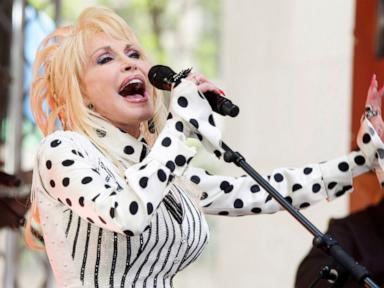
The lazy consensus in modern media is a comforting fairy tale. We love the narrative of the plucky outsider who plays dumb, lets the suits underestimate her, and then cashes the checks while laughing behind their backs. For decades, cultural critics have insisted that Dolly Parton weaponized sexism, using the wide-eyed, hyper-feminine, cartoonish caricature of a rural mountain girl as a Trojan horse to secure a business empire.
It is a great story. It makes us feel smart. It suggests a masterclass in long-term chess.
It is also entirely false.
Dolly Parton did not spend fifty years playing a character to trick Wall Street or Nashville executives. She simply built a multi-million-dollar copyright and entertainment machine because she possessed a terrifyingly acute grasp of commercial leverage, while everyone else was distracted by her aesthetic. The idea that she was somehow a passive victim of low expectations who cleverly turned the tables is a comforting fiction invented by people who don't understand how media conglomerates actually function.
Being underestimated wasn’t a clever trick she pulled. It was the tax she paid for entering a room dominated by men who lacked the imagination to process a woman owning her master recordings. She didn't orchestrate their blindness. They suffered from it voluntarily.
The Copyright Trap Nobody Talks About
Let's look at the actual business mechanics, because sentimentality makes terrible spreadsheets. In 1992, Whitney Houston released her version of I Will Always Love You. Elvis Presley had tried to record it years earlier, but Colonel Tom Parker demanded half the publishing rights. Parton said no. She walked away from a guaranteed windfall of historic proportions because she valued asset ownership over short-term liquidity.
That is not the behavior of someone who is accidentally succeeding because people misjudged her intellectual capacity. That is the behavior of a ruthless asset manager.
Most artists treat their catalog like a retirement fund to be sold off to private equity at the first sign of a market peak. Parton retained ownership of her publishing company, Blue Valley Music, maintaining control of her IP when the industry standard for women in country music was to sign away everything for a tour bus and a wardrobe allowance.
When you own the underlying asset, people can underestimate your singing voice, your fashion choices, or your accent all day long. You still cash the mechanical royalties every single time a song is streamed, covered, or licensed for film. The misconception is that her business acumen was disguised by her appearance. The reality is that her appearance was irrelevant to her balance sheet, and the executives who focused on it were simply bad at math.
The Myth of the Accidental Mogul
Spend enough time in corporate boardrooms and entertainment management offices, and you hear the same myth repeated about every outlier. People want to believe that extreme success is either an accident of history or the result of a secret persona.
I have watched executives blow millions of dollars trying to manufacture "authentic" brand positioning while missing the fundamental operational mechanics that actually drive cash flow. They look at Parton's theme park, Dollywood, and assume it’s a vanity project managed by a board of directors while she plays the banjo.
In truth, her partnership with Herschend Family Entertainment requires active governance, strategic capital allocation, and rigorous operational oversight. You do not maintain a dominant regional tourism destination for decades by wearing rhinestones and giggling at interviewers. You do it by understanding foot traffic analytics, labor retention in rural economies, and CapEx cycles.
Imagine a scenario where Dolly Parton walked into a venture capital pitch meeting today wearing her signature wig and a custom rhinestone suit. Half the room would dismiss her within thirty seconds based on aesthetic bias. The other half would scramble to Google her net worth, realizing too late that she controls a self-sustaining ecosystem of publishing, tourism, film production, and merchandising that outlives most tech startups.
The bias isn't the weapon. The bias is the noise. Parton simply ignored the noise and captured the cash flow.
The Cost of the Caricature
There is a dark side to this cozy myth. By framing her success as a clever trick played against misogynistic gatekeepers, we let the industry off the hook. We pretend that Nashville in the 1970s and 1980s was an equal-opportunity meritocracy where a clever woman could win if she just played the game right.
It wasn't. It was predatory, hostile, and aggressively exclusionary.
Parton didn't succeed because she was underestimated. She succeeded in spite of being marginalized, through sheer force of output, undeniable songwriting genius, and an ironclad refusal to surrender her equity. When she left Porter Wagoner’s television show in 1974—handing him the title track to her career as a literal parting gift—she wasn't executing a cute PR maneuver. She was executing a hostile career relocation to preserve her artistic independence, enduring years of professional blowback to do it.
To reduce that level of grit to a cute anecdote about playing dumb is an insult to her labor. It sanitizes a brutal corporate survival story into a feel-good fable for afternoon talk shows.
Stop Misreading the Blueprint
If you are building a business, a brand, or a career today, stop waiting for people to underestimate you so you can pull off a dramatic reveal. That is cinematic nonsense.
People do not underestimate you because you are playing chess while they play checkers. They underestimate you because most people lack the cognitive bandwidth to evaluate competence that falls outside their narrow cultural templates.
Dolly Parton didn't win by weaponizing their stupidity. She won by refusing to let their stupidity dictate her terms of engagement. She wrote thousands of songs, protected her publishing like a medieval warlord, diversified her revenue into recession-proof physical infrastructure, and never once apologized for liking sparkles.
The lesson isn't to lean into a persona to trick the market. The lesson is to build something so structurally bulletproof that the market's opinion of you ceases to matter entirely.
She doesn't need you to realize how smart she is. Your stream already cleared.