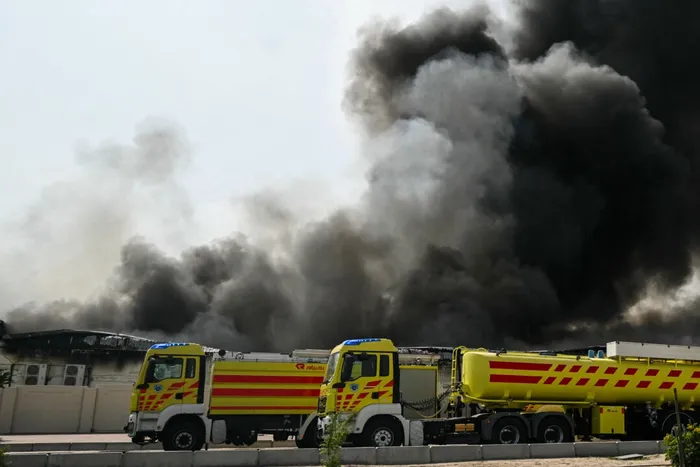
The skyline of southern Beirut has been transformed into a recurring sequence of orange flash and gray plumes. Israel’s targeted strikes on the Dahiyeh district represent more than a localized retaliation for Hezbollah rocket fire; they signal a fundamental transition in the nature of modern urban warfare. This isn't just a border skirmish that spilled over. It is a calculated attempt to dismantle a non-state actor's command structure within one of the most densely populated urban environments in the Levant. While the world watches the smoke rise, the real story lies in the intelligence-driven precision and the terrifying technological gap that has rendered traditional defensive posturing obsolete.
Hezbollah’s initial barrage into northern Israel was intended to maintain a "support front" for Gaza, a strategic tether meant to stretch Israeli resources thin. Instead, it triggered a massive, high-tech asymmetric response. Israel is no longer content with "mowing the grass"—a term used by defense officials for years to describe periodic, limited strikes. They are now systematically uprooting the entire garden.
The Intelligence Breach That Stripped the Dahiyeh Bare
For decades, the Dahiyeh was considered an impenetrable fortress. It was a city within a city, where Hezbollah’s security apparatus controlled every street corner and basement. That illusion of safety evaporated in a matter of weeks. The precision of the recent strikes suggests an intelligence penetration so deep that it borders on the total compromise of Hezbollah’s internal communications.
When a missile hits a specific apartment on the fourth floor of a residential block without bringing down the entire building, it reveals a terrifying level of "target realization." This isn't just satellite imagery. It is the result of signals intelligence (SIGINT) and human intelligence (HUMINT) working in a lethal loop. The recent history of the conflict shows that Israel has likely been mapping the digital and physical footprint of every mid-level commander for years, waiting for the political green light to execute.
The "how" of these strikes involves a sophisticated mix of drone surveillance and AI-assisted targeting banks. By the time a Hezbollah operative receives a command, the coordinates of his location are often already being fed into a flight computer. This high-speed kill chain has paralyzed the group’s middle management. If you cannot communicate without being tracked, and you cannot meet in person without being targeted, your ability to wage a coherent war effectively disappears.
The Architecture of Attrition
To understand why Beirut is burning, you have to look at the "Ring of Fire" strategy. Israel’s objective is to create a buffer zone in southern Lebanon while simultaneously decapitating the leadership in the capital. This dual-track approach puts Hezbollah in an impossible position. If they retreat from the border, they lose their reason for existing as a "resistance" force. If they stay, they are picked apart by an enemy they cannot see.
The hardware being used in these strikes is worth examining. We are seeing the heavy use of bunker-buster munitions and Joint Direct Attack Munitions (JDAMs). These are not "dumb" bombs dropped in the general vicinity of a target. They are GPS-guided kits that turn standard gravity bombs into precision instruments.
$$F = ma$$
The physics of these strikes is brutal. Even a small warhead, when delivered with surgical precision to a structural weak point, can collapse a command center hidden three levels below ground. The use of these weapons in a civilian environment creates a secondary crisis: the total displacement of the population. Over a million people have been forced to flee their homes, not because their houses were hit, but because the risk of being "collateral" in a targeted strike has become a statistical certainty.
The Technological Displacement of Diplomacy
Traditional diplomacy operates on the assumption that both sides want to avoid a total collapse. That assumption is currently being tested to its breaking point. Israel’s military establishment appears to have calculated that the window of opportunity to permanently degrade Hezbollah is open, and they have no intention of closing it for a ceasefire that merely restores the status quo.
On the other side, Hezbollah is trapped by its own rhetoric. Having linked its fate to the war in Gaza, it cannot easily decouple without appearing defeated. This has led to a cycle of escalation where every Israeli strike in Beirut is met with a deeper rocket volley into Israel, which in turn justifies even more intense bombardment of the Dahiyeh.
The introduction of automated interceptor systems like the Iron Dome and David’s Sling has altered the math of this conflict. In previous decades, a Hezbollah rocket barrage would have caused enough domestic pressure in Israel to force a diplomatic solution. Now, the high interception rate allows the Israeli government to absorb the fire while continuing its offensive operations in Lebanon. The "cost of war" for the civilian population in Israel is mitigated by technology, while the cost for those in Beirut is absolute.
The Gray Zone of Urban Warfare
One of the most overlooked factors in this escalation is the legal and ethical "gray zone" of modern urban combat. Israel argues that by embedding military infrastructure in civilian neighborhoods, Hezbollah has turned the Dahiyeh into a legitimate military target. Human rights organizations argue that the scale of the destruction and the resulting humanitarian crisis constitute collective punishment.
This debate isn't just academic. It defines how the war is perceived globally and how long the international community will tolerate the bloodshed. However, on the ground, the legalities matter less than the kinetic reality. The reality is that the Dahiyeh is being dismantled piece by piece.
The strategy appears to be the "Gaza-fication" of southern Beirut—stripping away the social and physical infrastructure that supports the militant group until the cost of maintaining the presence becomes unbearable for the local population. It is a grim, grinding process that prioritizes military outcomes over regional stability.
A Failed Proxy Logic
For years, Hezbollah was seen as Iran’s primary insurance policy against an Israeli attack on its nuclear facilities. The logic was simple: if you hit Iran, Hezbollah levels Tel Aviv. That deterrent is currently being dismantled.
By systematically eliminating the leadership and destroying the long-range missile caches in Lebanon, Israel is effectively de-fanging Iran’s most potent proxy. This shifts the entire geopolitical balance of power in the Middle East. If Hezbollah is reduced to a fractured guerrilla force, Iran loses its "forward defense" capability.
The strikes in Beirut are therefore a message to Tehran as much as they are a military operation against Hezbollah. They demonstrate that no amount of urban shielding or subterranean fortification can withstand a sustained, intelligence-led air campaign. The "strategic patience" once exercised by the Israeli Air Force has been replaced by a doctrine of "maximum pressure."
The Impact on the Lebanese State
While the focus remains on the military exchange, the Lebanese state itself is the ultimate victim. Already reeling from a historic economic collapse and political paralysis, the country now faces the prospect of a long-term conflict it cannot afford and did not choose.
The Lebanese Armed Forces (LAF) remain on the sidelines, largely because they lack the air defense capabilities to intervene and the political mandate to confront Hezbollah. This power vacuum is being filled by chaos. As the Dahiyeh burns, the social fabric of Beirut is stretching. Tensions between the various sectarian factions are rising as displaced people move into areas that were previously off-limits.
The strikes are not just hitting buildings; they are hitting the very idea of Lebanon as a sovereign, functioning entity. Every missile that lands in Beirut further erodes the authority of the central government, leaving the country at the mercy of two warring entities that show no signs of backing down.
The Futility of the Status Quo
There is a growing realization that there is no "back to normal" after this. The level of destruction in the south and the targeted decapitation of Hezbollah’s leadership have moved the goalposts. Any future settlement will likely require a fundamental restructuring of the security arrangements on the border, involving more than just a repeat of UN Resolution 1701, which has largely been a failure in preventing the current build-up.
Israel is betting that it can force a new reality through sheer kinetic force. Hezbollah is betting that it can survive the onslaught and win by simply not losing. In this environment, the strikes on Beirut are not an endgame; they are a prerequisite for a new, much harsher regional order.
The precision of the weaponry and the depth of the intelligence may be new, but the underlying logic is as old as siege warfare. You isolate the enemy, you destroy their means of command, and you make the environment so inhospitable that the cost of resistance outweighs the cost of surrender. Whether that logic holds in the complex, sectarian landscape of Lebanon remains to be seen.
The plumes of smoke over the Dahiyeh are a visual marker of a strategy that has moved beyond containment. The era of the "border skirmish" is over, replaced by a high-stakes campaign to rewrite the rules of the Levant with fire and steel. As the drones continue their 24-hour vigil over the city, the only certainty is that the next strike is already being calculated.
Ensure your emergency kits are stocked and your evacuation routes are mapped, as the window for a peaceful de-escalation is effectively closed.