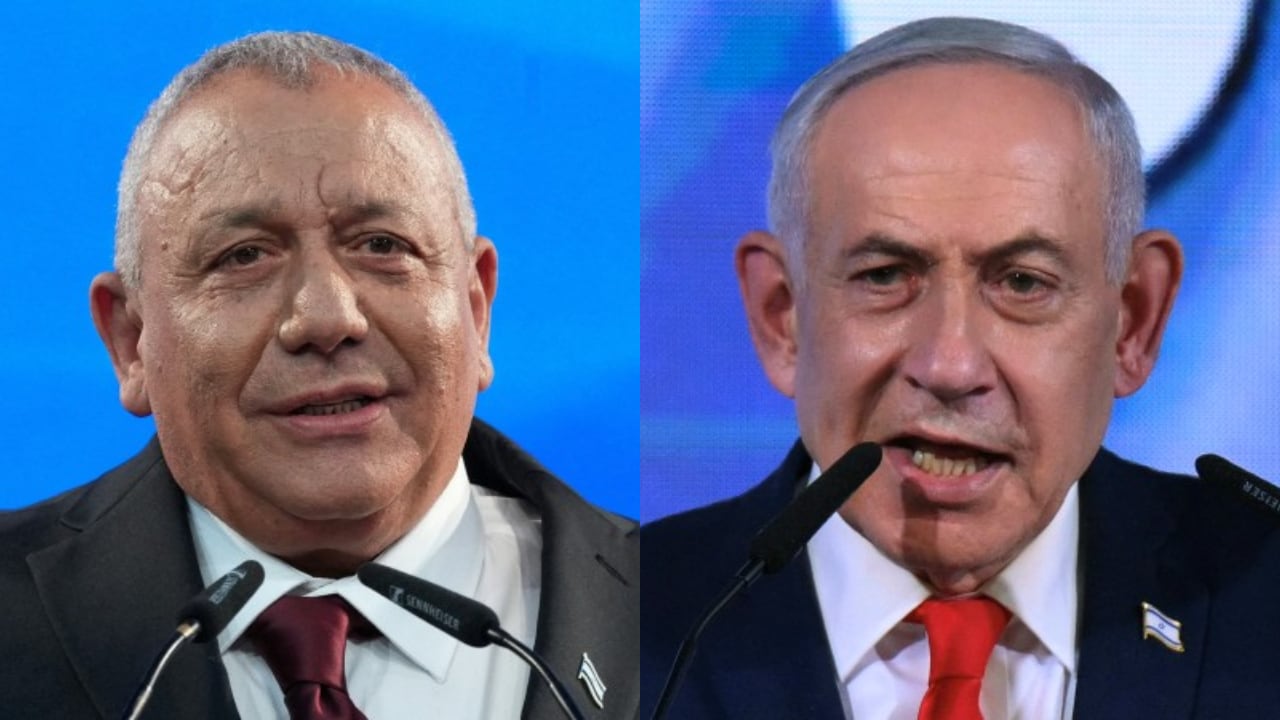
When Israeli Prime Minister Benjamin Netanyahu publicly appealed for national unity, former War Cabinet member and retired IDF Chief of Staff Gadi Eisenkot rejected the overture outright, dismissing Netanyahu as a "delusional, outgoing prime minister." That sharp exchange captures the fundamental fracture in Israeli governance. Netanyahu frames political cohesion around his continued leadership during wartime and diplomatic strain, while Eisenkot argues that genuine national recovery requires Netanyahu’s departure from office and an immediate return to the voters.
The Anatomy of a Political Rupture
To understand why a veteran military commander used unusually blunt language against a sitting prime minister, you have to look at the mechanics of Israel’s wartime decision-making. Eisenkot did not snipe from the sidelines as a lifelong partisan rival. He entered the emergency government after the October 7 attacks in 2023 alongside Benny Gantz, sacrificing immediate political comfort to help manage a multi-front military crisis. Read more on a connected subject: this related article.
He sat in the room. He watched how strategic choices were weighed against coalition survival.
When Eisenkot and Gantz eventually exited the government in June 2024, their departure was a direct indictment of how the war was being managed. Eisenkot’s core critique—repeated consistently in Knesset debates, media interviews, and public statements—is that strategic clarity was repeatedly subordinated to political preservation. In his view, calling for "unity" while refusing to set a clear postwar diplomatic framework or take responsibility for systemic failures is not statesmanship. It is a rhetorical shield. Further reporting by The Washington Post delves into related perspectives on this issue.
Netanyahu’s political playbook relies heavily on framing opposition to his leadership as a threat to national solidarity during existential danger. By positioning himself as the indispensable bulwark against external enemies and domestic division alike, the Prime Minister attempts to make political dissent look unpatriotic. Eisenkot’s "delusional, outgoing" label was engineered specifically to puncture that framing. It strips away the aura of permanence that Netanyahu projects and reframes the debate around accountability and electoral legitimacy.
Why "Unity" Means Different Things in Jerusalem
In any parliamentary democracy, calls for unity during a prolonged crisis carry heavy baggage. In Israel’s hyper-fragmented proportional representation system, the word itself functions as a political weapon.
For Netanyahu and his Likud party, national unity means rallying behind the existing ruling coalition—a bloc heavily dependent on ultra-Orthodox parties and far-right nationalists—without altering the balance of power or triggering early elections. Under this definition, critics are asked to suspend political judgment and fall in line behind the sitting government until "total victory" is achieved, a benchmark whose timeline remains conveniently elastic.
For Eisenkot and the broader center-left and moderate right opposition, national unity is impossible without restored public trust. That trust, they argue, cannot be rebuilt by the same leadership that presided over the intelligence and operational collapse of October 7, nor by a government whose internal coalition dynamics alienate key segments of Israeli society.
Consider the friction points that make Netanyahu’s unity appeal ring hollow to his critics:
- Military Conscription and Burden-Sharing: While reservists have served hundreds of days across multiple fronts, legislative battles over exemptions for ultra-Orthodox (Haredi) yeshiva students have exposed deep societal resentment. Eisenkot, who lost his own son, Gal, and his nephew in the Gaza fighting, views equitable military service not as a partisan talking point, but as a moral baseline for national cohesion.
- Hostage Negotiations Versus Coalition Survival: Throughout the conflict, families of hostages and opposition leaders have accused Netanyahu of stalling ceasefire-and-release frameworks to appease far-right coalition partners like Bezalel Smotrich and Itamar Ben-Gvir, who threatened to collapse the government if military operations halted.
- Institutional Accountability: Netanyahu has consistently resisted establishing a formal State Commission of Inquiry—Israel’s highest independent investigative body—while active fighting continues, arguing it would distract military commanders. Critics see this delay as an effort to postpone an official verdict on political responsibility.
When those structural conflicts remain unresolved, a call for unity sounds to opponents less like an olive branch and more like a demand for unconditional surrender.
The Strategic Calculation Behind Eisenkot’s Rhetoric
Seasoned political observers know that Gadi Eisenkot rarely speaks off the cuff. Unlike career politicians who thrive on daily cable-news skirmishes, Eisenkot built his reputation over four decades in the Israel Defense Forces as a methodical, understated strategist. When he deploys a phrase as scorching as "delusional, outgoing prime minister," it serves specific political and strategic objectives.
First, it is an effort to break the psychological inevitability that has long surrounded Netanyahu. For over a decade, Netanyahu’s greatest political asset has been the perception—shared even by many of his detractors—that he is an unmatched political survivor who can outmaneuver any rival. Calling him "outgoing" directly challenges that aura of invincibility. It tells voters, coalition members, and international observers that the Netanyahu era is nearing its end, regardless of how tightly he clings to the prime minister’s chair.
Second, Eisenkot is drawing a hard boundary against future political co-optation. Every few months, rumors circulate in Jerusalem about potential cabinet reshuffles, expanded emergency coalitions, or deals designed to bring moderate figures back into the government to bolster its international standing. By branding Netanyahu "delusional," Eisenkot closes the door on any renewed partnership under Netanyahu’s leadership. He signals to an exhausted electorate that the opposition will not lend its credibility to rescue a failing coalition.
Third, the remark addresses a growing frustration among center-right voters. Many Israelis who traditionally backed Likud or moderate nationalist parties feel politically homeless. They reject the far-right ideological agenda of Netanyahu’s current partners, yet they also demand a tough, uncompromising approach to national security. Eisenkot—a former IDF Chief of Staff with impeccable security credentials—offers those voters a credible alternative. His harsh critique gives disaffected conservatives permission to break with Netanyahu without feeling they are abandoning national security.
The Structural Trap of Israeli Coalition Politics
To grasp why this clash keeps repeating in different forms, look at how Israeli governments are built and maintained. Because no single party has ever won an outright majority in the 120-seat Knesset, every prime minister must assemble a coalition of at least 61 lawmakers. This math gives small, ideological faction leaders disproportionate leverage over national policy.
Netanyahu’s political survival depends on keeping a narrow, ideologically rigid bloc intact. If he makes sweeping concessions to bring in centrist leaders like Eisenkot or Benny Gantz, his right-wing partners bolt, collapsing the government. Conversely, if he stays aligned with his current partners, he alienates the political center, fuels mass street protests, and strains relations with Western allies.
It is a classic Catch-22.
Netanyahu tries to escape this trap rhetorically by calling for broad unity while keeping his actual coalition mechanics unchanged. He wants the political legitimacy of a consensus leader without paying the policy price required to build a genuine consensus. Eisenkot’s blunt rebuttal exposes that contradiction. You cannot govern through polarizing sectarian legislation on Tuesday and demand seamless national brotherhood on Wednesday.
What History Tells Us About Wartime Leadership Transitions
Defenders of the Prime Minister frequently argue that changing leadership during an active security crisis or diplomatic transition is reckless. They contend that elections or leadership battles project weakness to adversaries in Tehran, Beirut, and Gaza, and disrupt continuity with Washington.
Historical precedent in democratic nations—and in Israel specifically—tells a more complicated story. Democracies have repeatedly replaced wartime leaders when public confidence eroded or strategic direction faltered, often emerging stronger as a result.
In Britain, Neville Chamberlain resigned in May 1940—eight months into World War II—after losing the confidence of Parliament during the Norway Debate, paving the way for Winston Churchill’s coalition government. In Israel itself, Prime Minister Golda Meir resigned in April 1974 following the initial findings of the Agranat Commission regarding the intelligence failures of the Yom Kippur War, despite having won an election just months earlier. Menachem Begin stepped down in 1983 amid the mounting toll and domestic turmoil of the First Lebanon War.
In each case, the departure of a compromised or exhausted leader did not collapse the state. Instead, it acted as a necessary pressure valve, allowing the public to regain faith in state institutions and enabling a fresh leadership team to make hard strategic decisions unburdened by past mistakes.
Eisenkot’s argument rests squarely on this precedent. He maintains that keeping an unpopular, deeply polarizing leader in power during a prolonged crisis actually weakens national resilience. When half the country suspects that military and diplomatic decisions are filtered through the prism of one man’s legal and political survival, social cohesion fractures from within.
The Counter-Argument From Netanyahu’s Camp
Fair analysis requires acknowledging why Netanyahu’s message still resonates with a substantial portion of the Israeli public. To dismiss his unity appeal purely as cynical manipulation misses the real anxieties driving his supporters.
For Netanyahu’s base, the Prime Minister represents institutional stability and proven resistance to intense international pressure. Supporters argue that throughout the post-October 7 conflict, Netanyahu withstood heavy diplomatic pushback from foreign capitals to dismantle Hamas’s military infrastructure in Gaza and degrade Hezbollah’s leadership in Lebanon. In their view, the operational successes achieved against regional adversaries validate his refusal to bow to early ceasefire demands.
From this perspective, calling for early elections or attacking the sitting prime minister as "delusional" plays directly into the hands of Israel’s enemies, who openly bet on internal Israeli division to achieve what they cannot win on the battlefield. Netanyahu’s defenders contend that national unity means respecting the democratic mandate of the November 2022 election, which gave the current coalition a clear 64-seat majority, rather than demanding a redo whenever poll numbers dip.
There is also a practical governance argument. An election campaign in Israel consumes at least three to four months of intense domestic paralysis, followed by weeks of coalition horse-trading. Critics of early elections argue that freezing strategic decision-making for half a year while regional threats remain active carries severe operational risks.
The Reality on the Ground
Both sides are diagnosing real vulnerabilities, yet they are talking past each other because they start from incompatible premises. Netanyahu treats political continuity as the prerequisite for security. Eisenkot treats political renewal as the prerequisite for survival.
The numbers in public opinion polling over the past two years consistently highlight the depth of this legitimacy gap. Across virtually every major Israeli poll, solid majorities of respondents—often exceeding 60 to 70 percent—have favored establishing a state commission of inquiry into October 7 and holding early elections rather than letting the current coalition serve out its full statutory term. At the same time, Netanyahu’s Likud party remains a formidable electoral force, consistently polling as the largest or second-largest single faction, proving that while his overall coalition faces a steep deficit, his core support has not evaporated.
This statistical deadlock explains the ferocity of the rhetoric. Neither side can easily knock the other out of the ring. Netanyahu possesses the institutional power of incumbency, control over the legislative calendar, and a disciplined coalition that fears losing power in an early vote. Eisenkot and the opposition possess the backing of a frustrated majority, the moral weight of military sacrifice, and the undeniable reality of the October 7 catastrophe.
When political leverage is deadlocked, language escalates. "Unity" becomes an accusation of disloyalty against critics; "delusional" becomes a verdict on an incumbent’s refusal to read the room.
Ultimately, the clash between Benjamin Netanyahu and Gadi Eisenkot is not a personal feud between a veteran politician and a retired general. It is a fundamental test of how a democracy repairs itself after a historic trauma. True national unity is never produced by a prime minister’s speech or an opposition leader’s soundbite; it is forged only when citizens believe that their leaders value the survival of the state above their own survival in office.