Voters in Louisiana just sent a shockwave through the American political establishment, though anyone paying close attention saw it coming from miles away.
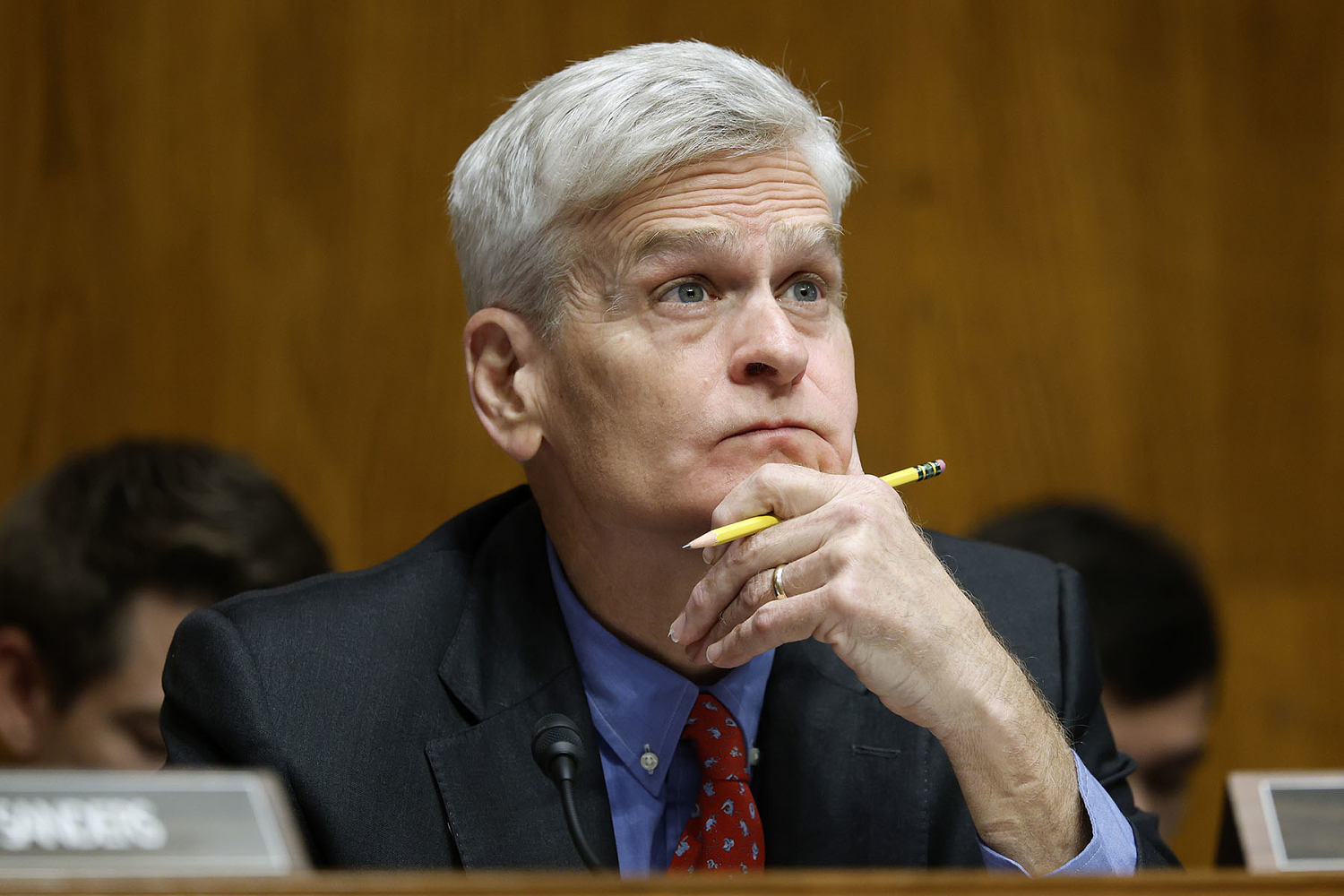
Incumbent Republican Senator Bill Cassidy didn't just lose his primary on Saturday night. He was completely locked out of the upcoming runoff, coming in a distant third place with a meager 24.4% of the vote. For a two-term incumbent who poured millions into his reelection bid, it's a historic and brutal defeat.
Instead of Cassidy, the deep-red state is advancing Representative Julia Letlow, who secured 45.2% of the vote, and state Treasurer John Fleming, who grabbed 28.3%. Because neither cleared the 50% threshold required by Louisiana law, Letlow and Fleming will face off in a high-stakes runoff election on June 27.
If you're wondering how an established, well-funded committee chairman gets thoroughly rejected by his own party, the answer isn't complicated. It comes down to a single vote cast five years ago, a dramatic overhaul of state election laws, and a relentless thirst for political retribution.
The Long Memory of the MAGA Base
Let's look at the numbers because they tell a story of a base that simply refuses to forgive. In 2021, Cassidy was one of seven Republican senators who voted to convict Donald Trump during his second impeachment trial following the January 6 Capitol riot.
At the time, Cassidy bet that the political temperature would cool by 2026. He figured voters would move on, or at least respect his independence. He bet wrong.
Of those seven Republican senators, most chose retirement over facing the wrath of primary voters. Cassidy chose to fight. With his defeat, only two of those seven remain in the upper chamber: Lisa Murkowski of Alaska, who survived a 2022 challenge thanks to Alaska's ranked-choice voting system, and Susan Collins of Maine.
Trump made his intentions clear early on. He personally pushed Letlow into the race back in January and handed her a prized endorsement. On Saturday night, Trump didn't hide his satisfaction, posting on social media that Cassidy's "disloyalty to the man who got him elected is now a part of legend" and celebrating that his political career is over.
Letlow leaned heavily into this narrative on the campaign trail, framing Cassidy's impeachment vote as a direct betrayal of the people who sent him to Washington. During her victory speech, flanked by her two children, she thanked Trump and noted that Louisiana took Cassidy's vote as a sign that he had turned his back on them.
How the Rules Were Reengineered to Kill an Incumbency
While the narrative centers on Trump, the actual mechanics of Cassidy's downfall rely on a quiet, structural engineering project executed by state Republicans.
For decades, Louisiana utilized an open "jungle primary" system. In that old setup, all candidates from all parties ran on the same ballot. If no one cleared 50%, the top two advanced to the general election. This system was Cassidy's ultimate safety net. It allowed him to build a coalition of traditional Republicans, political independents, and moderate Democrats who appreciated his pragmatic approach to governance.
But last year, Louisiana Governor Jeff Landry, a staunch Trump ally, spearheaded a massive overhaul of the state's election apparatus. The state legislature eliminated the jungle primary for congressional races, replacing it with a closed, partisan primary system.
The strategy was deliberate, and it worked precisely as intended.
By locking out Democrats and limiting the primary strictly to registered Republicans and unaffiliated voters, the state party stripped Cassidy of his moderate lifeline. He was forced to appeal exclusively to a primary electorate that had already censured him years prior.
Cassidy acknowledged the confusion caused by the new system on the eve of the election, noting that his office was flooded with calls from bewildered voters who claimed they couldn't figure out how to cast a ballot for him under the new rules.
High Spending and Low Yields
What makes this loss particularly devastating for Cassidy is the sheer volume of resources his campaign burned through. Cassidy and his allied political action committees dropped the lion's share of a massive $35 million collective spending pool in this race.
His strategy relied on carpet-bombing the airwaves with television ads painting Letlow as secretly liberal, pointing to her past statements regarding diversity, equity, and inclusion initiatives during her pre-political career as a university administrator.
He also attempted a delicate balancing act. As the chairman of the Senate Health, Education, Labor and Pensions Committee, Cassidy tried to remind voters of his tangible wins for the state. He touted his work protecting Louisiana's critical oil and gas industries. He pointed to four separate bills he authored or negotiated that Trump signed into law. He even highlighted his work ensuring that a federal tax exemption on tips applied directly to local barbers.
He even tried to placate the MAGA movement by casting a crucial vote in committee to advance Robert F. Kennedy Jr.'s nomination for health secretary, despite Cassidy's own background as a physician and supporter of traditional immunization programs.
None of it mattered. The voters didn't want a pragmatist who worked with the administration; they wanted absolute alignment.
What Happens in the June Runoff
The race now shifts to a traditional conservative heavyweight bout between Letlow and Fleming.
Letlow enters the June 27 runoff as the distinct frontrunner. She carries the formal backing of both Trump and Governor Landry. Her political narrative is deeply resonant in Louisiana. She first won her seat in the House of Representatives during a 2021 special election after her husband, Luke Letlow, tragically died of COVID-19 complications just days before he was scheduled to be sworn into Congress. Since then, she's built a solid conservative profile, championing the "Parents Bill of Rights Act" and securing a seat on the House Appropriations Committee.
But Fleming isn't a political novice. He's the current state treasurer, a former congressman, and served as a deputy chief of staff in the Trump administration. Fleming effectively split the anti-Cassidy vote on Saturday, running to Letlow's right on several fiscal issues.
Because Louisiana is a reliably red state, whoever wins this June runoff will be the overwhelming favorite to win the general election in November. The state hasn't sent a Democrat to the U.S. Senate since 2008.
The Reality for Subversive Republicans
If you are a Republican politician eyeing a break from the party line on high-profile issues, Cassidy's defeat offers a stark, unforgiving lesson.
Local institutional backing, policy achievements, and a multi-million-dollar campaign war chest cannot save you from a base that prioritizes loyalty above all else. Cassidy's campaign tried to frame this election around local results and economic delivery. The electorate insisted it was about national fealty.
Cassidy kept his head up during his concession speech, explicitly contrasting his response to the loss with Trump's historical rhetoric. He told his supporters that when you participate in democracy, you don't always get the outcome you want, but you don't pout, whine, or claim the election was stolen. He added a sharp warning about leaders who use the levers of power to control others rather than serve.
It was a classic, defiant establishment speech. But it was delivered by a man who no longer has a seat at the table.


_Biopsy.png?branch=uat_release_3)
