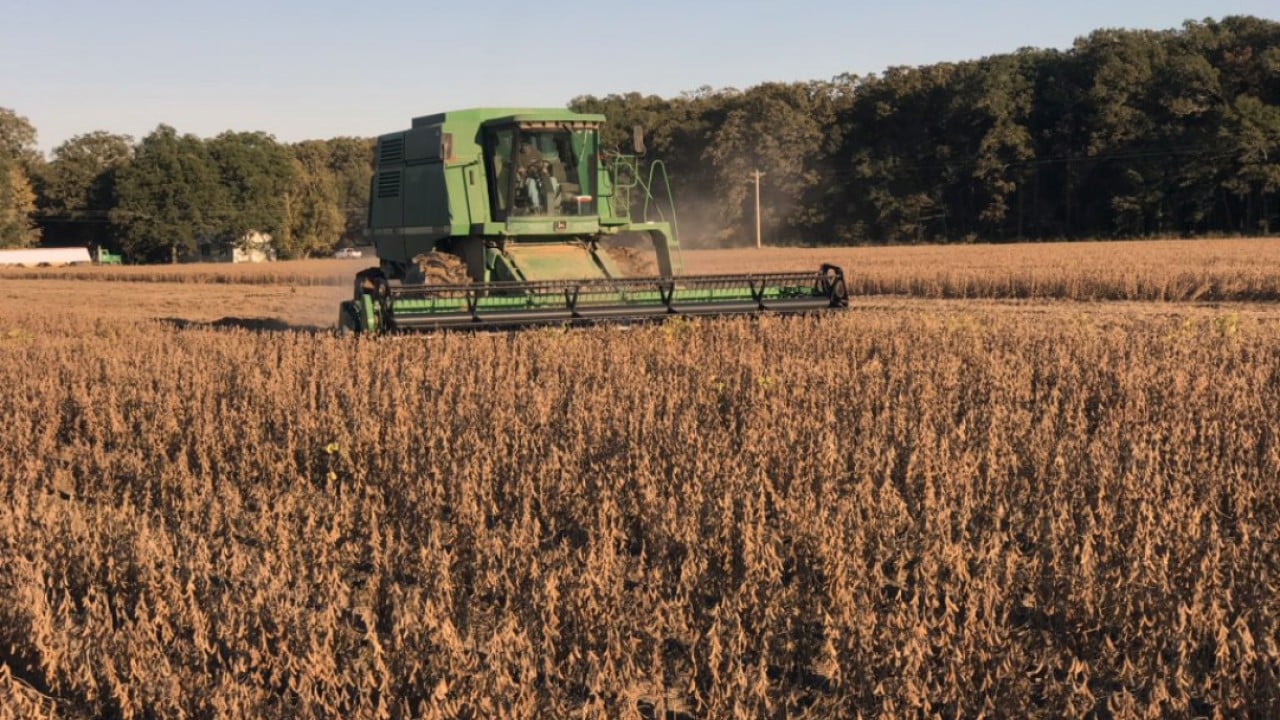
The soil in eastern Nebraska does not care about geopolitics. It cares about rain, nitrogen, and the quiet rhythm of a John Deere turning at the fence line.
For months, the men and women who wake before dawn to tend that soil have carried a specific, gnawing worry in their chests. They remember the trade wars. They remember silos choked with unsold corn, grain prices plummeting like dropped stones, and elevators turning away trucks because there simply was no place left to put the harvest. When two superpowers lock horns across oceans, the shockwaves always hit the roots first.
Then came the quiet numbers from Washington.
Trade officials let it slip that Beijing is back. Not with a whisper, but with massive, ledger-balancing orders. Cargo ships are lining up at Pacific terminals. Grain is moving. The targets agreed upon months ago are actually being met, right on schedule, just weeks before a high-stakes presidential summit in the capital.
History tells us that diplomacy is rarely born of pure goodwill. It is born of mutual necessity.
To understand why a few lines on a bureaucratic spreadsheet matter so intensely to a farmer in Iowa or a dockworker in Seattle, you have to look past the flashing cable news banners. You have to look at the math of survival. Agriculture is a game of thin margins and heavy upfront debt. A farmer does not buy seed in April with money they have; they buy it with money they hope to earn in November. When the largest buyer on earth steps away from the trading desk, the entire financial ecosystem shudders.
For the past couple of years, the tension had thickened the air in rural cooperatives across the Midwest. Talk over morning coffee at local diners drifted inevitably toward export quotas and port congestion. People whispered about the shifting alliances of global trade, watching Brazil step in to fill the vacuum with its own sprawling harvests. Every ton of soybeans not shipped from an American port was a vote of confidence lost to a competitor thousands of miles south.
So when the assessment dropped stating that China is officially on track to fulfill its massive agricultural purchasing commitments, the collective exhale could practically be felt from Omaha to Beijing.
Let us be entirely clear about what is happening here. This is not a sudden outbreak of international affection. It is a cold, calculated alignment of interests. China needs calories to feed a colossal domestic market and a recovering livestock sector. America needs buyers who can move volume on a scale that keeps the domestic agricultural machine from seizing up.
Consider what happens next: a delegation arrives, hands are shaken beneath the neoclassical stone pillars of Washington, and photographers capture the forced smiles of diplomats. But the real story is written in the holds of bulk carriers slipping past the mouth of the Columbia River, heavy with millions of bushels of golden grain.
There is an art to these negotiations. They are conducted in windowless conference rooms by negotiators drinking lukewarm coffee, trading concessions on everything from semiconductor chips to sanitary phytosanitary rules for pork exports. Every clause is a barricade. Every signature is a temporary truce.
Yet, beneath the heavy machinery of statecraft, human vulnerability remains the true currency.
Imagine a grain elevator operator standing atop a catwalk thirty feet above a roaring mountain of yellow corn. The dust catches the morning light like a golden fog. Below him, a line of semi-trucks stretches half a mile down the county road, drivers wiping sleep from their eyes, waiting to dump their loads. That operator does not care about the geopolitical theater of a Washington summit. He cares about whether the trains keep running, whether the export terminals keep accepting, and whether the numbers on his daily manifest add up to stability.
The announcement that trade targets are being met translates directly into that operator's peace of mind. It means the trucks will keep coming tomorrow. It means the credit lines will hold.
Critics will rightly point out that reliance on a single massive trading partner is a dangerous game. Economic gravity dictates that diversification is the only true shield against volatility. When your largest customer holds the power to alter domestic markets with a single policy shift, you are walking a tightrope over a canyon. Diversification efforts are underway, slowly, painfully, in emerging markets across Southeast Asia and Africa.
However, long-term pivots cannot erase short-term realities. Right now, today, the American farm belt needs volume. And China has the appetite.
As the summit approaches, the noise in the capital will reach a fever pitch. Pundits will dissect every syllable uttered during the joint press conferences. Analysts will scour the communique for hidden meanings, looking for signs of strain or breakthroughs on intellectual property, security, and currency exchange rates.
Let them talk.
Back in the fields, the combine engines are humming through the late afternoon heat, kicking up chaff that drifts across the horizon like smoke. The harvest waits for no politician. It must be reaped, stored, and shipped. For the moment, at least, the bridge across the Pacific is holding weight.
The ships are loaded. The ledgers balance. And the soil goes on demanding tomorrow what it demanded today.