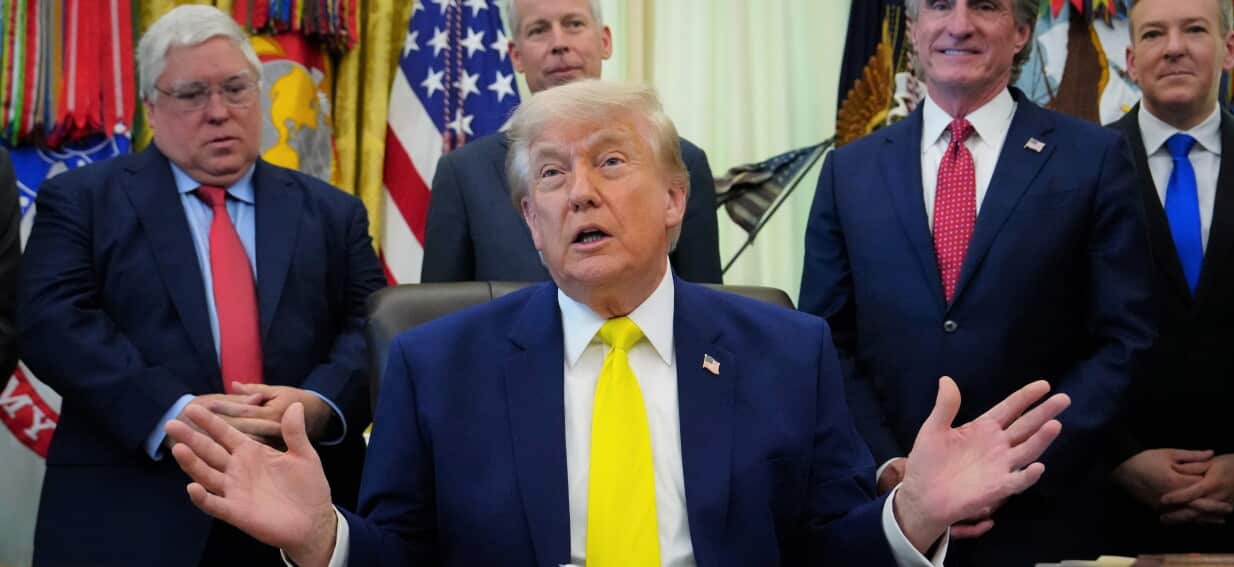
The notification pings at 2:00 AM. For millions of people clinging to the edges of the modern economy, that digital chime is not an annoyance. It is a lifeline. They stare at their screens, thumbs hovering over Twitter—now X—waiting for a wealthy stranger to pay their rent, buy their groceries, or settle their medical debt. This is the world of Bill Pulte, the self-proclaimed inventor of Twitter Philanthropy. To his millions of followers, he is a digital savior with a checkbook. To the corporate world, he is the heir to a housing empire.
But power in America rarely stays confined to one arena.
When Donald Trump announced that Pulte would step into a temporary intelligence role specifically tasked with investigating "rigged elections," the digital cash giveaways suddenly collided with the highest stakes of national security. It was a collision of two distinct American phenomena: the gamification of charity and the deep, pervasive anxiety over democratic institutions. This is not just a story about a political appointment. It is a glimpse into how modern power is manufactured, wielded, and weaponized in an era where attention is the ultimate currency.
The Architecture of Trust
To understand how a Twitter philanthropist ends up with a security clearance, you have to understand the modern mechanics of trust. Trust used to be built through institutions. You trusted a bank because of its stone pillars. You trusted a journalist because of the masthead. Today, trust is built through direct, unmediated connection.
Imagine a gig worker sitting in a parked car between delivery shifts. The transmission is slipping. The bank account is in the single digits. This worker does not care about bureaucratic processes or institutional white papers. They see Bill Pulte post a video offering $1,000 to a random follower who retweets him. When that money hits a Venmo account, a profound, fiercely loyal bond is forged. It is an immediate, visceral proof of concept.
Pulte built an army of believers not through policy proposals, but through direct action. His grandfather founded PulteGroup, one of the largest homebuilding companies in the United States. Bill Pulte used that legacy, and his own capital, to buy something far more valuable than real estate: absolute digital devotion.
When a leader decides to challenge the integrity of an election system, they cannot rely solely on traditional lawyers or career bureaucrats. They need investigators who already command the faith of the crowd. They need people who understand how to capture a screen, trend an algorithm, and validate the grievances of a skeptical public.
The Machinery of the Temporary Role
The assignment sounds like something out of a political thriller, but the reality of Washington appointments is often a dance of titles and legal loopholes. A "temporary intelligence role" is a specific creature of executive power. It bypasses the grueling, month-long congressional confirmation processes that stall permanent directors. It allows for swift movement.
But what does it actually mean to investigate an election from inside an intelligence apparatus?
National intelligence is traditionally focused outward. It tracks foreign adversaries, monitors cyber threats from hostile nations, and analyzes global signals. Turning that lens inward, even temporarily, changes the nature of the machinery. Critics immediately raised alarms, pointing out that election administration is historically a decentralized, state-level responsibility managed by local officials, not federal intelligence officers.
The appointment represents a fundamental shift in strategy. By placing a high-profile, media-savvy figure into the intelligence fold, the narrative moves from courtroom battles to the court of public opinion. The goal is not merely to find data points in a spreadsheet. The goal is to produce a narrative that resonates with a public that already feels left behind by the establishment.
The Anatomy of Skepticism
The skepticism directed at our electoral systems does not exist in a vacuum. It grows in the same soil that makes digital philanthropy necessary. When people feel that the economy is rigged against them, that the cost of living is an insurmountable wall, and that institutions no longer see them, it becomes entirely logical to believe that the ballot box is rigged too.
Consider the sheer complexity of a modern election. It involves proprietary voting machine software, chain-of-custody logs for paper ballots, signature verification algorithms, and decentralized volunteer networks. It is a massive, sprawling ecosystem. For the average citizen, it is completely opaque.
When something is opaque, human nature fills the darkness with its worst fears.
Pulte’s entry into this space changes the language of the debate. He does not speak in the dry, legalistic prose of a constitutional lawyer. He speaks in the urgent, punchy vernacular of the internet. His followers are conditioned to expect quick results and dramatic reveals. They expect the digital equivalent of a cash drop—a sudden, definitive proof that validates their suspicions.
The danger lies in the mismatch between internet velocity and the slow, grinding gears of actual investigation. True intelligence work is tedious. It is a mountain of negative results, a cross-referencing of dull databases, and a commitment to nuance. The internet, however, hates nuance. The internet demands a villain and a hero.
The High Stakes of the Digital Stage
This appointment is a symptom of a much larger transformation in American civic life. The line between entertainment, charity, and governance has not just been blurred; it has been completely erased.
We now watch political developments through the same interface where we watch cat videos, argue with strangers, and beg billionaires for rent money. The environment itself shapes how we perceive the truth. Information is judged not by its institutional verification, but by its engagement metrics. A shocking allegation with a million views carries more weight in the public consciousness than a three-hundred-page audit that clears a county of wrongdoing.
By bringing a titan of social media into the intelligence realm, the administration taps into a ready-made distribution network. Every update, every hint of a discovery, and every bureaucratic hurdle faced by the new investigator can be broadcast directly to millions of screens instantly. It turns the investigation into a spectator sport.
But democracy is not a sport. It is a fragile agreement between disparate groups of people who agree to abide by a set of rules, even when they lose. When that agreement is subjected to the incentives of the attention economy, the foundations begin to crack.
The tension here is palpable. On one side are the institutionalists, warning that using intelligence roles for political storytelling damages the credibility of our national security agencies. On the other side are the populist forces, arguing that the institutions are already corrupt and require an outsider with a massive public spotlight to force transparency.
The Final Shift
The sun comes up on another day of digital noise. Somewhere, a mother opens her phone to see if her plea for diaper money was answered by a wealthy account. Elsewhere, a poll worker prepares a high school gymnasium for a local vote, checking the locks on the ballot boxes and verifying the voter registries.
These two realities are now permanently linked.
The story of Bill Pulte moving from digital philanthropy to election intelligence is not just a quirky news cycle or a temporary political maneuver. It is an omen. It signals a future where authority is derived from the crowd, where national security structures can be rapidly repurposed for narrative warfare, and where the ultimate arbiter of truth is whoever holds the microphone loudest.
The screens will keep glowing. The pings will keep sounding. And the crowd will keep waiting, watching to see what the billionaire will give them next—whether it is a thousand dollars in cash, or a new reason to doubt the world around them.