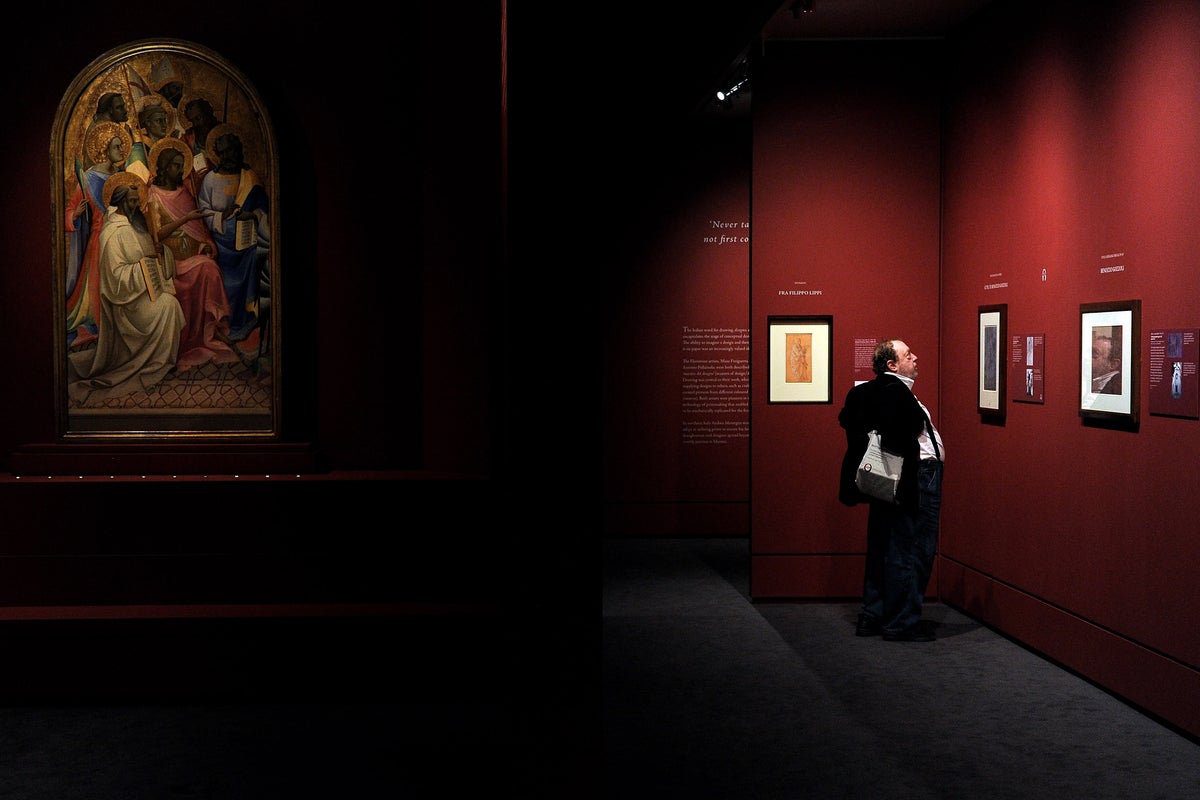
The heirs to the Bic pen empire are currently locked in a legal battle that feels more like a high-stakes thriller than a standard inheritance dispute. It isn't about office supplies or disposable razors. Instead, it involves a 500-year-old painting, a trusted family chauffeur, and allegations of a massive art heist that went unnoticed for years. When you have as much money as the Bich family, things get complicated.
The core of the issue is a Renaissance masterpiece titled The Holy Family. The painting is attributed to the workshop of Joos van Cleve, a Flemish painter active in the 16th century. For decades, it hung in the family’s private collection. Now, it’s at the center of a criminal complaint filed in Paris. The family claims their long-time driver didn't just provide transportation; they allege he systematically looted their private estate. If you enjoyed this post, you should read: this related article.
How a Masterpiece Vanished from a Billionaire Estate
Wealthy families often rely on a tight-knit circle of staff. Trust is the currency of these households. In this case, the chauffeur wasn't just a guy behind the wheel. He had access. He had keys. He had the kind of proximity that makes traditional security systems irrelevant. The Bich family—descendants of Marcel Bich, the man who made the ballpoint pen a global staple—allege that this trust was weaponized against them.
The theft wasn't a "smash and grab" job. It was quiet. The family discovered the painting was missing only recently, despite the theft potentially occurring years ago. This is a common pattern in high-value art crimes involving domestic staff. If a painting sits in a room that isn't used daily, or if the owners are traveling between multiple international properties, a gap of months or even years can pass before anyone notices a blank spot on the wall. For another angle on this story, refer to the recent coverage from Associated Press.
The chauffeur, now in his 60s, reportedly worked for the family for over twenty years. That’s two decades of learning the rhythms of the house. The heirs claim he didn't stop at the Van Cleve. They suspect a broader pattern of "disappearances" from their collection.
The Market for Stolen Renaissance Art
You might wonder how someone even sells a 500-year-old painting without getting caught immediately. It’s harder than it used to be, but the "grey market" for art still thrives. In the 2020s, the provenance of an artwork—its documented history of ownership—is everything. Without a clean paper trail, a piece like The Holy Family can't be sold at major auction houses like Sotheby’s or Christie’s.
However, shady private collectors exist. Some people want the prestige of owning a masterpiece and don't care if it was liberated from a billionaire’s hallway. If the chauffeur did take it, he likely faced a massive hurdle: turning a famous, recognizable oil painting into liquid cash.
The painting itself is a classic example of the Northern Renaissance style. Joos van Cleve was known for his technical precision and his ability to blend the Italian influence of Leonardo da Vinci with traditional Flemish realism. A work from his workshop isn't just a decoration; it's a historical document. Its value is estimated in the hundreds of thousands, if not millions, of dollars.
Why Billionaire Security Often Fails
This case highlights a massive vulnerability in the lives of the ultra-wealthy. You can have the best cameras in the world. You can have biometric locks. But if you give the "keys to the kingdom" to a staff member who has been with you for two decades, those tech layers become useless.
I’ve seen this happen in several high-profile estates. The "insider threat" is the hardest one to manage because it requires a level of suspicion that kills the comfort of a home. The Bich family heirs are now dealing with the fallout of that misplaced comfort. They aren't just mourning a lost asset; they're dealing with the violation of their private space.
Legal Hurdles and the Burden of Proof
Proving this in a French court won't be easy. The defense will likely lean on the lack of physical evidence if the painting hasn't been recovered yet. In France, the statute of limitations can also be a tricky beast for historical thefts. The heirs have to prove not just that the painting is gone, but that the chauffeur is the one who moved it.
They’re pushing for a full criminal investigation. They want the police to track the painting's movement through specialized art crime units. These units, like the French OCBC (Office Central de lutte contre le trafic des Biens Culturels), are the best in the world at sniffing out stolen heritage. They track sales records, talk to "fences," and monitor private sales across borders.
Steps for Protecting High-Value Private Collections
If you own anything of significant value, you shouldn't wait for a disappearance to take action. The Bich case is a wake-up call for collectors.
- Digital Inventory: Every single piece needs high-resolution photography and a documented "condition report." If it goes missing, you need to be able to give the police more than a vague description.
- Micro-chipping and DNA Tagging: Modern tech allows for synthetic DNA or microscopic chips to be applied to the frame or the back of a canvas. This doesn't stop the theft, but it makes the piece radioactive on the legal market.
- Rotation of Duties: It sounds harsh, but long-term staff shouldn't have indefinite, unsupervised access to high-value areas. Successful estates often use "dual-control" systems for high-security rooms.
- Insurance Audits: Most people don't realize their standard homeowners' policy won't cover a 16th-century painting. You need a specialized art floater that requires regular physical inspections by the insurer.
The Bich family is now playing a game of catch-up. They’re trying to recover a piece of history while dismantling the legacy of a man they thought was a loyal employee. It's a messy, public reminder that even a billion-dollar fortune can't buy absolute security.
Check your own walls. If you haven't looked closely at that "old family heirloom" in the guest wing lately, maybe now is the time to make sure it's still there. If it isn't, the trail is getting colder every second.