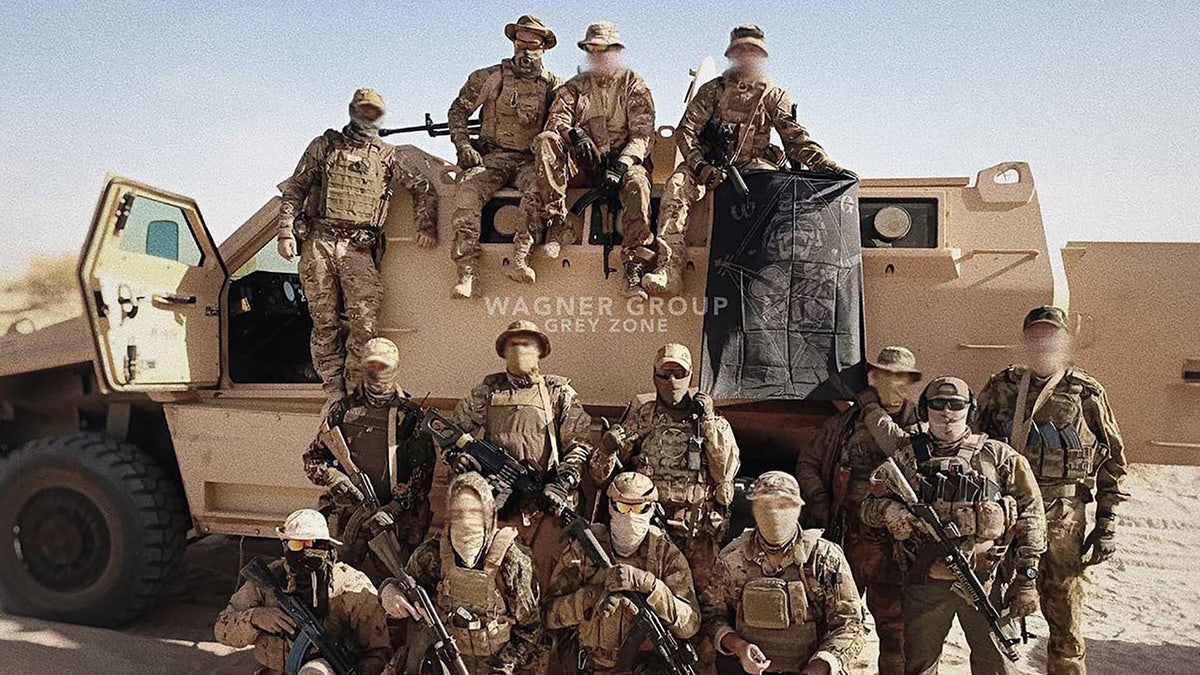
Slapping a "terrorist" label on a group like Wagner or its various successors feels good. It’s a clean, moral win for Western governments. It signals that we’ve had enough of the extrajudicial killings, the gold smuggling in Africa, and the brutal trench warfare in Ukraine. But if you think a legal designation alone stops the bleeding, you’re mistaken.
Most people assume that once the US State Department or the UK Home Office blacklists a paramilitary group, the money dries up and the guns stop firing. That’s a fantasy. Russian private military companies (PMCs) don’t operate like a standard business or even a typical rogue militia. They’re a feature of a state-sponsored shadow economy designed to bypass the very systems we use to track them.
The Shell Game of Russian PMCs
The biggest mistake we make is treating these groups as static entities. When the West designated the Wagner Group as a transnational criminal organization, the Kremlin didn't just pack up and go home. They rebranded. We saw the rise of the "Africa Corps" and groups like Redut or Convoy.
The structure is intentionally chaotic. One day, a unit is a "security consultancy" registered in a tax haven. The next, it’s a "geological survey team" protecting a gold mine in Mali. These groups use a sprawling web of shell companies to move equipment and cash. When you blacklist one name, three more pop up with different letterheads but the same commanders and the same Russian Ministry of Defense funding.
Sanctions work on entities that care about their reputation or their ability to trade on the New York Stock Exchange. Russian paramilitaries don't care. They deal in physical commodities—gold, diamonds, and oil. You can't freeze a gold bar sitting in a vault in Bamako by passing a law in Washington.
Why the Terrorist Label Often Misses the Mark
Calling these groups terrorists is legally complicated and often slows down the response. Once a group is designated, it becomes incredibly difficult for NGOs or humanitarian agencies to operate in the same regions. If a local village is forced to pay a "protection tax" to a blacklisted group to keep their water running, any international aid agency working with that village could suddenly find themselves accused of "material support" for terrorism.
It creates a vacuum. If Western agencies pull out because of legal fears, the paramilitaries tighten their grip. They become the only game in town for security and basic infrastructure.
We also have to look at the "deniability" factor. The Kremlin loves these designations because it allows them to distance themselves from the atrocities. If the world screams about Wagner, Moscow says, "That’s a private company, nothing to do with us." By focusing purely on the paramilitary brand, we sometimes let the state actors who sign the checks off the hook.
The Logistics of Shadow Power
To actually hurt these organizations, you have to go after the logistics. It's about the cargo planes. Most of these groups rely on a small fleet of aging Soviet-era transport aircraft to move men and materiel across borders. Many of these planes are serviced in countries that are technically Western allies or neutral parties.
- Tracking tail numbers is more effective than blacklisting a name.
- Targeting the middleman brokers in Dubai or Istanbul hits harder than a press release.
- Pressure on the "host" countries is the only way to see real change.
The Gold and Security Trap
In places like the Central African Republic (CAR) and Sudan, Russian paramilitaries offer a "regime survival package." They provide elite bodyguards for the president, disinformation campaigns to crush the opposition, and muscle to fight rebels. In exchange, they get mining concessions.
This is a closed loop. The gold is mined, flown to a refinery in a country with loose regulations, and converted into hard currency. This money never touches a Western bank. This is why blacklisting doesn't work on its own—it assumes the target needs our financial system to survive. They've built their own.
If we want to break this cycle, we have to offer an alternative. If a struggling government needs security, and the only people offering it are Russian mercenaries, they’ll take the deal every time. Telling them "those guys are bad" doesn't help when rebels are ten miles from the capital.
Moving Beyond Paper Prohibitions
Relying on blacklists is lazy statecraft. It’s the diplomatic equivalent of thoughts and prayers. If the goal is to actually dismantle these networks, the strategy needs to be more aggressive and less bureaucratic.
First, the intelligence community needs to prioritize "mapping the pivot." We know they’ll change names. We should be ready to designate the successor entities within hours, not months.
Second, we have to go after the "facilitators." The lawyers, the accountants, and the logistics firms that aren't Russian but make the Russian machine run. These people have assets in London, Paris, and New York. They have something to lose.
Third, we need to treat the resource theft as a blood diamond issue. If gold from Wagner-controlled mines is hitting the global market, the refineries and jewelry brands that buy it need to be held publicly and legally accountable. Make the product toxic, not just the name of the company.
Stop waiting for the next legislative session to "update" a list. Start tracking the shipments, the planes, and the gold. That’s how you actually stop a paramilitary force. Anything else is just noise.
You can start by looking into the "Conflict Observatory" or similar tracking projects that use satellite imagery to monitor these sites in real-time. Don't just read the headlines about new sanctions—look at the flight paths of IL-76 transport planes leaving Latakia or Moscow. That's where the real story is.