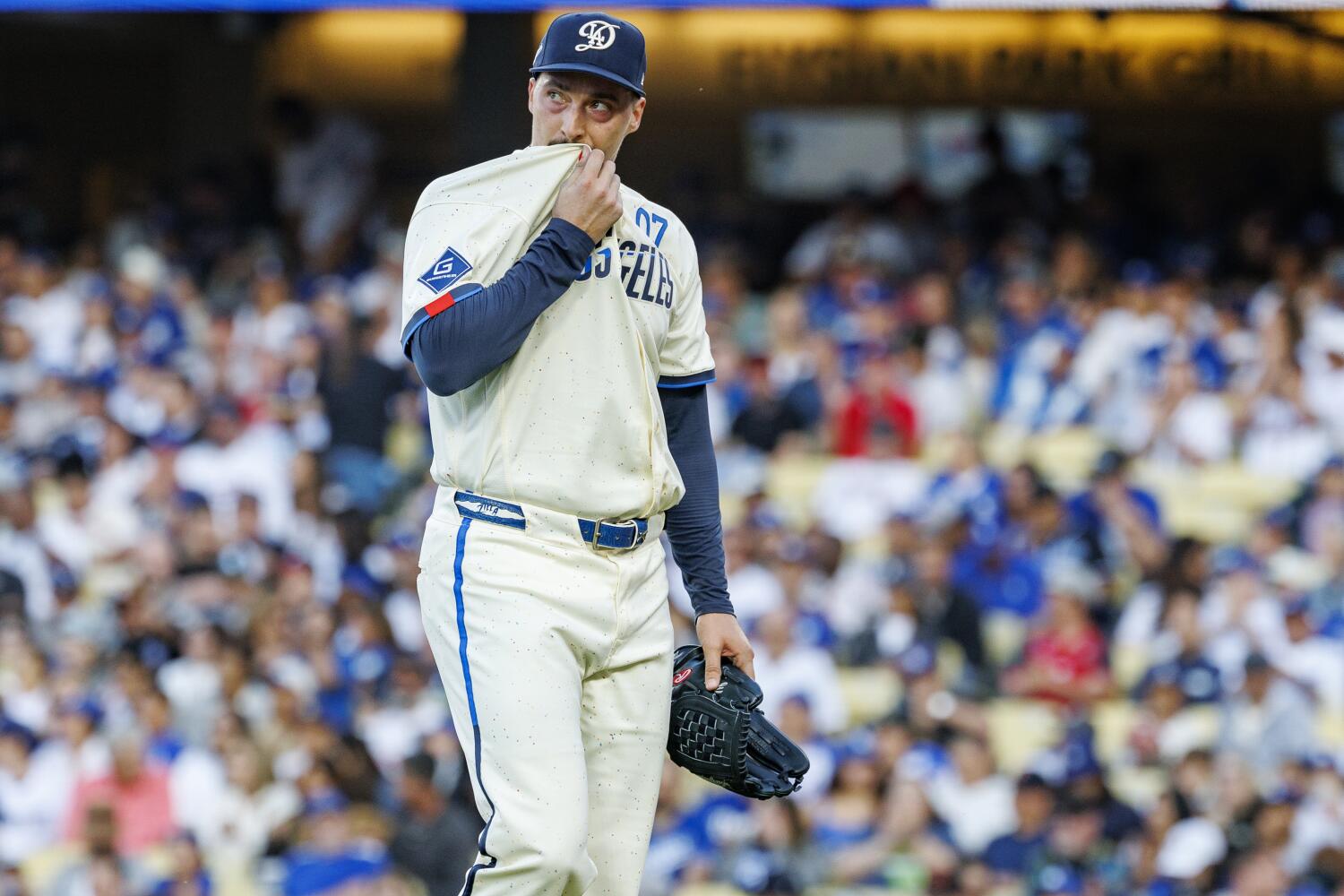
The box score is a liar. It tells a comfortable story for lazy analysts: Blake Snell threw a gem, the high-priced Los Angeles Dodgers offense went cold, and the Atlanta Braves walked away with a win they didn't earn. The narrative machine is already churning out the "no run support" tropes, painting Snell as the tragic hero of a dysfunctional $300 million super-team.
Stop buying the hype.
The idea that Snell was "robbed" of a win by a stagnant lineup isn't just wrong; it’s an indictment of how we value modern pitching. If you want to understand why the Dodgers lost, don't look at the zeroes on the scoreboard next to Mookie Betts or Shohei Ohtani. Look at the pitch count. Look at the nibbling. Look at the fundamental refusal to own the strike zone that has defined Snell's career and poisoned the Dodgers' defensive rhythm.
The Myth of the Hard Luck Loss
In baseball circles, "run support" is often treated like a charitable donation—something the pitcher is entitled to regardless of how he manages the game. But pitching is not an isolated event. It is a symbiotic relationship with the eight guys standing behind you.
When a pitcher like Snell spends five innings "painting corners" that aren't there, he isn't just being precise. He’s being timid. Every 3-2 count—and Snell lives in 3-2 counts—is a tax on the defense. It’s a tax on the hitters who have to spend three hours in the field watching their pitcher struggle to find the zone before they're expected to walk into the box and generate instant velocity.
The "unlucky" Snell narrative ignores the Internal Clock Theory. Ask any Gold Glove infielder: they want a pitcher who works fast and attacks. When Snell is on the mound, the game grinds to a halt. The Dodgers' offense didn't "fail" him; they were lulled into a coma by a style of pitching that prioritizes individual strikeout metrics over team momentum.
Efficiency is a Choice Not a Luxury
We’ve been conditioned to think that high-strikeout totals excuse low-inning counts. They don't.
Snell is the king of the "quality start" that feels like a marathon. He exits in the sixth with 105 pitches, 9 strikeouts, and a 1-0 lead, and the media treats it like a masterpiece. It’s actually a failure of resource management. By burning through his pitch count so early, Snell forces a manager to lean on a bullpen that is already overworked.
The Real Cost of the Snell Experience
- Defensive Fatigue: When a pitcher averages nearly 20 pitches per inning, the defense loses its edge. Static players make more errors.
- Bullpen Erosion: Even in a "good" Snell start, the middle relief is guaranteed to work 3-4 innings. Over a 162-game season, this "ace" performance actually weakens the pitching staff as a whole.
- Rhythm Disruption: Great offenses thrive on pace. Snell’s deliberate, often agonizingly slow pace between pitches kills the kinetic energy of the dugout.
Imagine a scenario where a CEO produces a brilliant product but takes three times as long as the market allows and burns out the entire marketing department in the process. You wouldn't call that "no help from the team." You’d call that a bottleneck. Blake Snell is the Dodgers' primary bottleneck.
The Bravery of the Braves vs. the Timidity of the Dodgers
The Atlanta Braves didn't beat the Dodgers because they had better "clutch" hitting. They beat them because they realized Snell’s greatest weakness is his own pursuit of perfection. The Braves took pitches, worked deep counts, and waited for the inevitable moment when Snell’s pitch count hit the red zone.
Meanwhile, the Dodgers' hitters are being roasted for "failing" to produce. But look at the data. When an offense is forced to sit in the dugout for 45 minutes while their pitcher works out of self-imposed jams, their timing vanishes. The "no help" argument treats the offense and defense as two different games. They aren't.
The Analytics Trap
The modern obsession with $FIP$ (Fielder Independent Pitching) has ruined our ability to judge a game. $FIP$ would tell you Snell was elite in this loss. It calculates his value based on what he "should" have controlled—strikeouts, walks, and home runs.
$$FIP = \frac{(13 \times HR) + (3 \times (BB + HBP)) - (2 \times K)}{IP} + Constant$$
But $FIP$ doesn't account for the human element. It doesn't account for the fact that a pitcher who walks the lead-off man in the fourth inning drains the soul out of his teammates. It doesn't show the frustration of an outfielder who hasn't seen a ball in play for twenty minutes and then is expected to make a diving catch on a 98-mph liner.
Snell’s style is built for the era of "Individualized Performance Tracking," not for winning pennants. He is the ultimate "I got mine" pitcher. He gets his strikeouts. He keeps his ERA respectable. And he leaves the stadium with a loss while his teammates take the heat for not scoring five runs against a Braves staff that actually knows how to get an out in three pitches or less.
Why We Blame the Wrong People
We blame the offense because it’s easy. You can see a strikeout. You can see a strand-of-runners. It’s much harder to see the subtle ways a pitcher’s lack of efficiency sabotages a team’s overall performance.
The Dodgers don't need Snell to be "unhittable." They need him to be "strikable."
If you're a Dodgers fan, stop looking at the box score to find the villain. Stop asking why Ohtani didn't hit a 450-foot bomb in the eighth. Ask why your "ace" can't get through seven innings without needing a nap and a fresh arm to bail him out.
The Braves didn't win because the Dodgers' offense failed. The Braves won because Blake Snell played exactly the kind of game that allows an opponent to hang around until the bullpen doors open.
Stop calling it a lack of support. Start calling it a lack of leadership on the mound.
Throw the damn ball over the plate or get out of the way for someone who will.