The $4 Threat Headline is a Distraction
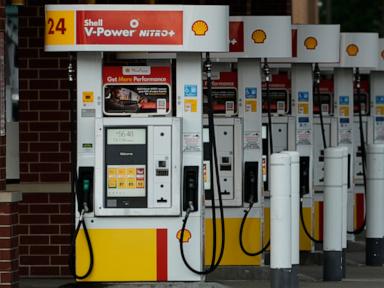
Every single time a missile flies in the Middle East, financial newsrooms dust off the exact same template. They splash headlines about geopolitical dread, plaster images of gas station signs flashing $4.00 a gallon, and tell you to brace your wallet for impact.
It’s lazy. It’s predictable. And mathematically, it’s mostly wrong.
The standard media narrative wants you to believe that military conflict creates a straight line to empty pockets at the pump. Iran launches an attack, oil spikes, refiners panic, and suddenly you’re paying $4 a gallon. It creates a simple, digestible villain. But if you’re actually trading commodities, managing fleet logistics, or running a macro fund, you know that the "war premium" is often a transient blip that masks the real structural forces driving fuel prices.
Stop blaming the Middle East for your gas bill. The real drivers are sitting right in your backyard, wrapped in regulatory friction, refinery bottlenecks, and Wall Street’s shift in capital allocation.
The "Middle East War Premium" Myth
Let’s dismantle the underlying premise. The knee-jerk reaction of mainstream market commentators is to treat the oil market like a local farmer's market. "Supply goes down, price goes up."
Except crude oil isn’t a tomato. It’s a globalized, heavily financialized asset traded on paper long before it touches a pipeline.
When conflict erupts in the Strait of Hormuz, paper traders buy futures to hedge downside risk. That pushes crude up for 48 to 72 hours. Then, reality sets in.
Unless physical production capacity is permanently vaporized, global oil flows reroute. Russian crude finds a way to India. Iranian barrels bypass sanctions via shadow fleets. Saudi Arabia adjusts output taps. The physical deficit the media panics about rarely materializes to the degree priced into the initial news cycle.
I’ve spent years analyzing commodity cycles and watching corporate CFOs burn millions hedging against geopolitical ghost stories. They buy high on the initial cable news panic, only to watch crude settle right back down as supply chains adjust.
If you are tracking gas prices by watching military movements, you’re looking through the wrong end of the telescope.
What Actually Drives the Price at the Pump
If conflict isn’t keeping prices at $4, what is?
It comes down to three domestic variables that mainstream media ignores because they don't generate sensational headlines.
+-----------------------------------------------------------------------+
|                       THE REAL DRIVERS OF $4 GAS                      |
+------------------------------------+----------------------------------+
| Refining Capacity Cracks           | Crack spreads expand as aging    |
|                                    | infrastructure struggles to deal |
|                                    | with heavy vs. light crude.      |
+------------------------------------+----------------------------------+
| Capital Discipline Over Drilling   | Wall Street demands stock        |
|                                    | buybacks instead of volume       |
|                                    | expansion from E&P firms.        |
+------------------------------------+----------------------------------+
| Regional Regulatory Patchworks     | Summer blends and localized      |
|                                    | mandates fragment distribution.  |
+------------------------------------+----------------------------------+
1. The Refining Bottleneck
Crude oil in a well is useless to your engine. You don't burn crude; you burn refined products. The real squeeze rarely happens at the oil well—it happens at the refinery.
The United States hasn't built a massive, new, greenfield refinery with major capacity since the 1970s. Existing refineries operate at near-peak capacity. When an aging refinery in Louisiana or California goes down for unscheduled maintenance, the "crack spread"—the margin between crude oil and the refined products made from it—blows out.
You can have a global glut of $60 crude oil, but if refining capacity is choked, retail gas prices will still soar toward $4. The market isn't short on oil. It's short on the industrial capacity to process it.
2. Wall Street’s War Against Production Growth
For decades, American exploration and production (E&P) companies followed a simple rule: when prices rise, drill more wells.
That playbook is dead.
Investors got burned during the shale busts of the last decade. Today, institutional capital demands strict discipline. Shareholders don't want energy executives burning cash to flood the market with cheap oil; they want higher dividends and aggressive share buyback programs.
Energy CEOs who try to drill their way out of a price spike get punished by the market. They are intentionally keeping production growth measured. The lack of cheap, domestic supply surges isn't due to foreign wars or executive incompetence—it is a calculated, profit-maximizing strategy demanded by Wall Street.
3. Summer Blends and Distribution Friction
The jump to $4 often coincides with seasonal shifts. Federal mandates require refiners to switch to complex "summer blend" gasoline formulas to reduce smog. These blends are more expensive to produce and require refineries to drain their inventories completely before switching over.
Add to that a fragmented distribution network where moving fuel from the Gulf Coast to the Midwest relies on constrained pipelines and a severe shortage of hazardous-materials truck drivers, and you have a recipe for localized price spikes that have zero connection to geopolitical conflict.
Dismantling the Public Myths
To understand fuel prices, you have to unlearn the soundbites fed to the public during every election cycle and news crisis.
Myth 1: "The President Controls Gas Prices"
No single political figure has a dial on their desk that raises or lowers the cost of fuel. Releasing oil from Strategic Petroleum Reserves offers temporary, psychological relief, but it does not fix long-term structural supply limits. Regulatory policies can create long-term tailwinds or headwinds, but day-to-day fluctuations at your local station are driven by regional supply dynamics and wholesale market pricing.
Myth 2: "Big Oil Artificially Sets Prices at the Pump"
Retail gas stations operate on razor-thin margins. Roughly 60% of what you pay per gallon goes straight to crude oil costs, around 20% to refining and processing, and the rest to taxes, distribution, and marketing. Most branded gas stations aren't even owned by major oil companies—they are independent operators who make their real profit on coffee and snacks, not on the fuel itself.
How Smart Operators Handle the Volatility
Panic is expensive. If you run an enterprise dependent on fuel, or if you're trying to insulate your personal finances, reacting to foreign news reports is a losing game.
Here is how to navigate the market correctly:
- Ignore the Middle East Headlines: Unless physical infrastructure like refineries, key deep-water ports, or primary pipelines are demonstrably destroyed, ignore the panic. Geopolitical spikes are statistically short-lived.
- Track the Crack Spread: If you want to predict gas prices, watch the price difference between WTI Crude and RBOB Gasoline futures. That gap tells you the real story of supply constraints long before the local news catches on.
- Stop Hedging on Fear: Buying fuel hedges during a conflict-driven price spike is financial suicide. You are paying a peak volatility premium. Hedging should be executed during calm, low-volatility periods when nobody is talking about energy markets.
The Flaw in the Contrarian Bet
It would be dishonest to act as if geopolitical risk carries zero weight. It does—under one specific condition.
If a conflict scales to the point of long-term physical destruction of core export facilities, or permanently closes a major transit choke point for months rather than days, supply shocks become real.
Imagine a scenario where key processing facilities along the Persian Gulf sustain severe, irreparable structural damage that takes years to rebuild. In that specific, extreme outcome, global supply drops instantly, and no amount of market rerouting or refining efficiency can absorb the shock.
However, trading, planning, or living your life as if that low-probability tail-risk is the baseline for every headline is a strategy for losing money.
The Uncomfortable Truth
Gas prices don't hit $4 a gallon because foreign nations launch attacks.
They hit $4 because our refining infrastructure is aging, domestic capital prioritizes investor payouts over overproduction, and regulatory frameworks fragment distribution.
The media sells you a foreign war story because it’s dramatic, cinematic, and easy to understand. The truth is far more boring—and far more expensive.
Next time you pull up to the pump and see $4.00 on the sign, don't look overseas. Look at the balance sheets of Wall Street firms and the aging infrastructure in your own backyard. That's where your money is actually going.