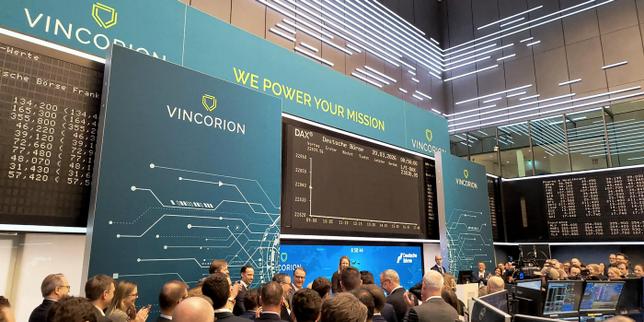
The moral barrier between private capital and the machinery of war has collapsed. For decades, defense stocks occupied a dusty corner of the exchange, often shunned by institutional funds under the banner of environmental, social, and governance (ESG) mandates. That period of hesitation is over. Driven by the protracted invasion of Ukraine and the expanding volatility in the Middle East, military spending has transformed from a political necessity into a primary engine of portfolio growth. This isn't just a temporary spike in share prices. It is a fundamental shift in how global markets value high-intensity conflict.
Investors are no longer betting on a quick resolution to global tensions. They are pricing in a decade of rearmament. The shift is visible in the order books of giants like Lockheed Martin, Rheinmetall, and BAE Systems, where backlogs now stretch into the 2030s. The math is simple and cold. When the world moves from a "peace dividend" era to one of active attrition, the demand for consumables—shells, missiles, and drones—becomes inelastic. Read more on a similar subject: this related article.
The End of the ESG Blockade
For years, the ESG movement acted as a soft ceiling for defense valuations. Major European banks and pension funds frequently blacklisted weapons manufacturers, categorizing them alongside tobacco and gambling. The logic was grounded in harm reduction. However, the optics changed the moment Russian tanks crossed the Ukrainian border. Suddenly, the narrative shifted from "weapons cause harm" to "weapons defend democracy."
This rhetorical pivot opened the floodgates for institutional money. We saw a quiet but rapid reclassification of defense spending as a "social good" in various policy circles. When a sovereign nation requires a missile defense system to keep its power grid online, the fund manager who provides the capital for that system can now claim they are fulfilling a humanitarian objective. It is a convenient marriage of ethics and profit that has allowed billions in sidelined capital to enter the sector without the stain of public backlash. Further journalism by Reuters Business delves into similar views on the subject.
The numbers reflect this migration. Stock prices for major European defense contractors have tripled in some cases since February 2022. This wasn't a speculative bubble. It was the market correcting for years of underinvestment.
The Logistics of Attrition
Modern warfare has returned to its industrial roots. The conflict in Ukraine revealed a terrifying reality for Western militaries. They are out of practice. The "just-in-time" supply chain model, which works beautifully for iPhones and Toyotas, is a disaster for a war of attrition.
In a high-intensity conflict, the rate of consumption for basic artillery rounds exceeds the total production capacity of the entire NATO alliance. This realization has turned the defense sector into a manufacturing play. Investors aren't just buying "tech." They are buying floor space, assembly lines, and raw material contracts.
The Shell Crisis and Profit Margins
Consider the 155mm artillery shell. It is a relatively low-tech piece of equipment compared to a stealth fighter. Yet, it is currently the most valuable commodity on the European continent. Companies that can scale production of these "dumb" munitions are seeing margins that would make a Silicon Valley startup blush.
The barrier to entry here is enormous. You cannot simply pivot a factory from making car parts to making explosives. The regulatory hurdles, the specialized chemistry, and the national security clearances create a moat that protects the incumbents. This lack of competition allows established players to dictate terms. Governments, desperate to replenish their own depleted stockpiles while simultaneously supplying a foreign front, have lost their bargaining power. They are paying premium prices for hardware that was sitting in warehouses two years ago.
The Drone Disruption and Venture Capital
While the "old guard" of defense contractors handles the heavy metal, a new wave of venture capital is flowing into autonomous systems. War is being digitized. The cheap, off-the-shelf drone has replaced the expensive sniper, and the market is scrambling to keep up.
This is where the industry analyst sees the most volatility. Companies like Anduril are challenging the traditional "cost-plus" contracting model used by the Pentagon. They are building products with their own money and selling them as finished goods, much like a software company. This shifts the risk from the taxpayer to the investor, but it also increases the potential reward. If a $500 drone can take out a $5 million tank, the ROI isn't just a financial metric. It is a proof of concept that changes the entire architecture of military budgets.
The Silicon Valley Pivot
Founders who once spent their time building photo-sharing apps are now focused on computer vision for loitering munitions. This "dual-use" technology is the holy grail for modern investors. If a piece of AI can sort packages in a warehouse, it can also identify a target on a battlefield. This allows tech firms to tap into defense budgets without alienating their civilian customer base. It is a hedge against a cooling tech market. When ad revenue drops, government contracts for "autonomous border security" remain steady.
The Middle East Escalation and Energy Defense
Conflict in the Middle East adds a layer of complexity to the defense trade. It isn't just about weapon sales. It is about the protection of trade routes and energy infrastructure. Every time a drone is launched at a container ship in the Red Sea, the valuation of naval defense contractors ticks upward.
The market treats the Middle East as a permanent theater of high-tech defense testing. It is where the latest electronic warfare suites and missile interceptors are proven in real-time. For a defense analyst, a successful interception by an Iron Dome battery or a Sea Viper missile is a marketing demonstration. It validates the technology and triggers orders from other nations looking to secure their own borders.
Investors are tracking these incidents with more precision than ever. They recognize that in a multipolar world, the "demand" for security is no longer localized. It is systemic. Japan, Poland, Germany, and South Korea are all engaged in massive, multi-year procurement programs. They are not buying for a specific war. They are buying for a world where the old rules of deterrence no longer apply.
The Fragility of the War Trade
It is dangerous to assume this upward trajectory is permanent. The defense sector is uniquely tied to political whims. A change in administration in Washington or a shift in public sentiment in Berlin can freeze a billion-dollar contract overnight.
There is also the "crowded trade" risk. So much capital has rushed into defense stocks over the last 24 months that many are trading at historical highs. The easy money has been made. To profit from here, an investor must be able to distinguish between companies that are merely benefiting from a temporary surge and those that are fundamentally expanding their capacity.
The Debt Trap
Many European nations are funding their rearmament through debt. This is sustainable while interest rates are manageable, but it creates a long-term fiscal strain. If a recession hits, the "guns vs. butter" debate will return with a vengeance. Defense contractors are acutely aware of this. They are pushing for long-term, multi-decade contracts that are difficult for future governments to cancel. They want to lock in the current fear before the reality of the bill sets in.
The Weaponization of the Supply Chain
Beyond the munitions and the platforms lies the most critical investment frontier: the supply chain itself. China’s dominance over rare earth minerals and certain electronic components is the "Achilles' heel" of Western defense. A smart analyst looks past the company that builds the missile and focuses on the company that mines the materials inside it.
We are seeing a move toward "friend-shoring." Defense companies are being pressured to move their supply chains out of adversarial territories. This is expensive. It requires building new refineries and processing plants in high-cost jurisdictions like the US or Australia. While this eats into short-term profits, it creates a much more resilient business model. In the "new war" economy, reliability is more valuable than efficiency.
The Moral Hazard of the Index Fund
The final piece of this reconstruction is the democratization of war profits. Through ETFs and index funds, the average retail investor is now a stakeholder in global conflict. Most "Total Market" or "Industrial" funds are heavily weighted toward defense.
This creates a strange psychological feedback loop. When news of a new conflict breaks, the market reaction is often a mix of geopolitical dread and financial optimism. The investor sees their portfolio rise as the world becomes less safe. This isn't a cynical take. It is a mechanical reality. The stock market is a giant machine designed to find value, and right now, the market sees immense value in the ability to project force.
The Permanence of the Shift
Governments have realized they cannot fight a 21st-century war with a 20th-century industrial base. The "invasion of Ukraine" was not a one-off event. It was a catalyst that exposed the hollowing out of Western manufacturing. The rebuilding of that base will take decades.
This is why the "war is a selling point" headline misses the deeper truth. War isn't just a selling point. It is the new foundation of the industrial economy. We have entered a cycle where the distinction between "defense" and "tech" or "defense" and "manufacturing" is disappearing.
The companies that will dominate the next decade are those that can bridge the gap between the digital and the physical. They are the ones building the AI that guides the shell, the satellite that spots the target, and the factory that produces both at scale. The moral debate is a luxury for those not currently looking at the order books. For the market, the signal is clear: the era of peace is a historical outlier, and the business of war is once again the world's most reliable growth sector.
Buy the manufacturers of the consumables. The platforms—the planes and the ships—get the headlines, but the shells and the missiles are what win the wars and fill the coffers.


