The Myth of the Careless Trucker
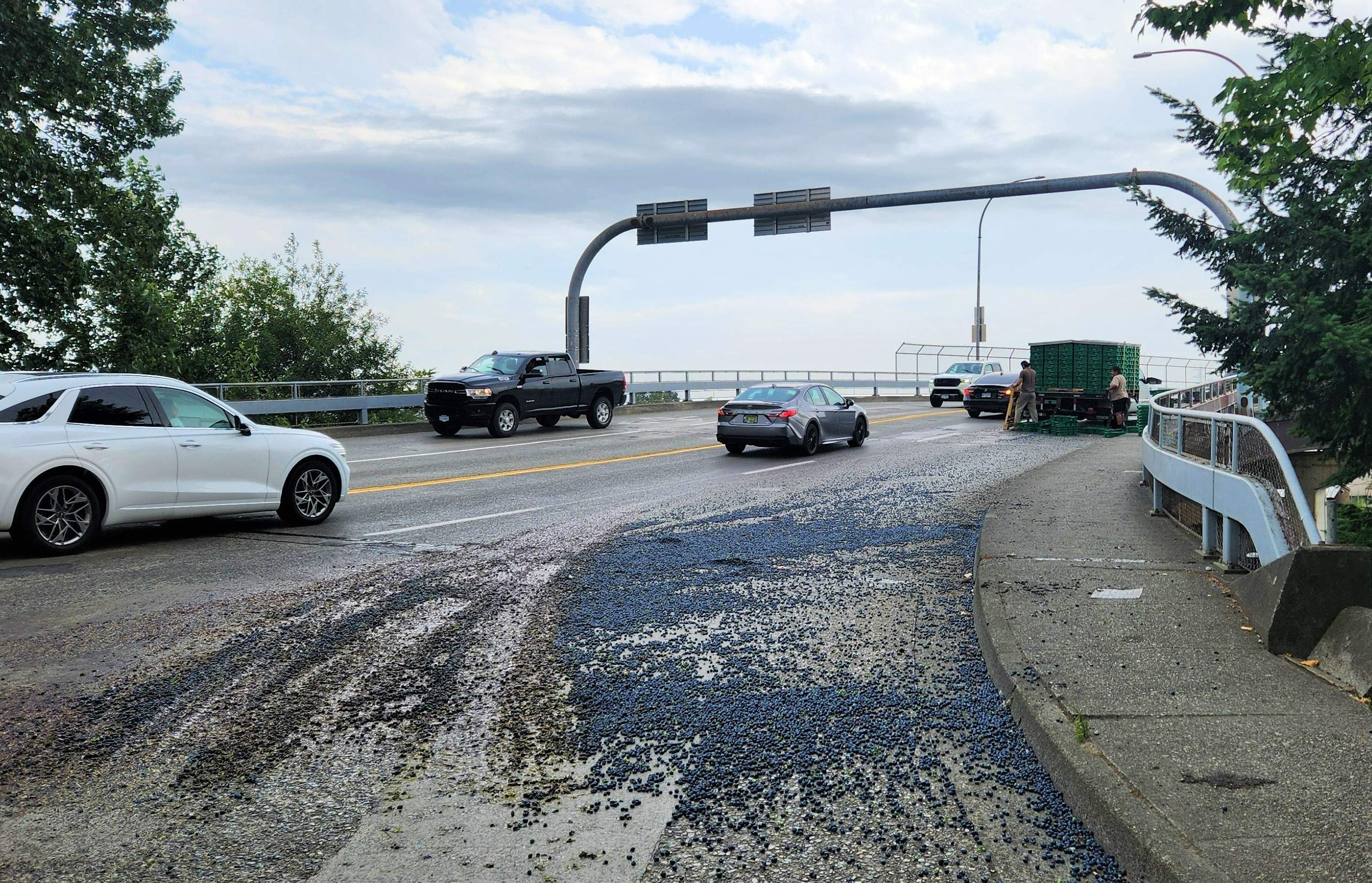
Twice in a single month, thousands of pounds of fresh blueberries spilled across a roadway in Mission, British Columbia. The local news treated it like a bizarre, slapstick coincidence—a local oddity meant to trigger chuckles, traffic complaints, and lazy jabs at driver incompetence.
They got it dead wrong.
What happened on that asphalt wasn't an accident, nor was it a failure of individual driver caution. It was the predictable, mathematical output of an ultra-fragile, hyper-optimized agricultural supply chain pushed well past its structural limits. When low-margin commodities are rushed from field to processing hub under tight refrigeration windows, speed is ruthlessly prioritized over load stability.
Blaming the driver who spilled the crates is easy. Inspecting the broken economic model that forced those crates into a rush in the first place requires actual work.
High-Value Perishables and the Illusion of Efficiency
Let us analyze the raw mechanics of regional berry transport.
Fresh berries are highly sensitive cargo. Unlike dry consumer goods or heavy industrial equipment, high-water-content fruit possesses a brutal shelf life measured in hours, not weeks. The moment a blueberry is picked, a clock starts ticking toward decay. To maximize revenue, growers and regional distributors rely on Just-In-Time (JIT) freight dynamics.
[Harvest in Field] ──> [Rapid Pre-Cooling] ──> [Tight Transit Window] ──> [Processing/Packing]
                                                        │
                                            (Failure Point: Load Shift)
In this system, transit margins are razor-thin. Distributors routinely make calculated risks:
- Load Density Maxing: Packaging pallets to the exact vertical ceiling of secondary restraint systems to shave off cents per unit.
- Minimalist Friction Banding: Utilizing lightweight plastic strapping that meets minimum legal safety thresholds but fails under sudden lateral acceleration.
- Time-Definite Delivery Penalties: Imposing harsh financial surcharges on freight haulers for late arrivals at cold-storage facilities, incentivizing aggressive cornering and high speeds through rural arterial roads.
When a flatbed or dry van rounds a bend in Mission and loses structural containment of a perishables load, it isn't a fluke. It is the cost of doing business in a system designed with zero margin for physical error.
I have watched logistics operators burn millions of dollars chasing "driver retraining" initiatives while completely ignoring the fact that their pallet packaging specs were engineered for a static warehouse, not dynamic centrifugal forces on poorly banked municipal roads.
People Also Ask: The Flawed Premise of Road Safety
"Why do truck spills keep happening in the same locations?"
The standard answer usually points toward road design, speed limits, or poor signage. That is a superficial take. Spills cluster at specific intersections because those points represent the exact intersection of maximum thermal urgency and geometrical strain.
Drivers exiting rural farming zones onto primary transit corridors are accelerating rapidly to match highway traffic speeds while simultaneously executing sharp maneuvers. If the load inside has shifted even three inches during initial farm-lane transit due to inadequate dunnage, that acceleration converts static mass into a kinetic hammer. The highway turn doesn't cause the spill; it merely reveals the failure that occurred five miles back.
"Why don't haulers just use fully enclosed, heavy-duty container units for short hops?"
Because the economics of short-haul ag-transport are brutal. Retrofitting short-distance regional fleets with rigid, climate-controlled container units increases tare weight, slashes payload capacity per trip, and spikes fuel consumption. Growers operate on margins where a fraction of a cent per pound dictates whether a harvest is profitable or a write-off. They choose risk over guaranteed margin compression.
The True Cost of Supply Chain Fragility
The traditional view assumes that losing a few tons of fruit on a highway is merely a temporary nuisance cleaned up by municipal crews. The reality goes much deeper into regional economic fragility.
| Supply Chain Component | Standard Assumption | Operational Reality |
|---|---|---|
| Packaging & Strapping | "Meets regulatory safety standards." | Engineered to minimum thresholds; vulnerable to lateral force. |
| Routing Strategy | "Optimized for public safety and speed." | Dictated by rigid cold-chain time slots, forcing aggressive transit. |
| Risk Management | "Spills are random, insured incidents." | Spills are systemic write-offs built into agricultural transport models. |
To fix this issue, supply chain directors must stop treating transport as an isolated variable. If your freight requires absolute speed to avoid spoilage, your packaging geometry must account for aggressive driving dynamics. You cannot demand maximum speed and minimal packaging weight while expecting zero structural load failures.
What Supply Chain Leaders Must Do Immediately
- Mandate Dynamic Load Testing: Stop relying on static warehouse stability tests. Mandate load testing under simulated high-g lateral acceleration for all seasonal crop packaging.
- Redesign Last-Mile Penalties: Eliminate time-based financial penalties for short-haul transfers from field to regional packing plant during peak harvest windows.
- Upgrade Dunnage Standards: Replace cheap plastic banding with high-friction inter-pallet matting for all wet or high-center-of-gravity agricultural freight.
Stop Crying Over Spilled Cargo
The next time a municipal road gets painted blue with crushed fruit, don't waste time shaking your head at the transport company or chuckling at the news anchor's puns.
Recognize it for what it actually is: a stress indicator flashing red on a global supply chain model that sacrifices physical stability for paper-thin profit margins. Until industry standards force distributors to value load security over hyper-optimized throughput, the asphalt will keep taking its cut.
Fix the incentives, or keep sweeping the street.