Political conventions are rarely exercises in spontaneous emotion. They are meticulously choreographed product launches, designed to introduce a brand to a skeptical marketplace. When the Republican party gathers for high-stakes quadrennial and midterm summits, every speech functions on two distinct tracks. There is the immediate electoral demand of the current cycle, and there is the subterranean chess match for what comes next.
For figures positioning themselves at the vanguard of the populist right, these moments require a delicate architectural balance. They must honor the undisputed gravity of the current titular head while quietly laying down the track for their own future trajectory. Analysts parsing these keynote addresses often look for coded policy shifts, but the real intelligence is found in tone, demographic targeting, and the explicit rejection of old orthodoxies.
The Evolution of Populist Rhetoric
The rhetorical strategy deployed by figures like JD Vance represents a calculated departure from traditional conservative talking points of the late twentieth century. Gone are the polite invocations of free-market absolutism and unbridled globalization. In their place stands an explicit appeal to economic nationalism, industrial protectionism, and a cultural defense of the domestic working class.
This shift is not merely stylistic; it is structural. By framing political conflict around the preservation of manufacturing towns and the rejection of corporate offshoring, modern conservative architects have rewritten the geographic coalition map. The target audience is no longer the suburban corporate executive focused on capital gains tax rates. The target audience is the assembly line worker, the logistics clerk, and the tradesperson in the industrial Midwest who feels abandoned by decades of bipartisan consensus.
Yet, anchoring a political identity to a singular dominant personality creates unique vulnerabilities. When an entire movement orbits a singular charismatic leader, successors face a narrow corridor. They must prove absolute loyalty to retain the base while demonstrating independent operational competence to reassure general election voters.
The Shadow of Foreign Policy Realities
Every political succession strategy runs into the hard wall of governing reality. While domestic populist grievances offer potent emotional fuel, international entanglements provide severe turbulence. Recent political cycles have exposed deep fractures regarding foreign interventions, particularly lingering conflicts in the Middle East.
Voters who enthusiastically embrace economic nationalism can experience severe cognitive
The 2028 Blueprint Underneath the Convention Lights
news, politics
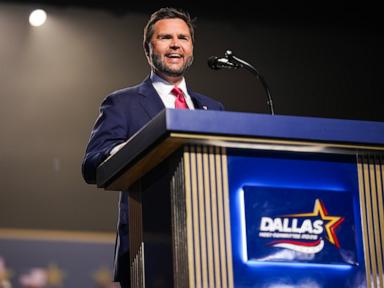
Conventions are rarely remembered for policy wonkery. They are multi-day theatrical productions designed to project unity, manufacture momentum, and introduce a candidate's worldview to an audience that tunes in for four hours every four years. When JD Vance stepped onto the stage for his high-stakes address, the immediate media consensus focused on his biography, his rapid ascent from Rust Belt memoirist to the Republican ticket, and the logistical realities of a changing political landscape.
Look past the red-white-and-blue bunting and the orchestrated applause lines. The speech was not merely a personal introduction or a standard acceptance of a vice presidential nomination. It served as a meticulously constructed opening argument for the 2028 presidential election cycle, mapping out the intellectual architecture of a populist movement that intends to outlive the current campaign.
Political movements rarely pause to evaluate their own trajectory until a crisis forces their hand. The strategy laid out on that stage represented a permanent pivot in how conservative politics frames economic security, industrial policy, and foreign intervention. To understand where the ticket is heading, one must examine the specific fractures the speech attempted to heal and the new electoral coalitions it tried to cement.
The Ideological Mechanics of Modern Realignment
For decades, the dominant economic orthodoxy of the American right prioritized shareholder value, corporate tax optimization, and unfettered global trade. The argument was simple: market efficiency would eventually benefit every zip code.
That theory fractured under the weight of deindustrialization in places like Middletown, Ohio, and across the manufacturing heartland. When factories closed, communities did not naturally rebound; they hollowed out.
Vance built his political identity on the ruins of that consensus. His convention address doubled down on a rejection of the old guard's economic assumptions. By framing the working class not as a demographic to be pitied with retraining programs, but as the primary stakeholders of the American project, the speech signaled a profound ideological shift.
Tariffs are no longer discussed as temporary negotiating tactics or protectionist anomalies. They are presented as structural necessities to shield domestic labor from asymmetrical competition. Industrial policy, once anathema to free-market purists, was reframed as a national security imperative.
This is where the 2028 chess match begins. By permanently wedding the conservative brand to blue-collar economic nationalism, the architects of this movement are rewriting the map. They are trading suburban voters who prioritize traditional fiscal conservatism for working-class union members and disaffected industrial laborers who care deeply about domestic production and border security.
Foreign Policy as Domestic Economics
The traditional separation between foreign policy and domestic well-being took a heavy blow during the convention proceedings. For years, bipartisan establishments in Washington treated international entanglements and trade agreements as abstract exercises in diplomacy and global leadership.
The new approach treats foreign policy as a direct extension of domestic economic health. When the speech questioned unchecked foreign aid and overseas nation-building, it struck a chord with a weary public that has watched trillions of dollars flow abroad while infrastructure at home deteriorates.
Critics call this isolationism. Supporters call it a recalibration of national interest.
The analytical reality is more complex. It represents a transition toward selective engagement. The primary metric for any international commitment is no longer the preservation of a nebulous global order, but the tangible benefit to the American worker. If a trade deal depresses wages in the Midwest, it is viewed as a failure, regardless of its geopolitical optics.
This worldview creates deep friction with international allies who built their security and economic strategies on the assumption of unconditional American underwriting. Yet, within the domestic electorate, the message resonates. It explains why traditional party orthodoxies on foreign intervention are collapsing faster than pundits can catalog.
The Succession Question
No major political address happens in a vacuum. Every high-profile speech delivered by a vice presidential nominee carries a dual mandate. It must help win the immediate election while simultaneously auditioning the speaker for the role of undisputed leader when the top of the ticket eventually steps aside.
By anchoring his rhetoric to a coherent, systemic critique of modern governance rather than just personal grievances, Vance positioned himself as the intellectual heir apparent to the populist movement. Other contenders for future leadership must now answer to the framework he laid out. They cannot simply return to the economic playbooks of the past without looking anachronistic to a base that has tasted populist victories.
The challenge for this faction lies in execution. Economic nationalism sounds compelling on a teleprompter, but translating protectionist sentiment into sustained GDP growth, manageable inflation, and resilient supply chains requires bureaucratic competence of the highest order. Governments struggle to pick winners and losers in industrial markets without inviting crony capitalism.
The speech offered a compelling diagnosis of the nation's ailments, but the treatment plan remains largely untested at scale. Tariffs can protect an industry in the short term, but without concurrent investments in workforce development, energy abundance, and technological innovation, protectionism risks becoming a subsidy for stagnation.
The Real Battlegrounds Ahead
Elections are won at the margins, and political movements survive by expanding their coalitions before the opposition figures out how to neutralize them. The real consequence of the convention speech was not the immediate bump in the polls or the flurry of cable news commentary.
The real consequence was the hardening of a new orthodoxy.
As the country looks toward the remainder of the decade, the debate within American politics is no longer about the size of government versus the free market. It is about which version of economic nationalism will govern, and which party can better convince the manufacturing worker, the truck driver, and the service employee that their interests come first.
The blueprint has been published. The rhetorical lines have been drawn. The next four years will test whether this populist synthesis can deliver actual prosperity or if it will prove to be just another chapter in the long history of political realignment promises left unfulfilled.