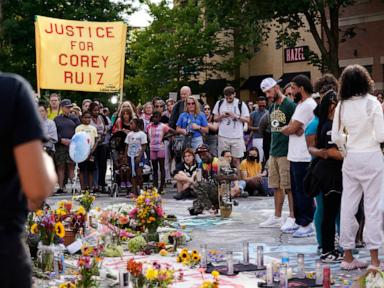
The lazy consensus after the fatal police shooting of Corey Ruiz in Madison, Wisconsin, is predictably rigid: if only the four officers involved had been wearing body cameras, the truth would be obvious and justice would be swift.
Media outlets and local lawmakers have turned the absence of bodycam footage into the central tragedy. They point out that nearly 100% of departments of Madison's size already require body-worn cameras, framing Madison's failure to fund a $414,800 rollout as an absurd administrative oversight.
They are asking the wrong question.
Adding high-definition lenses to an officer's tactical vest does not prevent fatal escalations. It merely creates a more expensive archive of municipal tragedy.
The Bodycam Fetishism Fallacy
For a decade, progressive reform movements and police departments alike bought into a shared myth: surveillance equals accountability. The logic seemed bulletproof—put cameras on officers, and bad behavior will vanish under the watchful gaze of the public.
Instead, bodycams have largely functioned as an administrative security blanket for city halls.
Studies across major metropolitan police departments have repeatedly shown that body-worn cameras have a statistically negligible impact on officers' use of force or citizens' complaints. When an encounter devolves into a struggle—such as the incident where police state Ruiz produced a knife—a body camera strapped to a chest routinely captures little more than motion blur, rustling fabric, and obscured angles.
By treating body cameras as the ultimate arbiter of truth, cities like Madison spend years in procedural paralysis. Committees birth subcommittees, feasibility studies stack up, and local politicians debate line items while ignoring the underlying structural failures that put officers and vulnerable citizens in fatal contact to begin with.
The Real Failure in Madison Was Structural, Not Technological
Focusing on the lack of video footage masks the actual failure in Madison: the catastrophic breakdown of urban social safety nets.
City Council President Sabrina Madison noted that in recent years, local officials were forced to prioritize funding homeless shelter operations over police hardware. That was not a failure of vision—it was an accurate diagnosis of where municipal dollars actually matter.
Corey Ruiz was an unhoused man. The encounter that ended his life involved four armed police officers dispatched to handle a situation that primarily required specialized mental health intervention and housing infrastructure.
Imagine a scenario where those four officers were wearing state-of-the-art 4K body cameras.
The outcome would have been identical. The city would possess a graphic video file to stream to news outlets, but a man would still be dead, an officer would still be wounded, and the root cause of the encounter would remain completely unaddressed.
The Hidden Cost of the Surveillance Trap
There is a real trade-off to the bodycam obsession that proponents rarely mention: administrative bloat.
The hard costs of body cameras are never just the $414,800 hardware contract. The real expense lies in data storage, redaction staff, public record processing, and perpetual software licenses sold by private tech monopolies.
I have seen municipalities burn millions on video infrastructure that could have funded full-time mental health crisis response teams, community outreach personnel, or permanent supportive housing.
When cities divert finite public safety funds into managing video repositories, they trade active prevention for passive documentation. They build a bureaucracy designed to record tragedy rather than prevent it.
Fix the Dispatch, Not the Lenses
If Madison—or any city—wants to prevent another fatal shooting, politicians must stop treating body-worn cameras as a panacea for police reform.
True policy disruption requires changing who gets sent to a call, not what hardware is strapped to their chest.
- Divert routine welfare calls entirely away from armed law enforcement. Police officers are trained for tactical response, not social work. Deploying four armed officers to interact with an unhoused resident in crisis is an inherent escalation mechanics failure.
- Stop treating oversight as a hardware problem. Real accountability comes from independent, fully funded civilian oversight bodies with subpoena power—not from police departments reviewing their own raw footage behind closed doors.
- Fund social infrastructure first. If a city must choose between funding emergency shelter beds or paying a tech vendor for cloud footage storage, the shelter wins every single time.
Demanding bodycam footage after a man dies gives the public an illusion of control. Demanding that armed police stop being used as the primary response team for social distress prevents the death from happening in the first place.