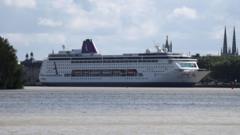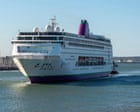
The dream of a luxury European river cruise turned into a clinical nightmare this week for more than 1,700 people. While docked in the picturesque port of Bordeaux, the MS Amera—a ship operated by Phoenix Reisen—became a floating isolation ward. It started with a tragedy. A passenger died. When local health authorities in France suspected Norovirus as the culprit, they didn't just flag the ship; they locked it down.
Bordeaux health officials and the Gironde prefecture took a hard line. They confined every soul on board to the vessel. This wasn't a "precautionary delay." It was a full-scale quarantine enforced while the ship sat within sight of the city's famous wine cellars. If you think your vacation is immune to these sudden shifts in maritime law, you’re mistaken. The reality of cruise travel in 2026 is that a single stomach bug can strip away your freedom of movement in minutes.
The Reality of the Bordeaux Norovirus Outbreak
Norovirus isn't just "the stomach flu." It’s a highly resilient, incredibly contagious virus that thrives in the closed-loop environment of a ship. According to data from the Centers for Disease Control and Prevention (CDC), cruise ships are uniquely vulnerable because people from different geographical areas congregate in tight spaces. You share elevators, buffet tongs, and handrails.
In the Bordeaux incident, the stakes were raised because of a fatality. While Norovirus is rarely fatal for healthy adults, it causes severe dehydration. For elderly passengers or those with underlying conditions, it’s a genuine threat. The French authorities, including the Regional Health Agency (ARS) of Nouvelle-Aquitaine, stepped in to conduct massive testing. They had to determine if the death was an isolated medical event or the start of a catastrophic surge.
[Image of norovirus structure]
The lockdown wasn't just about the sick. It was about containment. When a ship is "confined," the local economy stops, the excursions are canceled, and the crew goes into overdrive with high-strength disinfectants. For the 1,700 people on the MS Amera, the "Europe live" experience became a view of a pier they weren't allowed to step on.
Why Port Authorities Overreact and Why They're Right
You might think the French officials were being overly dramatic. They weren't. When a ship enters a port like Bordeaux, it brings a concentrated biological load. If 1,700 people disembark and spread a virus through the city's restaurants and public transit, the local healthcare system bears the brunt.
Port health regulations are governed by the International Health Regulations (2005). These rules give local authorities the power to deny "free pratique"—the license for a ship to enter a port and let people off. In the case of the MS Amera, the presence of a death linked to gastrointestinal symptoms triggered a red alert.
The Protocol for Maritime Illness
- Reporting: The ship’s surgeon must report any "outbreak" level illness to the next port of call.
- Evaluation: Health officers board the ship in full PPE to assess the severity.
- Quarantine: If the risk to the public is too high, the ship stays put.
- Sanitization: The vessel must undergo a "deep clean" using chlorine-based solutions.
Most travelers don't realize that the captain isn't the highest authority once the ship hits the dock. The local health inspector is. If they say nobody leaves, nobody leaves. It’s a legal wall that no amount of "Diamond Member" status can break through.
The Hidden Costs of a Cruise Lockdown
A lockdown costs the cruise line millions, but the cost to the passenger is often measured in lost time and psychological stress. On the MS Amera, reports indicated that while the crew tried to maintain "business as usual" with entertainment and food, the atmosphere was tense. You’re trapped.
Travel insurance often fails here. Most standard policies cover "trip interruption," but they have very specific definitions for what counts. If the ship is held for 48 hours for testing, your policy might not kick in unless you’re the one who is actually sick. If you’re just part of the 1,700 people held back because of someone else’s illness, you might be out of luck.
We see this frequently. Travelers assume the cruise line will refund them for a "ruined" trip. Usually, they offer a "Future Cruise Credit" (FCC). That’s not cash. That’s a coupon that forces you to give them more of your time and potentially more of your money later. It’s a brilliant business move for the line, but a raw deal for the passenger who just spent three days staring at a concrete dock in Bordeaux.
How to Protect Your Health and Your Wallet
The Bordeaux situation isn't an anomaly; it’s a warning. If you’re planning a cruise, you need to change your approach to "health security" on board.
Stop relying on the hand sanitizer stations at the buffet entrance. Norovirus is famously resistant to many alcohol-based sanitizers. You need to wash your hands with soap and water for at least 20 seconds. It’s basic, it’s boring, and it’s the only thing that actually works against the protein shell of the virus.
Immediate Steps for Savory Travelers
- Check the VSP Scores: Before booking, look up the vessel’s Vessel Sanitation Program score. Ships that consistently score below an 85 are a gamble.
- Buy Independent Insurance: Don't buy the cruise line’s "Protection Plan." Get a third-party policy with a "Cancel for Any Reason" (CFAR) rider. It’s more expensive, but it’s the only way to get cash back if the ship becomes a giant petri dish.
- Pack a "Med Kit": Bring your own rehydration salts and anti-diarrheal medication. If the ship goes into lockdown, the infirmary will be overwhelmed. You don't want to be at the back of a 200-person line for basic supplies.
- Avoid High-Touch Surfaces: Use a paper towel to open the public bathroom door. Use your elbow for the elevator button. It sounds paranoid until you’re the one stuck in a cabin for five days while the ship sits in France.
The MS Amera incident proves that the "Golden Age of Cruising" has a gritty underbelly. Public health is a collective responsibility, but on a cruise ship, it’s a collective liability. When you step on that gangway, you’re consenting to the health laws of every country you visit. Sometimes, that means seeing Bordeaux through a porthole while health officials decide your fate.
If you're currently booked on a river cruise through Europe, call your insurance provider today. Ask them specifically if "government-mandated quarantine of a vessel" is a covered reason for a full trip refund. If the answer is "no" or "it depends," you have some re-evaluating to do. Don't wait for the lockdown to start reading the fine print.
Check your policy's "Trip Delay" section. Look for the daily limit. Most only cover $200 a day, which barely covers a decent meal and a hotel if you were actually on land. On a ship, it’s practically useless. Get a policy that treats a quarantine like a medical emergency, because that’s exactly what the authorities in Bordeaux considered it to be.
Pack your bags, but pack your common sense too. The sea is beautiful, but the germs are real. Wash your hands. Read your contract. Stay cynical. It’s the only way to ensure your next vacation doesn't end in a French quarantine zone.