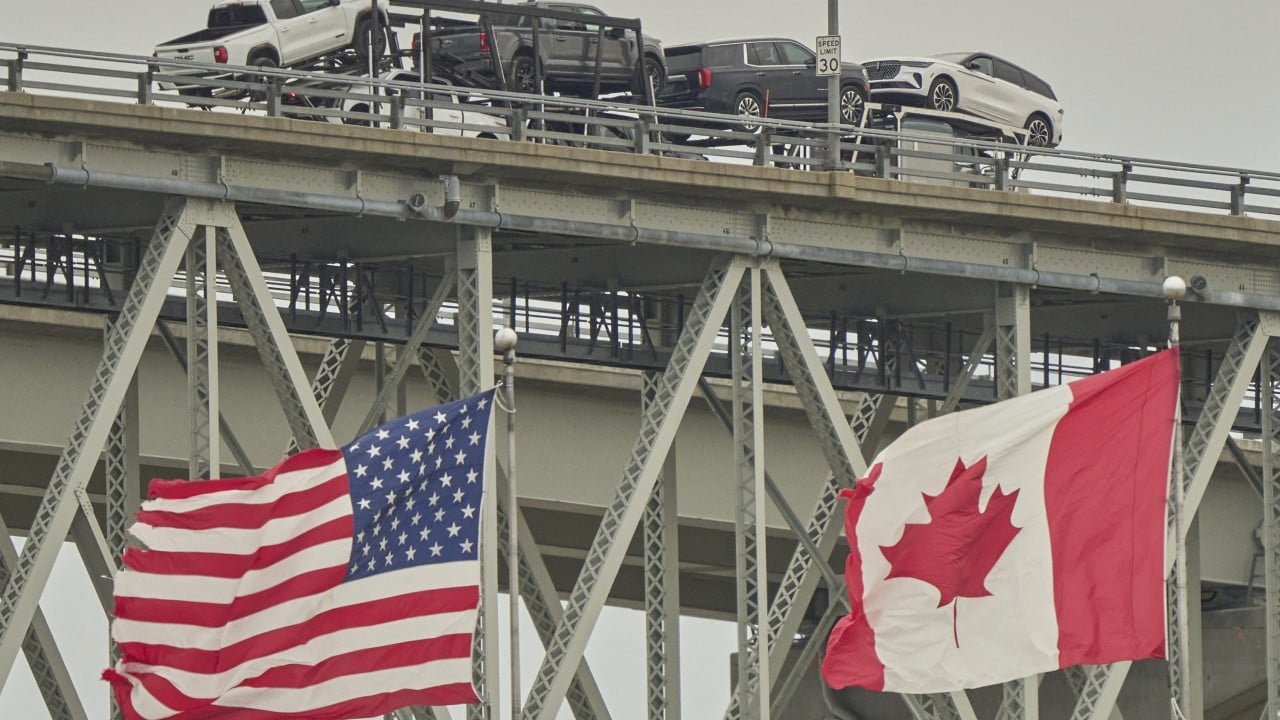
The map on the wall of the quiet conference room in Ottawa was not complicated. It showed two countries sharing the longest undefended border on earth, a thin red line cutting through forests, lakes, and industrial arteries. But on a Tuesday morning, that line felt less like a shared boundary and more like a tripwire.
Consider Arthur, a man who has spent thirty years running a modest steel fabrication plant in southern Ontario. He does not think in abstract geopolitical terms. He thinks in shipments of sheet metal, the hum of plasma cutters, and the familiar faces of forty employees who clock in before sunrise. To Arthur, the United States is not a foreign market; it is the floorboards of his entire livelihood. When Washington hints at a steep fifty percent tariff, Arthur does not hear policy. He hears an incoming tide threatening to swamp his loading dock.
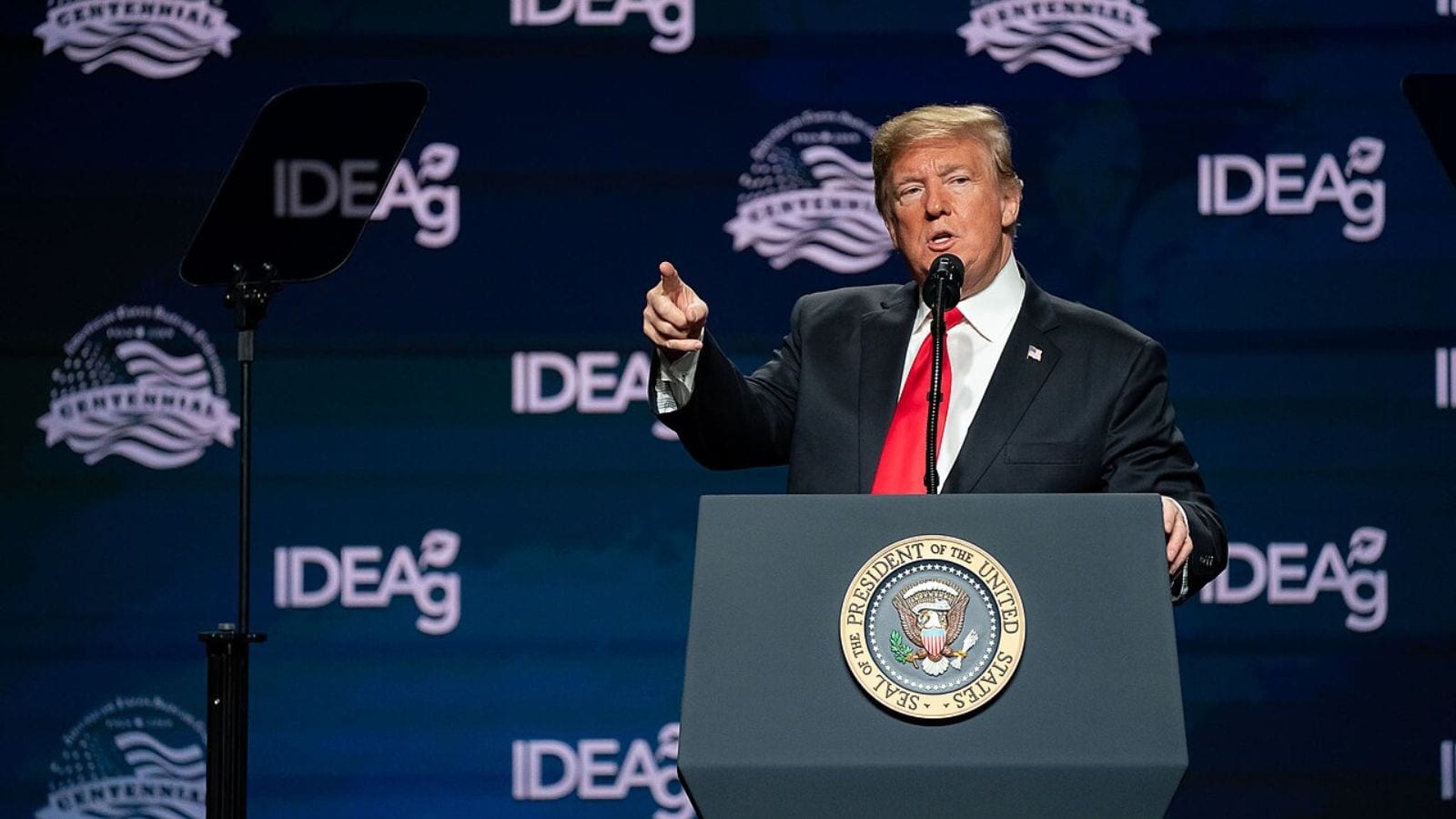
Across the continent and across the political divide, leaders are forced to grapple with the seismic friction of protectionism. Enter figures like Mark Carney, navigating a high-stakes diplomatic tightrope, stepping into urgent talks with Donald Trump. This is not just a headline about trade quotas or import levies. It is a collision between sovereign economic ambitions and deeply integrated cross-border supply chains that have spent decades growing together like old oak trees tangled in the same soil.
To understand why a potential fifty percent tariff strikes such terror into boardrooms and factory floors alike, we must look at how the machinery of modern manufacturing actually works.
Imagine a single automobile engine. By the time it rolls off an assembly line in Michigan or Ontario, its components have crossed the international border six or seven times. Raw aluminum is mined in Quebec, smelted into parts in Ohio, wired with electronics from Toronto, and finally bolted into a chassis in Detroit. Each crossing is frictionless, efficient, built on the assumption that neighbors trade as freely as siblings.
Slap a fifty percent penalty on those crossings, and the math shatters overnight.
Tariffs do not exist in a vacuum. They are taxes paid not by the exporting country, but by the importing businesses and, ultimately, the consumers who buy the finished goods. If Arthur has to pay an extra fifty percent on every component he sends south, his prices soar. His American buyers look elsewhere. Orders dry up. The machines go silent.
This is the invisible human cost behind dry economic policy. Behind every percentage point is a deferred retirement, a canceled expansion plan, an anxious conversation around a kitchen table when a worker realizes their shift has been cut.
Negotiations at this level resemble high-stakes chess played in a hurricane. Trump operates from a playbook centered on aggressive leverage, using the immense gravity of the American consumer market to demand concessions on security, trade deficits, and border enforcement. For Canada, a nation whose economy exports roughly three-quarters of its goods to its southern neighbor, the stakes are existential. There is no backup market large enough to absorb that volume overnight.
Mark Carney steps into these discussions carrying the weight of institutional memory and financial pragmatism. The challenge is not merely convincing an administration in Washington that tariffs will harm Canadian workers; it is proving that a trade war inflicts self-inflicted wounds on American workers too. Inflation rises. Supply chains fracture. Costs cascade down to the very voters politicians promise to protect.
History offers sobering lessons here. Protectionist impulses have a long pedigree, often rising during moments of economic anxiety or national introspection. Walls feel comforting when the world feels unpredictable. Yet, economic integration is notoriously stubborn. Unraveling a century of shared infrastructure is like trying to untie a knot while the rope is running through a high-speed winch.
Arthur turns off the lights in his empty factory at the end of the day, listening to the cooling hum of heavy machinery. He doesn't know what the diplomats will agree to behind closed doors. He only knows that the line on the map is no longer just a line. It is a question mark hanging over everything he has ever built.