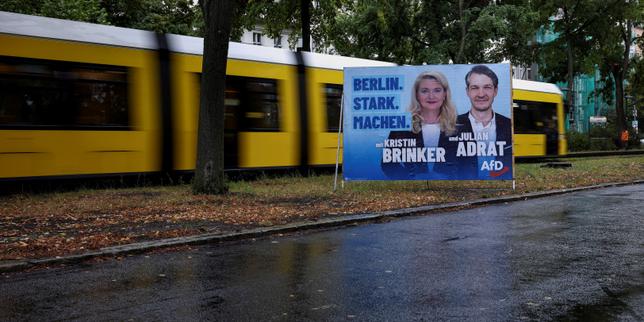
The ballot boxes in Magdeburg closed, and the tectonic plates of European politics shifted beneath Brussels’ feet. When the Alternative for Germany captured 43.8 percent of the vote in Saxony-Anhalt, mainstream commentators immediately reached for familiar scripts. They diagnosed the surge as a panicked reaction to migration, a regional spasm of anti-immigrant sentiment in a region with relatively low foreign populations, or a straightforward protest against Berlin's austerity. This framing is comforting to European elites because it treats the symptom while ignoring the systemic failure beneath it. The real crisis exposed by the Saxony-Anhalt election is not merely the rise of the radical right; it is the catastrophic collapse of the European Union’s credibility on sovereignty, borders, and basic competence.
European leaders love to talk about protecting citizens, securing outer perimeters, and defending democratic integrity. Yet, for decades, governance has devolved into an exercise in bureaucratic abstraction. Brussels issues directives on environmental compliance and digital markets while citizens in eastern Germany watch local infrastructure crumble, industrial energy costs skyrocket, and public services hollow out. When millions feel that the state has abandoned its foundational duty to maintain order at its borders and stability in its neighborhoods, they stop listening to institutional lectures about democratic values.
The political establishment treats border security and national identity as toxic conversation topics, conceding the vocabulary of sovereignty entirely to populist actors. This is a fatal strategic error. Voters are not demanding empty rhetoric about an interconnected continent; they are demanding functional proof that the nation-state can still regulate who enters, who stays, and who obeys the law. When mainstream parties label every concern about migration or public safety as illegitimate, they drive desperate electorates straight into the arms of movements explicitly promising a radical break from the European consensus.
Consider the economic undercurrents that traditional analysts consistently overlook. Saxony-Anhalt is not just an ideological battleground; it is a laboratory of demographic decline and industrial restructuring. Decades of post-reunification brain drain, combined with punishing energy prices that threaten traditional chemical manufacturing bases, have created an environment of acute vulnerability. Corporate insolvencies have climbed far above the national average. In this climate of anxiety, federal politicians sermonize about grand geopolitical strategies while local bakeries, schools, and hospitals shutter.
The disconnect between the European project's high-altitude ambitions and ground-level reality has reached a breaking point. Brussels and Berlin assume that stability is permanent and that integration is an irreversible historical law. They treat voter rebellion as an educational deficit—as if the public simply needs a better explanation of why open borders and centralized regulations are good for them. This technocratic arrogance is precisely what built the populist wave.
If Europe wants to survive this political realignment, it must abandon the fantasy that administrative governance can substitute for genuine protection. Citizens are asking a very simple, brutal question: Can the state keep us safe, prosperous, and culturally coherent? Right now, the institutional answer sounds like evasion. Until mainstream political forces reclaim the mantle of competence, secure their borders with transparent rigor, and rebuild local economies from the ground up, every election will remain a referendum on an establishment that forgot how to govern.
The earthquake in eastern Germany is finished echoing, but the institutional tremors have only just begun.


