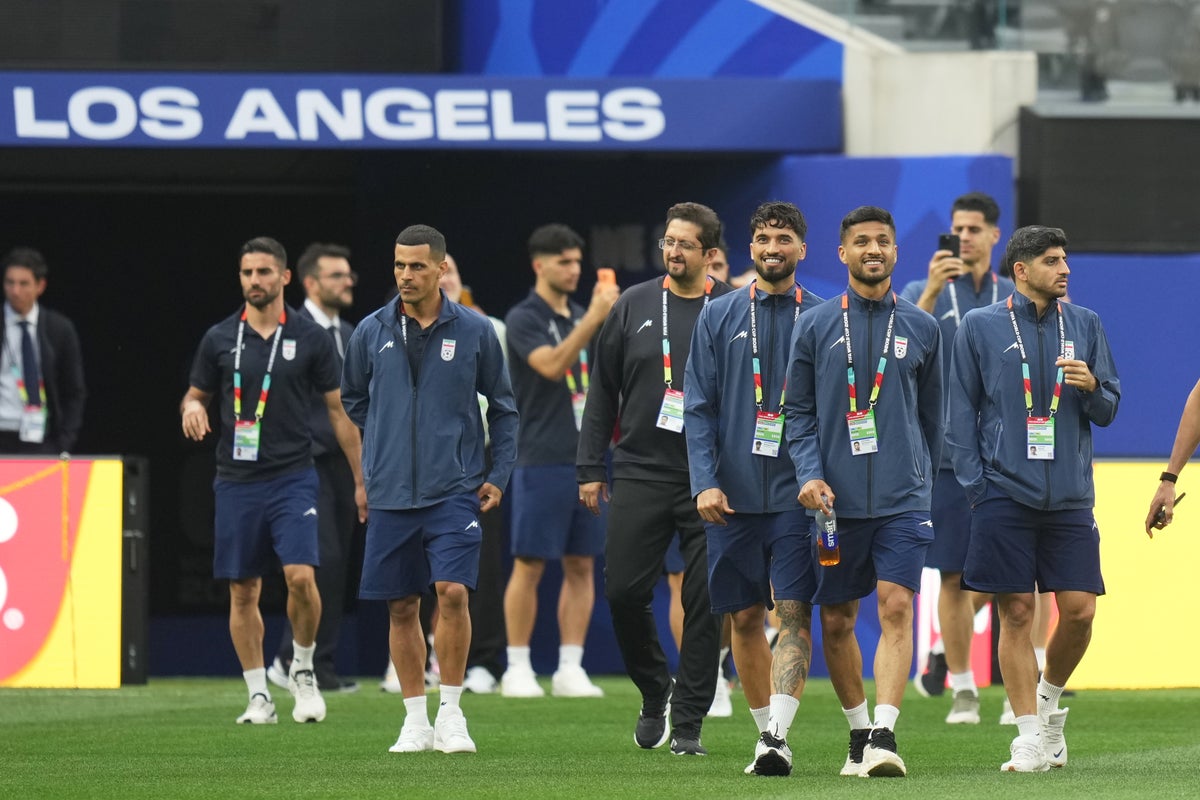
The fluorescent lights of an international arrivals terminal do not care about the World Cup. They emit the same sterile, buzzing hum whether you are a tourist, a businessman, or an elite athlete carrying the hopes of an entire nation on your shoulders. For the Iranian national football team, the tournament did not begin with a whistle on a pristine green field. It began in the bureaucratic purgatory of an airport passport control line.
Hours ticked by. Passports were scrutinized. Visas were checked, re-checked, and held up to the light. While other qualifying squads breezed through customs with the gilded privilege afforded to global sports icons, Team Melli stood stranded on the linoleum floor. They were subjected to administrative delays that felt less like standard security and more like a calculated psychological weigh-in.
Football is supposed to be the great equalizer. Eleven players against eleven players, governed by a universal rulebook, decided entirely by merit, sweat, and strategy. But the modern sporting world does not exist in a vacuum. Politics does not stop at the touchline. It bleeds through the seams of the ball. It shadows the players from the tarmac to the training pitch, turning a game into something much heavier.
The Weight of the Jersey
Amir Ghalenoei has spent decades in the high-pressure cooker of Iranian football. He knows the tactical nuances of a 4-3-3 formation, how to exploit a high defensive line, and how to motivate a locker room. Yet, nothing in the coaching manuals prepares a manager for the task of shielding his players from geopolitical friction before the biggest tournament of their lives.
When Ghalenoei finally addressed the media, the frustration was palpable beneath his composed exterior. This was not a coach complaining about a bad refereeing decision or a poorly maintained training ground. This was a man defending the human dignity of his players. The treatment his squad faced upon arrival in the host region—marked by excessive delays and an atmosphere of cold suspicion—was, in his view, a direct violation of the spirit of the game.
Consider the mental toll. An elite athlete’s preparation is a fragile ecosystem. It requires meticulous timing, precise rest, and absolute focus. When you disrupt that ecosystem with hours of administrative interrogation, you are not just checking paperwork. You are draining the battery. You are planting seeds of distraction.
Mehdi Taremi, the star striker whose clinical finishing has terrorized European defenses in the Champions League, stood alongside his coach. Taremi is a man used to being judged solely by his movement off the ball and his lethal instinct in front of the net. In the terminal, however, none of his goals mattered. His stats were irrelevant. He was viewed through a rigid geopolitical lens, a citizen of a nation locked in a decades-long cold war with the West, rather than a world-class competitor.
Taremi did not mince words. He spoke of the respect that athletes owe to one another, and the respect that host nations owe to the participants who qualify for the global stage. His critique was not a political manifesto. It was a plea for the sport to be allowed to be just a sport.
The Illusion of Neutrality
We like to comfort ourselves with the myth that sports and politics do not mix. FIFA plasters stadiums with slogans about unity, respect, and fair play. We watch the opening ceremonies and marvel at the sight of historic adversaries marching in the same parade. It is a beautiful illusion.
The reality is far more complicated.
Imagine a hypothetical runner preparing for the Olympic 100-meter dash. For four years, they have optimized every meal, every stride, and every breath. They arrive at the stadium, only to be forced to wear shoes that are two sizes too small, while their competitors wear custom-fitted spikes. The race is still 100 meters. The clock still ticks at the same speed. But the contest is no longer fair.
The administrative hurdles faced by Iran act as those ill-fitting shoes. When a team is isolated, denied standard friendly matches due to international sanctions, and subjected to hostile treatment at the border, the playing field is tilted long before the kickoff.
This is not about asking for special treatment. It is about pointing out the hypocrisy of a system that demands absolute professionalism from athletes while treating them with systemic unprofessionalism based on the passport they carry. The Iranian players did not choose the sanctions. They did not draft the foreign policies. They play football.
The Beautiful Game in a Broken World
The irony of the situation is that Team Melli has historically been a profound symbol of unity within Iran itself. In a country marked by deep social divides and complex internal politics, football is the singular thread that sews the fabric together. When Taremi scores, the shouts of joy echo across the rooftop apartments of Tehran, through the ancient bazaars of Isfahan, and down to the coastal towns of the Persian Gulf.
For ninety minutes, the internal fractures heal. The external pressures fade. The nation breathes as one.
To bring that level of emotional responsibility to the world stage is already a staggering burden. To add the indignity of being treated as a security threat at the gateway to the tournament is a cruel compounding of that weight.
But there is a counter-narrative hidden within this friction. Adversity has a strange way of hardening resolve. History shows that when Team Melli faces the stiffest external headwinds, they often display a fierce, stubborn resilience on the pitch. The anger voiced by Ghalenoei and Taremi was not an excuse made in advance of a loss. It was a line drawn in the sand.
The True Pitch
When the stadium lights finally drown out the memory of the airport terminals, and the national anthems ring out across the arena, the bureaucratic nonsense fades into the background. The green grass becomes the only reality that matters.
The Iranian squad knows they are playing for more than three points in the group stage. They are playing for validation. They are playing to prove that their talent cannot be regulated by a border agent or diminished by political posturing.
The ball is round. It does not look at a passport. It does not care about visas. When Taremi makes his first run into the penalty box, he will not be thinking about the hours lost in customs. He will be looking at the flight of the ball, hunting for the back of the net, driven by the quiet fury of a man who has already played his hardest match before the tournament even began.