The grass at SW19 does not care about your ranking. It does not look at the entry list, it does not read the tennis blogs, and it certainly does not care that you needed a wildcard just to walk through the gates. Under the blistering July sun, the turf is nothing more than a green crucible, wearing down to brown dust at the baselines, slick and treacherous under pressure.
For a young British player, walking out onto these courts is an exercise in public vulnerability. You are carrying the sudden, heavy weight of a home crowd that desperately wants a hero, even if they barely know your name when the fortnight begins. They want the fairy tale. They crave the impossible run. But beneath the romanticism of the British underdog lies a brutal reality: tennis is a lonely sport that systematically breaks those who are not ready for its demands.
Arthur Fery was not supposed to be here. Not in the second week. Certainly not in the final four.
Yet, there he stood on the worn baseline, one match away from a grand slam final, after a straight-sets demolition that left the tennis world scrambling for answers. It was a performance stripped of youthful nervousness, replaced instead by a cold, clinical precision that felt entirely detached from his ranking. To understand how a wildcard finds himself in the semifinals of the world’s most prestigious tournament, you have to look past the scoreboard. You have to look at the quiet, unglamorous years spent in the shadows of the tour, far away from the applause of Center Court.
The Sound of Empty Bleachers
Before the flashbulbs and the roar of Henman Hill, there is the grinding reality of the Challenger circuit. It is a world of cheap hotels, delayed flights, and matches played in front of three people and a stray dog. This is where professional tennis players are truly made.
Consider a hypothetical young athlete—let us call him the ghost of every academy prospect—who wakes up at five in the morning in a chilly indoor facility in the middle of winter. His shoulder aches. His bank account is draining faster than he can earn first-round prize money. He hits a thousand cross-court forehands into an empty court, wondering if anyone will ever notice.
That is the invisible baseline of Arthur Fery’s reality. The public only tunes in when the sun is shining and the Pimm's is flowing, but the muscle memory required to hit a running passing shot on a break point at Wimbledon is forged in those freezing, forgotten mornings.
When Fery received his wildcard entry into the main draw, it was viewed by many as a polite nod to local talent, a traditional gesture to give a young Brit some valuable experience on a big stage. The script usually dictates a brave, three-set loss in the first round, a warm round of applause from a sympathetic crowd, and a press conference about "learning opportunities."
Fery threw the script away in the opening round. Then he tore it up in the second. By the time he reached the quarterfinals, the polite applause had transformed into something entirely different. It became a primal, collective roar.
The Anatomy of a Straight-Sets Masterclass
There is a distinct psychological horror in playing a home-court wildcard who has found his rhythm. For the seeded opponent across the net, the pressure is suffocating. You are expected to win. If you lose a point, the crowd erupts. If you make an unforced error, a thousands gasps echo through the stadium.
In the quarterfinal match that sealed his place in history, Fery turned that pressure into a weapon.
From the first game, it was clear this would not be a long, dramatic five-set epic filled with teenage emotional swings. It was something far more terrifying for his opponent: a systematic dismantling. Fery played with the tactical maturity of a thirty-year-old veteran. He sliced low to the backhand, forcing his taller opponent out of his comfort zone. He rushed the net with a fearless intensity, volleys dropping with microscopic precision just over the net chord.
Watch the way a player moves when they are in the zone. Their feet seem to float an inch above the grass. They anticipate the ball before it leaves the string bed of the opposing racket. Fery was moving with that exact, haunting clairvoyance.
The first set went to a tiebreak, a tense war of nerves where a single slip means ruin. Fery hit an ace out wide, followed by a lunging volley that defied physics. First set, Fery.
The second set was a blur of momentum. The opponent’s body language slumped; the realization was setting in that this was not a fluke. The British kid was not going away. By the third set, the match had taken on an air of inevitability. When Fery broke serve at four-games-all, the stadium became so quiet you could hear the sweat dripping onto the grass.
Then came the final service game.
The Loneliest Fifteen Seconds in Sports
Nothing prepares a human being for the moment they have to serve out a match to reach a grand slam semifinal. The court suddenly feels twice as large. The racket feels like a crowbar in your hand. The ball toss, usually an automatic reflex practiced millions of times, suddenly requires intense conscious thought.
Fery stepped up to the line at 40-15. Two match points.
He missed his first serve. A collective sigh rippled through the stands. He walked back to the towel, wiped his face, and took a deep breath. This is where the true battle happens—the fifteen seconds between points where a player’s mind can either become his greatest ally or his executioner. He had to block out the headlines, the family crying in the player’s box, the millions watching at home, and focus entirely on a yellow felt ball.
He tossed the ball again. A kicking second serve to the body. The return went long.
It was over. Straight sets.
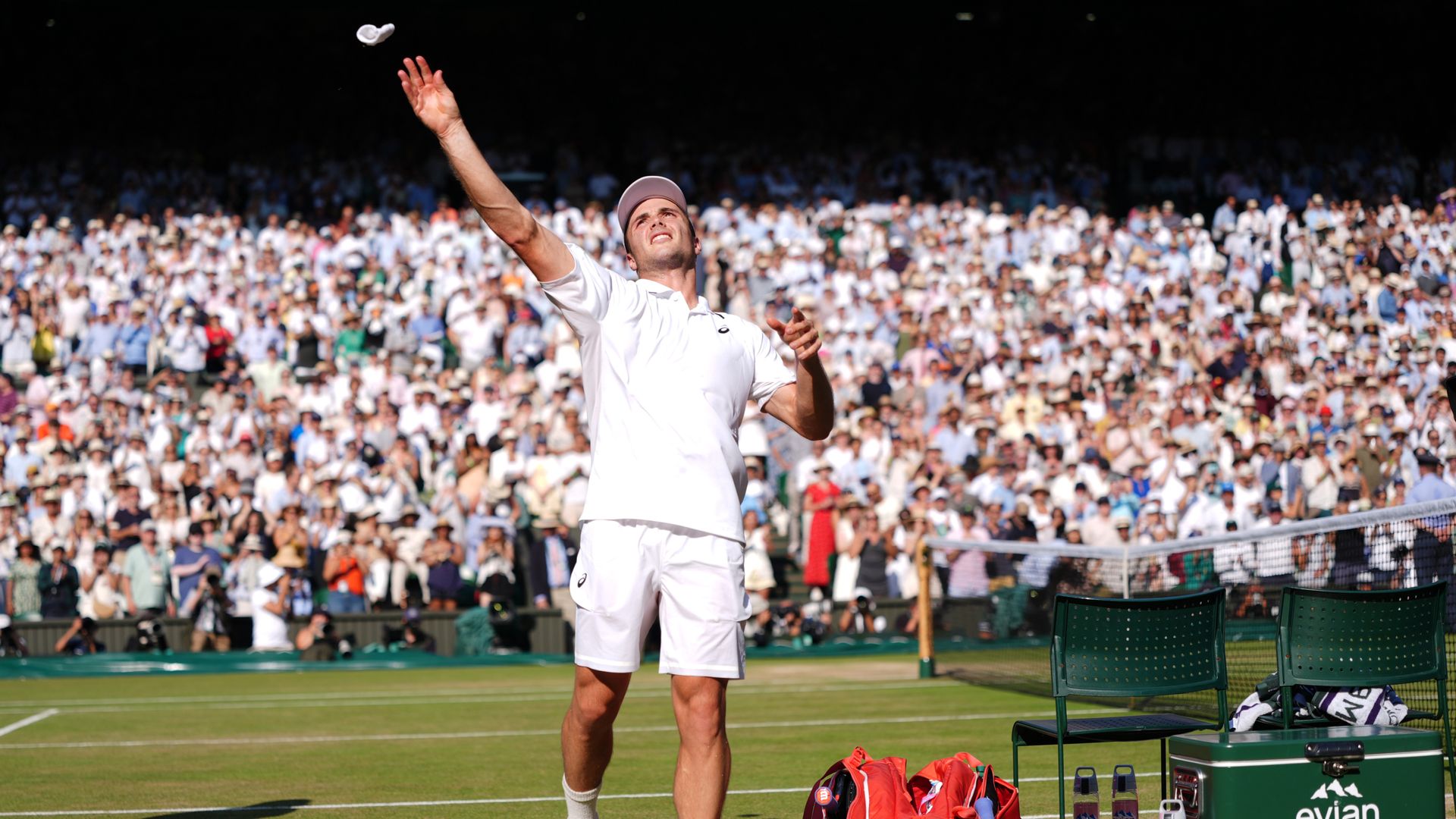
The celebration was not an explosion of artificial drama. Fery simply dropped to his knees on the baseline, pressing his palms into the turf, perhaps checking to ensure the ground beneath him was actually real. The applause that followed was a physical force, shaking the rafters of the old stadium. The boy who needed permission just to play had just earned a permanent place in the lore of the tournament.
Beyond the Fairy Tale
The media will call this a miracle. They will use the word "fairytale" until it loses all meaning, plastering his face across the back pages alongside puns on his surname. But calling it a miracle does a profound disservice to the sheer amount of tactical intelligence and physical punishment required to win five consecutive matches at this level.
This run was not magic. It was chemistry, geometry, and stubborn defiance.
It was the result of a young man recognizing that the giants of the game are human beings who bleed unforced errors when they are pressed into a corner. Fery didn't win because he was lucky; he won because he refused to accept the role of the polite, grateful loser that history had assigned to him.
As the tournament moves into its final weekend, the stakes climb into the stratosphere. The opponents will get tougher, the lights will get brighter, and the pressure will multiply. But whatever happens when Fery steps back out onto that lawn for his semifinal match, the narrative of his career has been permanently rewritten.
He walked into the tournament as a name on a wildcard list, a footnote in the draw sheet. He walks out of the quarterfinals as aชาย who proved that sometimes, the gatecrashers are the ones who truly know how to throw a party. The grass of SW19 might not care about rankings, but it remembers greatness, and for one flawless afternoon, it belonged entirely to Arthur Fery.