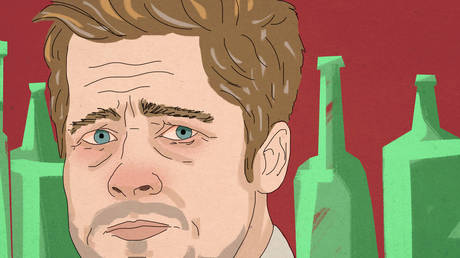
Every time a public figure stumbles, the vultures descend with clipboards and moral superiority. When tabloid whispers suggest a Hollywood icon has picked up a glass again, the internet treats it like a personal moral failure.
The lazy consensus screams that relapse is the ultimate betrayal of recovery. It treats sobriety like a binary switch. You are either pure, white-knuckling your way through a beige hotel meeting room, or you are morally bankrupt, sliding down a grease-soaked pole toward your own demise.
This narrative is not just wrong. It is dangerous.
The Sobriety Industrial Complex relies on a rigid, dogmatic myth: that one slip erases every single day of progress you fought for. It turns recovery into a fragile glass house where a single speck of dust shatters the entire foundation.
I have watched people I love drown in this exact black-and-white framework. They slip up once, panic because the textbook told them their counter is reset to zero, and surrender to a binge because the guilt of the "failure" is heavier than the alcohol itself.
Let us look at how the machinery actually operates.
The Math of Recovery is a Lie
We need to talk about data.
When an outlet runs a breathless piece warning that Brad Pitt or any other high-profile name is drinking again, they bank on a specific cultural panic. They want you to believe that recovery is a fragile house of cards.
Look at the longitudinal studies on substance use behaviors. According to data from the National Institute on Alcohol Abuse and Alcoholism, a massive percentage of individuals who achieve long-term remission experience a recurrence of symptoms along the way. Medical science views this through the lens of chronic disease management. When a diabetic has a blood sugar spike, doctors adjust the insulin. They do not strip away the patient's dignity and declare their entire treatment history void.
Yet, cultural commentary treats addiction like a personal sin.
If an actor with decades of scrutinized sobriety has a drink, the moralists act as though the past ten years of physical healing, mental rewiring, and personal growth simply evaporated into thin air. That is mathematical nonsense. Your liver cells regenerate. Your neurological pathways adapt. Your psychological coping mechanisms mature. A momentary return to a substance does not magically rewrite biology.
The obsession with absolute, monastic perfection is why so many people hide their struggles until they are fatal.
The Myth of the Silver Bullet
The mainstream advice given to high-stress individuals dealing with substance reliance is aggressively uniform. Step away from the spotlight. Sit in a circle. Confess your powerlessness.
Powerlessness is a comfortable philosophy for people who want to absolve themselves of agency, but it fails high-performers. When you tell a person whose entire life is built on hyper-competence, multi-million dollar productions, and intense operational control that they are entirely helpless against a chemical compound, you create a psychological trap.
Imagine a scenario where an elite athlete is told they have no control over their performance. They would quit.
Addiction is not a demon possessing you from the outside. It is an adaptation. It is a biological response to chronic stress, trauma, or a dysregulated nervous system looking for an off-switch. When the pressure cooker of global fame, bitter custody battles, and relentless media scrutiny reaches a boiling point, the brain looks for the tool it knows.
Calling that a moral collapse ignores the engineering of the human brain.
Do not misunderstand me. Drinking is rarely a good strategy for managing stress. It wrecks sleep architecture, spikes cortisol, and clouds judgment. But pretending that a lapse means the person is back at square one is intellectual dishonesty designed to sell magazine subscriptions and self-help paperbacks.
The High Cost of Absolute Purity
There is a dark downside to my own argument, and I will own it openly.
Rejecting the all-or-nothing model can be dangerous for someone in the acute, chemically dependent phase of addiction. If you are shaking, seizing, or physically dependent, playing with the nuances of harm reduction is a fast ticket to a hospital bed or a morgue. Medical detox is non-negotiable for true physical dependency.
Furthermore, telling people that slips do not matter can become an excuse for chronic, unchecked self-destruction.
There is a vast chasm between a managed recurrence and active, chaotic addiction. The problem is that the cultural narrative refuses to acknowledge that chasm. It lumps a conscious choice to re-evaluate life after a glass of wine into the same category as a three-day blackout bender in a ditch.
This lack of nuance causes immense psychological collateral damage. People internalize the shame of the slip so deeply that the shame kills them faster than the alcohol ever could.
Dismantling the Sobriety Narrative
If you want to understand why celebrities keep stumbling under the microscope, stop looking at their willpower. Look at the cage we built for them.
We demand absolute perfection from people whose entire professional lives exist in a state of chaotic artifice. Then, when they inevitably seek an escape hatch, we act shocked and disappointed, as if we did not hand them the shovel ourselves.
Here is the unconventional truth that actual practitioners see every day: progress is jagged. It looks like a jagged mountain range, not a straight upward staircase.
Stop weaponizing the slip-ups of others to feel better about your own clean slate. Stop treating recovery like a religious cult with strict purity tests.
Recovery is about building a life you do not desperately need to escape from. If someone stumbles along that path, they do not need your pity, your judgment, or your moral panic. They need a better toolkit and the freedom to keep moving forward without paying a tax of endless shame.
The counter is a construct. Your life is not.