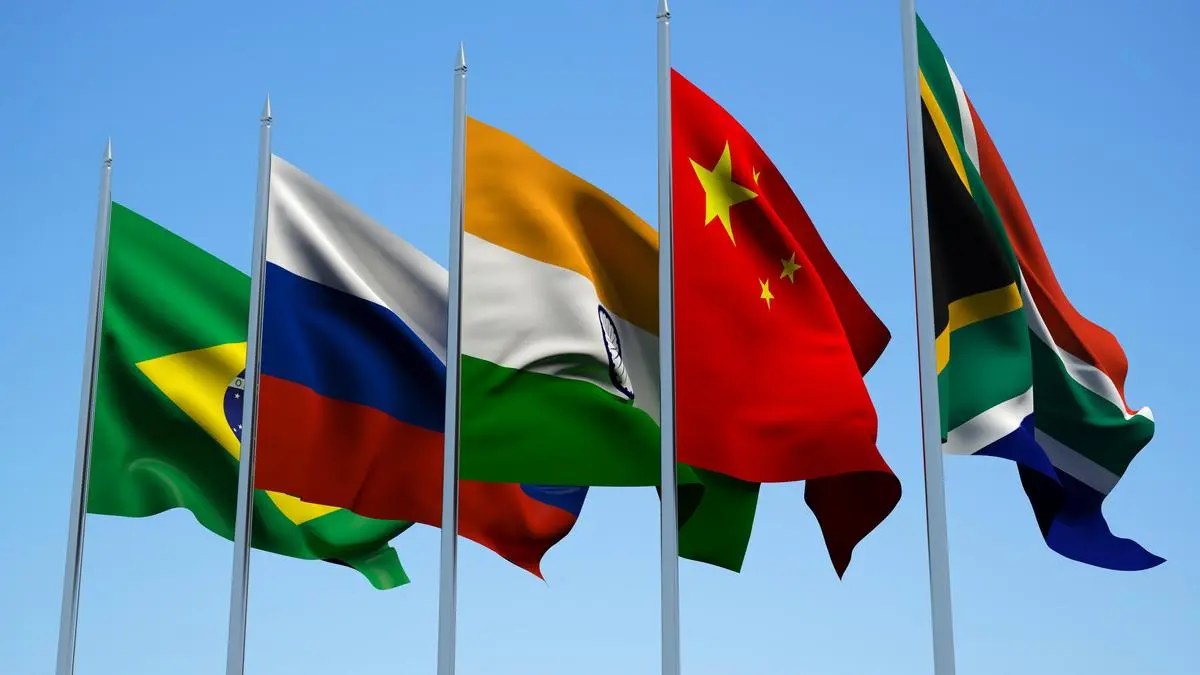
Geopolitics is often treated like a high school debate club where "consensus" is the only metric of success. The mainstream media is currently obsessed with the narrative that the BRICS summit failed because there was "no consensus" on West Asia or the Palestine-Israel conflict. They point to India’s refusal to pivot its stance as a sign of diplomatic friction or, worse, indecision.
They are wrong. In fact, they are looking at the chessboard upside down.
What the "consensus hunters" fail to grasp is that the lack of a joint communique on West Asia isn't a failure of the BRICS engine. It is the engine working exactly as intended. India’s refusal to sign off on a performative, anti-Western screed isn’t "stubbornness." It is a masterclass in strategic autonomy that preserves the only thing that actually matters in the new global order: multi-alignment.
The Consensus Trap
The lazy consensus in modern journalism suggests that if a group of nations meets and doesn’t produce a unified, thundering statement on a global crisis, the meeting was a waste of jet fuel. This is a Western-centric hangover from the G7 era, where ideological purity was the entry fee.
BRICS was never meant to be a monolithic bloc. It’s a trade and infrastructure syndicate, not a defensive pact or a moral crusade. When sources whisper about "differences" preventing a joint stance on Palestine, they are describing a feature, not a bug. India’s position remains unchanged because changing it to suit the collective would be a strategic suicide mission.
New Delhi has spent the last decade building a delicate, high-stakes relationship with Israel while simultaneously securing energy interests with the Gulf monarchies. To throw that away for a paragraph of boilerplate text in a BRICS memo would be the height of diplomatic amateurism.
The False Narrative of "Isolation"
Critics argue that India risks being "isolated" within BRICS if it doesn't align with the more vocal postures of South Africa or Brazil. This is a fundamental misunderstanding of power dynamics.
Isolation only happens to weak states. India is currently the fastest-growing major economy on the planet. You don't isolate the person who is buying your oil and building your digital infrastructure.
The reality is that India’s "divergence" is actually its greatest asset. By refusing to join a reactionary chorus, India maintains its role as the ultimate bridge between the Global South and the West. While other members are eager to use BRICS as a battering ram against the existing financial system, India is playing a longer, more sophisticated game. It wants to reform the system from within, not burn it down and sit in the ashes.
De-dollarization is a Distraction
The West Asia stalemate is often linked to the broader push for de-dollarization within BRICS. The logic goes: if they can't agree on a war, they can't agree on a currency.
This is another area where the "experts" are missing the mark. The push for a BRICS currency is largely a rhetorical tool for China and Russia. India knows this. New Delhi has zero interest in trading a US dollar hegemony for a Chinese yuan hegemony.
When India holds the line on West Asia, it is also signaling that it will not be bullied into economic experiments that serve Beijing’s interests more than its own. The "lack of consensus" is actually India’s way of keeping the handbrake on any move that would turn BRICS into a satellite of Chinese foreign policy.
The Palestine-Israel Realpolitik
Let’s talk about the actual "unchanged" position. India supports a two-state solution. It also recognizes Hamas’s actions on October 7 as terrorism. To the radical ideologues, this middle ground is "inconsistent." In the real world, it is the only logical path.
- Fact: India needs Israeli defense technology.
- Fact: India needs Arab capital and energy.
- Fact: India needs the IMEC (India-Middle East-Europe Economic Corridor) to remain viable.
If India had leaned into the fiery rhetoric demanded by some other BRICS members, it would have effectively spiked the IMEC before the first brick was laid. By maintaining its "unchanged" position, India is protecting a multi-billion dollar trade artery that bypasses the Belt and Road Initiative.
Stop Asking for a "Unified Voice"
The most common question in the "People Also Ask" section of search engines is: "Why can't BRICS agree on a common foreign policy?"
The question itself is flawed. You don't ask a shopping mall why it doesn't have a unified religion. BRICS is a platform for economic transactionalism. The moment it tries to become a moral arbiter of global conflicts, it will collapse under the weight of its own contradictions.
The "insiders" leaking stories about friction are usually those who want to see BRICS fail, or those who want to see it turned into an anti-West weapon. By resisting both, India ensures the group stays focused on what matters: reform of the IMF, expansion of the New Development Bank, and trade settlements in local currencies.
The Cost of Compliance
I’ve seen diplomats and corporate strategists lose their shirts trying to chase "alignment" for the sake of optics. It’s an expensive ego trip.
If India had chased consensus at this summit, the costs would have been immediate:
- Erosion of Trust with Washington: At a time when supply chains are shifting out of China, India cannot afford to look like a member of an ideological "anti-West" club.
- Alienation of Middle Eastern Partners: Countries like the UAE and Saudi Arabia—who are themselves navigating complex ties with Israel—value India’s pragmatic, non-combative approach.
- Loss of Leverage: If you always agree with the group, your vote is worth nothing. By being the "difficult" member, India ensures that nothing moves without its explicit consent.
The New Rules of the Game
We are moving into an era of "pick-and-pay" diplomacy. You join one group for tech, another for security, and a third for climate. The idea that you must have a "consensus" across all these disparate interests is a relic of the 20th century.
The BRICS West Asia stalemate isn't a sign of weakness. It's a sign that the members are actually powerful enough to disagree. Unlike the G7, where everyone nods along to the US tune, BRICS is a messy, loud, and honest reflection of a multipolar world.
India isn't "standing still" on Palestine. It is standing its ground.
Stop looking for harmony in a room full of giants. Look for the person who isn't shouting. They are usually the ones holding the keys to the exit. India has no interest in being the loudest voice in the room; it only cares about being the one that can’t be ignored. The "failure" to reach a consensus is, in reality, a confirmation of India's veto power over the Global South's narrative.
Don't wait for a joint statement. It wouldn't be worth the paper it’s printed on anyway. Watch the trade volumes and the hardware shipments. That’s where the real diplomacy is happening. Everything else is just noise for the critics.