The smell of roasted coffee beans usually dominates the morning air in Ciudad Bolívar, a sprawling working-class district clinging to the steep hillsides of Bogotá. But lately, the aroma is choked out by the sharp, metallic tang of burning rubber and the damp scent of overturned earth.
María Elena Gutiérrez wipes her hands on her apron. Her fingers are permanently stained from decades of peeling plantains for her small street-side empanada stall. For forty years, women like María Elena watched Colombian politics from afar, viewing the presidential palace in the historic center of the capital as a distant, walled fortress where wealthy men in tailored suits traded power like family heirlooms.
Then came Gustavo Petro.
When the former guerrilla and longtime senator took the oath of office as Colombia's first-ever left-wing president, María Elena wept. It felt like a personal victory. For the first time, the invisible Colombians—the domestic workers, the rural farmers, the informal vendors—had a voice at the highest level.
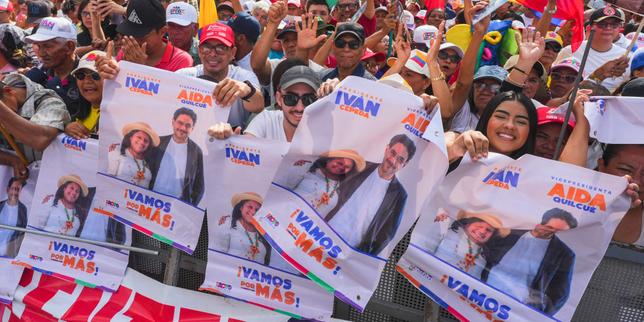
Now, as the country prepares to vote for his successor, that euphoric hope has curdled into a tense, agonizing anxiety. The upcoming presidential election is not merely a choice between competing political parties. It is a referendum on a profound, messy, and deeply polarizing social experiment. The very legacy of Colombia’s first leftist government hangs in the balance, and with it, the daily survival of millions who staked their futures on the promise of total change.
The Weight of a Broken Promise
To understand why Colombia stands at this knife-edge, one must look at the physical reality of Petro’s ambitious agenda. The administration entered office promising a radical overhaul of the country’s economic and social fabric. They pledged to transition away from oil and coal, rewrite the healthcare system, and achieve paz total—total peace—with the remaining armed groups terrorizing the countryside.
It was a beautiful vision. The reality, however, has been a grueling war of attrition.
Consider the healthcare system. Under the old model, private insurers managed public funds. It was a system plagued by corruption and long wait times, but it functioned with a predictable regularity in major cities. Petro sought to dismantle this framework, aiming to put the state in direct control of healthcare delivery to reach marginalized rural areas.
What followed was chaos. The reform stalled in a fractured Congress. Major insurers began to collapse under the weight of financial uncertainty. For María Elena, this meant that her monthly prescription for hypertension medication, which used to take an hour to collect, suddenly required three separate trips across the city to pharmacies facing severe shortages.
"The president spoke about dignity," she says, her voice dropping to a whisper as a crowded collective bus roars past her stall. "But dignity is hard to feel when you are standing in the rain for four hours just to get a blister pack of pills."
This is the central paradox of the Petro presidency. The rhetoric is emancipatory, but the execution has left many vulnerable citizens feeling abandoned in the transition. The opposition has seized on this frustration, painting the administration not as a champion of the poor, but as an incompetent entity capable of destroying working institutions without building viable replacements.
The Ghost of Total Peace
In the rural heartlands of Colombia, far from the bureaucratic battles of Bogotá, the stakes are measured in lives rather than legislative votes. The administration's flagship policy, paz total, aimed to negotiate simultaneous ceasefires with various guerrilla factions and criminal syndicates, including the National Liberation Army (ELN) and dissident groups of the former FARC.
In theory, it was a noble attempt to break the cycle of violence that has plagued the nation for over six decades. In practice, the policy inadvertently created power vacuums.
In departments like Cauca and Catatumbo, the withdrawal or restraint of state military forces allowed rival criminal groups to expand their territory. Extortion rackets skyrocketed. Local community leaders, the very people Petro promised to protect, found themselves targeted by armed groups vying for control of lucrative drug trafficking routes and illegal mining operations.
The skepticism is palpable. Rural communities that overwhelmingly voted for Petro feel a sense of profound whiplash. They wanted peace, but they received an unstable equilibrium where the state appears paralyzed, and the outlaw groups operate with a renewed sense of impunity. The dream of a peaceful countryside has collided with the brutal logistics of warlordism, leaving voters wondering if the idealistic approach of the left is simply too naive for Colombia’s complex criminal underworld.
The Battle lines of the New Election
As the campaign trail heats up, the political center has effectively evaporated. The upcoming election is shaping up to be a fierce ideological tug-of-war, with candidates positioning themselves strictly in relation to the current president’s record.
On one side stands the conservative and centrist opposition. Their narrative is simple, cohesive, and potent: a promise to restore order, economic stability, and security. They appeal to the middle class, which has grown increasingly alarmed by rising inflation, a weakening peso, and the perception that Colombia is slipping backward into the dark days of widespread insecurity. They point to the stalled economic growth and argue that Petro's anti-extractive rhetoric has scared away foreign investment, starving the state of the revenue needed to fund social programs.
On the other side are the defenders of Petro’s historical project. They argue that four years is an absurdly short time to dismantle decades of systemic inequality and institutional inertia. They view the failures not as errors of the administration, but as deliberate sabotage by a traditional elite determined to see the left fail. For them, a vote for the continuity of the progressive platform is a vote to keep the door open for the marginalized.
But the real problem lies elsewhere. The most critical demographic in this election is not the ideological faithful on either side. It is the exhausted majority.
These are the voters who do not care about political theory. They care about the cost of eggs, the safety of their children on the walk home from school, and whether their local clinic has a doctor on duty. They are the ones who feel the disconnect between the soaring poetry of the presidential speeches and the prose of their daily struggles.
A Choice Between Two Uncertainties
The atmosphere in Colombia today feels heavy, reminiscent of the tense days leading up to the 2016 peace referendum. There is a collective holding of breath.
If the country votes to swing back to the right, it will be viewed as a definitive rejection of the leftist experiment, likely leading to the dismantling of Petro's policy initiatives and a return to orthodox economic strategies. Yet, such a shift risks re-igniting the deep-seated social anger that led to the massive, sometimes violent national strikes of 2019 and 2021. The systemic inequalities that brought Petro to power will not vanish with a change in administration.
If the progressive coalition somehow retains power, they will face an uphill battle with a deeply cynical electorate and a system that has proven remarkably resistant to rapid transformation. They will no longer have the luxury of blaming past governments; they will own the reality they helped create.
The sun begins to set over Ciudad Bolívar, casting long, dramatic shadows across the unevenly paved streets. María Elena begins the slow process of packing up her stall, cleaning the grease from the metal counter, and counting the day’s meager earnings.
She looks down the hill toward the glittering towers of the financial district in the distance. The city looks beautiful from up here, a sea of lights stretching across the savannah. But up close, the cracks in the pavement are deep, and the climb is steep.
"I don't know who I will vote for yet," she says, securing the plastic tarp over her cart. "Many promises were made to us. Some were kept, many were broken. All I know is that whoever wins, we will still be up here on this hill, trying to survive the morning."