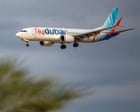
The cockpit door was supposed to be impenetrable. For over two decades, reinforced bulkheads, heavy deadbolts, and digital locking mechanisms stood as the ultimate physical barrier against unlawful interference. But on September 30, 2026, Flydubai Flight 1073 from Dubai to Tel Aviv proved a terrifying operational reality: the greatest vulnerability in modern commercial aviation is not the person trying to break in from the cabin. It is the person already sitting in the right-hand seat.
When First Officer Hamam al-Hammami allegedly attacked Captain Smit Machchhar with a crash axe inside the flight deck of a Boeing 737 MAX 8, he shattered more than just aviation safety norms. He exposed a structural blind spot in global pilot vetting, background checks, and psychological monitoring that airlines and security agencies have spent years ignoring. Within days of the incident, counter-terrorism investigators across the UAE, Israel, and international intelligence networks began retracing the co-pilot's paper trail. That trail quickly led thousands of miles away to Australia, where security agencies launched an urgent inquiry into al-Hammami's years spent living and studying in Melbourne. For an alternative look, read: this related article.
The Anatomy of an Inside Threat
Commercial aviation security has historically suffered from linear thinking. Billions of dollars are funneled into metal detectors, liquid restrictions, baggage reconciliation systems, and passenger manifest screening. Yet, the flight deck remains a sanctuary of absolute trust. Once a pilot clears a credential verification check and steps past security, they are effectively granted the keys to a multi-ton kinetic missile.
Investigations revealed that al-Hammami had previously studied engineering at RMIT University in Melbourne between 2015 and 2017 before leaving the institution without completing his degree. Security services are now dissecting that specific window. Investigators are probing whether radicalization took root during his time in Australia, or if warning signs were missed during subsequent transitions through flight training pipelines in other jurisdictions. Related insight on this matter has been provided by TIME.
Compounding the regulatory failure are reports that al-Hammami had previously been flagged or restricted from flying by Omani authorities due to concerns over extremist leanings. Rather than triggering a global aviation blacklist, those red flags apparently failed to prevent his transition into an administrative role at Oman Air before he was subsequently hired by Flydubai. In an industry plagued by pilot shortages and fragmented cross-border data sharing, human resources departments often rely on basic license validations rather than deep, intelligence-led background checks. When a pilot moves between carriers and countries, vetting files do not always travel with them.
The Breakdown of Cockpit Protocols
The immediate aftermath of Flight 1073 was averted only by raw physical courage. As the aircraft plunged from 34,000 feet toward a catastrophic dive, the wounded Captain Machchhar, alongside deadheading crew members and passengers who rushed the flight deck, managed to overpower the first officer. The structural damage was severe; the extreme overspeed during the dive tore away a major portion of the Boeing 737's rudder before the plane was safely diverted to Saudi Arabia.
The incident laid bare the grim inadequacy of current emergency protocols for internal mutiny. Standard operating procedures dictate that the flight deck remains locked to prevent external threats. When the threat originates from within, the traditional power dynamic of the two-person crew collapses. If the captain is incapacitated or ambushed without warning, the remaining pilot holds absolute, unmitigated control over the aircraft's flight management systems.
Aviation safety experts have long debated the merits of mandatory "sterile cockpit" rules that require a cabin crew member to step inside whenever one pilot leaves to use the restroom. However, few airlines have designed robust countermeasures for a co-pilot actively weaponizing the controls against the captain while airborne. The assumption of inherent peer trustworthiness has proven to be a fatal design flaw.
Regulatory Blind Spots and the Road Ahead
As intelligence agencies comb through digital footprints, social media associations, and historical university records in Melbourne and beyond, the political fallout is expanding rapidly. Regulators are under immense pressure to overhaul how foreign pilot credentials and background histories are audited.
Sharing intelligence across international borders remains notoriously bureaucratic. Civil aviation authorities operate in silos, rarely exchanging real-time counter-terrorism intelligence with local police forces or foreign security services unless a formal criminal investigation is already underway. If an airline in the Gulf can hire a pilot whose previous national employer had concerns about his ideological trajectory, the global safety net is broken.
Tightening screening protocols at the airline level will come at a high operational cost. Comprehensive psychological evaluations, continuous behavioral monitoring, and universal intelligence vetting for commercial aviators are expensive and logistically complex. But the alternative is maintaining a system where a single disgruntled or radicalized crew member can bypass every physical security checkpoint on earth simply by wearing a uniform and flashing an ID badge.
The investigation into Flight 1073 is far from complete, and the full extent of the attacker's international networks remains under active scrutiny. What is already certain, however, is that commercial aviation can no longer afford to treat the flight deck as a zone exempt from skepticism. The locks on the door keep the world out, but they do nothing to keep the enemy within.