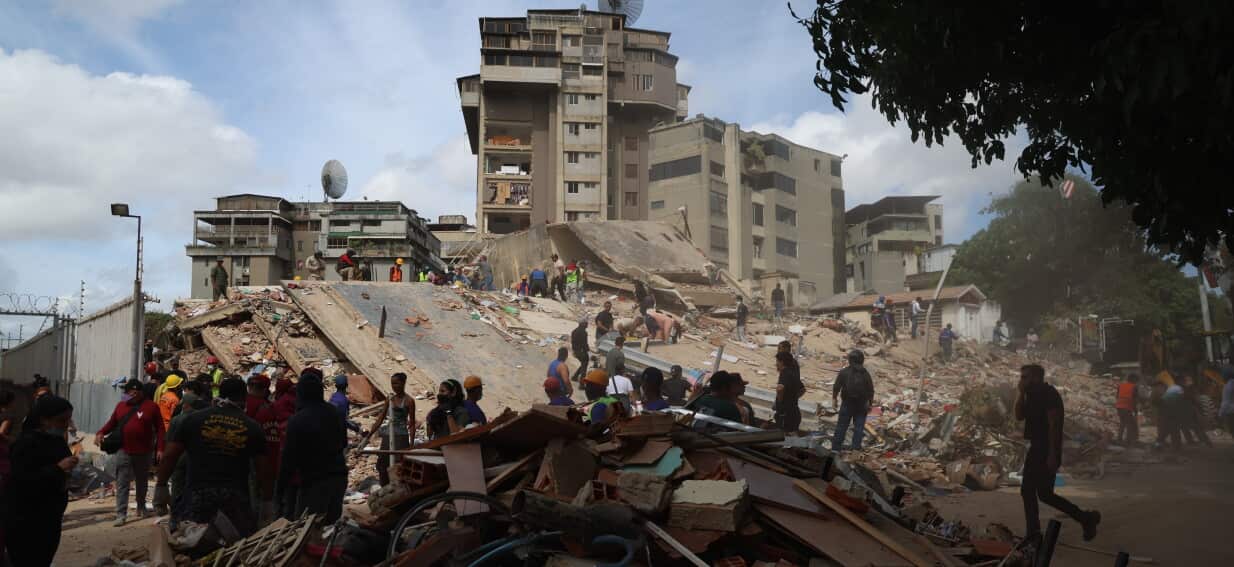
A series of catastrophic earthquakes has left Venezuela reeling, with the official death toll climbing past 235 and thousands more displaced. While a surge of global relief is arriving at the borders, the aid is not reaching the people who need it most. Bureaucratic bottlenecks, crumbling domestic infrastructure, and deep political distrust are choking the supply lines. The international community is throwing money and supplies at a logistics network that is fundamentally broken. To prevent a secondary humanitarian disaster, the focus must shift from sending more cargo to fixing the distribution channels on the ground.
The immediate aftermath of a seismic disaster demands speed. Yet, the current influx of international goodwill is colliding with a grim reality. Tons of medical supplies, clean water, and temporary shelters are sitting in warehouses at ports of entry, trapped in a web of customs red tape and logistical paralysis.
The Anatomy of a Distribution Failure
Getting supplies into a country is not the same as getting them into the hands of a survivor.
When the ground stopped shaking, the international response was swift. Neighboring countries and global NGOs dispatched cargo planes laden with emergency goods. However, the domestic infrastructure required to move these goods from tarmac to towns has effectively collapsed. Venezuela’s transportation network was severely degraded long before the quakes struck. Now, damaged roads, bridge failures, and severe fuel shortages mean that aid convoys are stuck in place.
Furthermore, the distribution of goods is heavily centralized. Local municipalities and independent aid groups are being bypassed in favor of a top-down management style that lacks granular visibility. Without local coordination, supplies are sent to areas based on guesswork rather than verified need.
- Fuel Shortages: Even where roads are passable, diesel and gasoline are scarce, grounding delivery trucks.
- Communication Blackouts: Cellular networks and electricity grid failures prevent field workers from reporting real-time shortages.
- Security Corridors: Armed groups and localized lawlessness mean convoys require military escorts, which slows operations to a crawl.
Consider a hypothetical scenario where an NGO brings 50 tons of water purification tablets to a port. Under normal circumstances, this would be deployed to regional hubs within 24 hours. In the current environment, that same shipment faces a multi-day delay just to secure the necessary transport permits, followed by a hazardous journey over cracked highways with no guarantee of fuel for the return trip.
The Friction of Political Friction
Aid is never purely humanitarian; it is inherently political. The current relief surge is exacerbating long-standing tensions between state authorities and independent civil society organizations.
The government insists on total oversight of incoming cargo. They argue this is necessary to ensure equity and prevent contraband. Independent operators, however, view this control as a mechanism to weaponize aid distribution for political leverage. This mutual suspicion creates an environment of compliance checks that paralyzes field operations. While officials sign off on paperwork in Caracas, communities in the hardest-hit zones are left to dig through rubble with their bare hands.
International donors are also caught in a bind. They want to ensure their taxpayers' money is spent effectively, but they are wary of funneling resources directly through state channels with poor tracking histories. This hesitation creates another layer of delay. Donors demand rigorous reporting and transparency measures that local teams, operating without internet or electricity, simply cannot provide in the middle of an emergency.
The Problem with Blanket Aid Packages
A common mistake in rapid-response journalism and international logistics is treating all aid as equal. Sending generic winter tents to a tropical region or shipping complex medical machinery that requires a stable power grid to operate does more harm than good. It clogs the limited transport capacity that should be reserved for blood plasma, clean water, and heavy machinery.
Reports from the ground indicate that warehouses are filling up with clothing donations and non-essential goods, while basic surgical instruments and antibiotics remain in critically short supply. The global relief surge is noisy, visible, and poorly targeted.
Rebuilding the Local Network
To break the deadlock, international actors must decentralize their operations. They must empower the networks that already exist on the margins.
Local churches, community doctors, and neighborhood associations are the only entities with accurate, street-by-street data on casualties and immediate needs. They do not need massive logistics hubs; they need direct financial support and micro-grants to purchase what is available locally or across nearby borders through informal, faster channels.
Relying entirely on massive container shipments and government-to-government agreements is a luxury that a country with a collapsed infrastructure cannot afford. The international community needs to pivot toward cash-based assistance where markets are still functioning, allowing survivors to dictate their own recovery priorities.
The Security Dilemma on the Highways
Moving valuable goods through a crisis zone invites exploitation. Criminal networks and opportunistic gangs have begun targeting unescorted cargo vehicles along the major northern transit routes.
This introduces a brutal trade-off for aid agencies. Accepting state-provided military escorts guarantees a degree of safety, but it compromises the neutrality required to operate in contested territories. Some communities view the military with deep skepticism, and an armed convoy can inadvertently turn an aid drop into a flashpoint for local violence. Conversely, moving without protection risks losing the entire cargo to theft.
This security paralysis is the hidden reason why the delivery numbers reported by international agencies do not match the desperate conditions reported by citizens in the affected towns. The supplies exist, but the risk of moving them is deemed too high by risk-averse logistics managers sitting in regional offices outside the country.
The Cost of the Long-Term Shadow
The focus will eventually shift away from Venezuela as the news cycle moves on. The death toll will stabilize, the initial shock will wear off, and the global relief surge will recede. That is when the real crisis begins.
An earthquake does not just destroy buildings; it obliterates the economic fabric of a region. When the emergency food rations run out in a few weeks, the underlying agricultural and retail systems will still be broken. If the current aid bottlenecks are not cleared immediately, the population will face a protracted period of artificial scarcity, driving inflation and triggering another wave of mass migration that will ripple across the continent.
Fixing this requires a hard, unglamorous shift in strategy. International agencies must stop holding press conferences celebrating the volume of aid sent and start doing the tedious work of negotiating local access agreements, repairing specific transit bottlenecks, and bypassing centralized choke points. The survival of thousands depends not on the generosity of the world, but on the efficiency of the final mile.