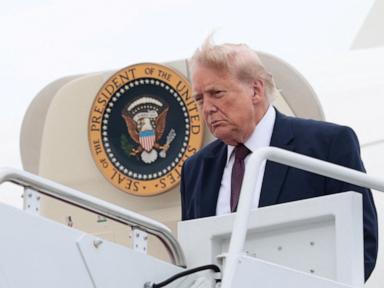
President Donald Trump ordered the Department of Justice to investigate major oil companies for price gouging, claiming retail gasoline prices are not falling fast enough relative to crashing crude markets. The directive follows a late-night social media post where the president noted that while crude prices drop like a rock, the relief for everyday drivers remains painfully slow. While a quick political fix ahead of the upcoming midterm elections makes for good theater, the underlying economics of fuel distribution suggest a federal probe will do little to alter what happens at the local pump.
Crude oil benchmark prices have dropped roughly 23 percent from their recent highs, driven largely by an interim ceasefire agreement between the United States and Iran that reopened the Strait of Hormuz. Despite the global supply chain opening back up, the national average for a gallon of regular gasoline has only trickled down by about 14 percent, sitting stubbornly near the $3.90 mark. Drivers feel cheated. Politicians smell an opportunity. Yet anyone who has spent decades tracking the energy sector knows that the gap between crude oil futures and retail fuel prices is driven by infrastructure bottlenecks, regional refining constraints, and retail risk management, rather than a smoke-filled room of oil executives conspiring to fix prices.
The Rockets and Feathers Phenomenon
Retail fuel markets have long operated under a well-documented economic pattern known to analysts as the rockets and feathers effect. When international crude prices spike due to geopolitical conflicts or sudden supply disruptions, retail gas station owners raise their pump prices almost immediately, soaring like a rocket. They do this because they know their next delivery of wholesale fuel will cost significantly more, and they need to preserve enough cash flow to replenish their tanks.
Conversely, when crude oil prices tumble, retail prices drift downward slowly, falling like a feather. Retailers are hesitant to slash prices when they are still sitting on inventory that they purchased days prior at a higher wholesale rate. If a local gas station owner lowers their prices too quickly, they risk selling their current fuel at a financial loss. This lag creates a multi-week cushion where retail margins temporarily expand, giving the appearance of corporate greed to the casual observer.
The underlying math of a gallon of gasoline explains why prices do not move in perfect harmony with oil barrels. A barrel of oil contains 42 gallons, but turning that raw commodity into usable motor fuel requires a complex sequence of refining, blending, transporting, and retailing. Each step carries fixed operational expenses that do not decrease just because a geopolitical peace deal was signed in the Middle East.
The Ghost of Refining Capacity
Even if the Department of Justice launches a sweeping antitrust investigation, federal lawyers cannot magically expand the capacity of domestic oil refineries. During the recent conflict involving Iran, multiple global refining operations faced severe halts and reduced capacity. Bringing those heavy industrial plants back to full utilization takes months, not days.
The United States currently operates with a structural deficit in refining capacity compared to its historical peaks. Older facilities have been shuttered or converted to biofuels over the last decade, leaving the remaining plants running at near-maximum capacity just to keep pace with baseline consumer demand. When a refinery goes offline for unscheduled maintenance or operates at a reduced rate due to supply instability, it creates a localized shortage of finished gasoline. You can have a global glut of cheap crude oil, but if you do not have the physical facilities available to boil that crude down into gasoline, the price at the pump will stay high.
Regional variations emphasize this structural reality. In states with strict environmental regulations requiring specialized summer fuel blends, refining constraints are even tighter. These boutique fuel blends cannot easily be imported from neighboring states, meaning any local refinery hiccup triggers an immediate price spike that takes weeks to resolve, regardless of what the broader global benchmarks indicate.
Washington Institutional Memory
History shows that federal investigations into oil industry price gouging rarely yield the explosive findings that politicians promise. Over the past fifty years, various administrations have called upon the Federal Trade Commission and the Department of Justice to investigate energy companies during periods of high inflation or sudden market shifts. Almost every single probe has concluded with the same result, attributing price fluctuations to market forces, supply-demand imbalances, and standard competitive behavior rather than illegal collusion.
An actual antitrust violation requires proof of an explicit agreement among competitors to fix prices or restrict supply. Major integrated oil companies do not directly set the daily price at the corner gas station. The vast majority of retail fuel stations are independent franchises or small businesses owned by local operators who set their daily rates based on nearby competition and their own wholesale acquisition costs.
A Department of Justice probe will likely consume thousands of billable hours, demand millions of pages of internal corporate emails, and drag out long past the upcoming midterm elections. The true objective of the announcement is not necessarily a courtroom victory, but rather a public relations effort designed to show an anxious electorate that the administration is actively fighting inflation. With core inflation remaining elevated and the Federal Reserve signaling further interest rate hikes, pointing the finger at corporate actors provides a convenient shield against voters frustrated by the lingering high cost of living.
The True Cost Breakdown
To understand why a federal mandate cannot instantly lower prices, one must look at what actually comprises the price of a gallon of fuel. According to historical energy data, the raw cost of crude oil typically accounts for roughly half of the total price at the pump. The remaining half is split among three distinct categories that are largely immune to sudden downward market shifts.
- Taxes: Federal, state, and local excise taxes represent a fixed cents-per-gallon charge that remains completely unchanged regardless of whether crude is trading at $100 or $50 a barrel.
- Refining Costs: The cost to process the oil, purchase chemical additives, and comply with environmental mandates fluctuate based on electricity costs and regional capacity rather than crude availability.
- Distribution and Marketing: Trucking fuel from terminal racks to local stations involves labor costs, diesel fuel for delivery fleets, and insurance, all of which have risen significantly over the past three years due to broader inflationary pressures.
When a local station operator works on a net profit margin of just a few cents per gallon, their room to maneuver is incredibly tight. Expecting retail prices to mirror the immediate 23 percent drop in crude oil futures ignores the heavy operational realities of the domestic supply chain.
The administration’s aggressive rhetoric may scare some large retail chains into shaving a few cents off their margins earlier than planned to avoid becoming a political target. However, structural economic realities dictate that true relief at the pump will only arrive when domestic refining capacity catches up with demand and the logistics network flushes out the expensive inventory currently sitting in the system. Until those physical constraints ease, the price of fuel will continue its slow, agonizing feather-like descent, completely indifferent to political pressure or the threat of a federal inquiry.