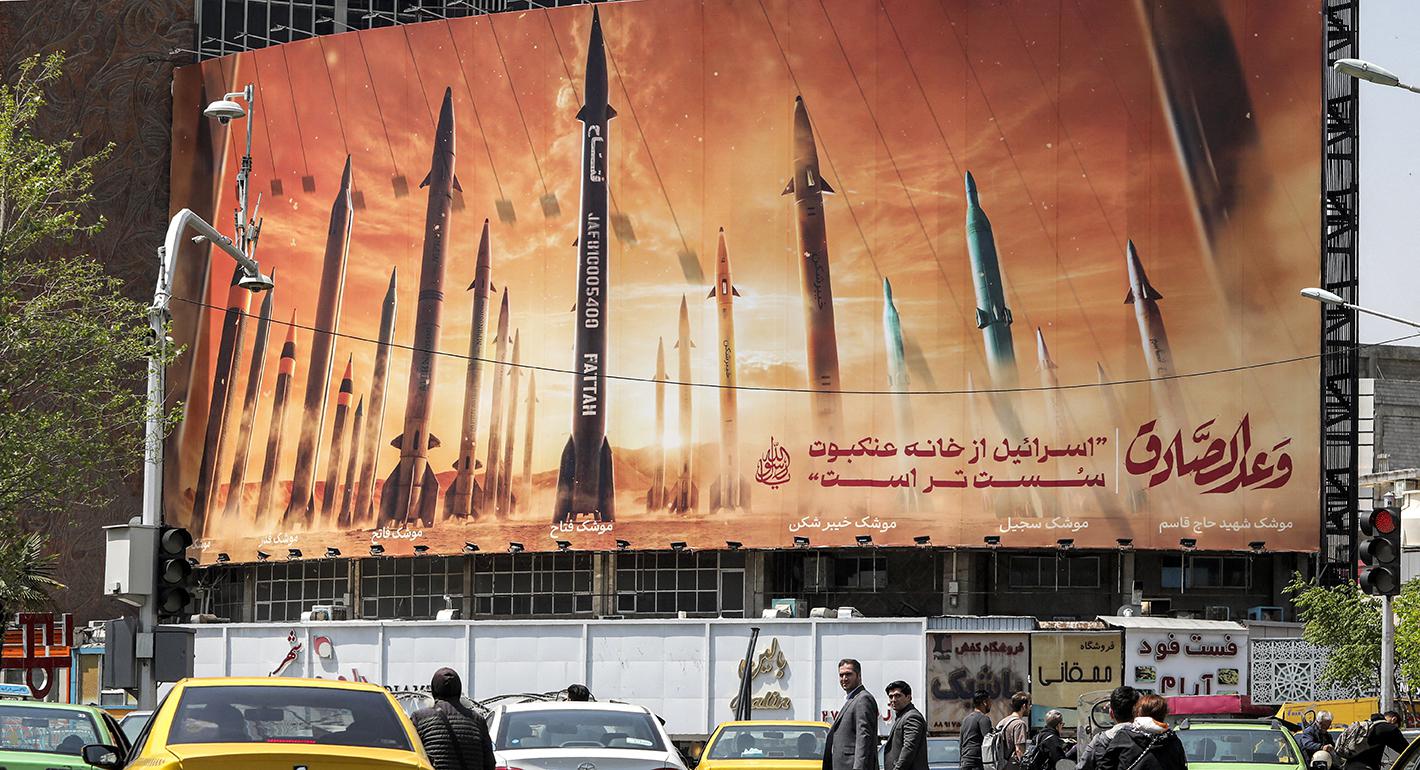
The shadow war between Washington and Tehran has shifted from a slow burn to a high-stakes standoff that threatens to dismantle the existing nuclear non-proliferation framework. While recent headlines have fixated on diplomatic optics and high-profile meetings between Donald Trump’s inner circle and international figureheads, the underlying reality is far more dangerous. The core of the current crisis is not just about uranium enrichment levels or ballistic missile ranges; it is about a total collapse of deterrence that has left both sides one miscalculation away from a full-scale regional conflict.
The geopolitical board is being reset. With the re-emergence of a "maximum pressure" doctrine, the United States is signaling that the era of managed containment is over. However, Iran is no longer the isolated actor it was a decade ago. It has spent the intervening years hardening its infrastructure, diversifying its proxy network, and deepening its strategic ties with Moscow and Beijing. This is a collision course where neither side has a clear off-ramp that doesn't look like a total surrender.
The Nuclear Red Line is Shifting
For years, the international community treated the 2015 nuclear deal as the definitive benchmark for Iranian ambitions. That benchmark is now a relic. Iran has mastered the fuel cycle, and more importantly, it has developed the technical "know-how" that cannot be bombed out of existence. Even if a strike were to take out physical centrifuges at Natanz or Fordow, the intellectual capital remains.
The current administration's stance is unequivocal: Iran will not be permitted to weaponize its nuclear program. But the definition of "weaponization" is becoming increasingly blurred. Tehran has already crossed the threshold of 60% enrichment, a level that has no credible civilian application. They are essentially parking themselves on the doorstep of 90% weapons-grade material. This "nuclear hedging" serves as a permanent leverage point, forcing the U.S. and its allies to negotiate under the constant threat of a breakout.
This isn't just a technical challenge. It’s a psychological one. By maintaining the ability to produce a weapon in a matter of weeks, Tehran exerts a form of "virtual deterrence" even without a physical bomb.
The Rubio Factor and the New State Department
The appointment of Marco Rubio as Secretary of State signals a fundamental pivot in how the U.S. intends to handle its adversaries in the Middle East. Rubio has long been a hawk on the Iran issue, viewing the Islamic Republic not as a state to be bargained with, but as a revolutionary entity that must be fundamentally constrained.
His strategy involves a two-pronged attack: suffocating Iran’s remaining oil revenue through aggressive secondary sanctions and rebuilding a credible military threat. The message being sent to European allies and regional partners is clear: the days of strategic patience are over. The U.S. is returning to a policy where economic survival for Tehran is directly tied to its behavior regarding both its nuclear program and its regional proxies.
However, this approach carries a massive risk. In the past, extreme economic pressure has led Tehran to lash out. Whether it's through harassment of shipping in the Strait of Hormuz or activating Hezbollah and the Houthis, Iran has shown it can raise the cost of American pressure significantly. Rubio’s challenge will be managing that escalation without being dragged into the very "forever war" his superiors have promised to avoid.
The Proxy Network as a Defensive Shield
One cannot analyze the potential for a US-Iran war without looking at the "Axis of Resistance." This isn't just a collection of ragtag militias; it is a sophisticated, tiered defense system designed to push the battlefield away from Iranian soil.
The Lebanon Front
Hezbollah remains the crown jewel of Iran's proxy strategy. With an arsenal of over 150,000 rockets and missiles, many of them precision-guided, Hezbollah acts as a conventional deterrent against an Israeli or American strike on Iranian nuclear facilities. If Iran is hit, Tel Aviv becomes a target. This creates a Mexican standoff that has successfully prevented a direct strike for nearly two decades.
The Houthi Variable
The conflict in Yemen has provided Iran with a low-cost, high-impact way to threaten global trade. The Houthis have demonstrated that they can disrupt the Red Sea corridor with relatively inexpensive drones and anti-ship missiles. This adds a global economic dimension to any potential war. If the U.S. moves against Iran, the global oil market could see an immediate and catastrophic spike as the world's most vital shipping lanes become combat zones.
The Failure of Traditional Diplomacy
The involvement of religious figures and high-level envoys in the dialogue around Iran often serves as a smokescreen for the harder realities of power politics. While public messages to the Vatican or other moral authorities may soften the narrative for a global audience, they rarely move the needle on the ground. The reality is that the Iranian leadership views the nuclear program as an existential necessity for the survival of the regime.
They look at the fate of Muammar Gaddafi in Libya—who gave up his nuclear program only to be ousted by a NATO-backed rebellion—and contrast it with the Kim dynasty in North Korea, which remains secure precisely because it possesses a nuclear deterrent. For the Supreme Leader, the lesson is clear: weapons are the only true guarantee of sovereignty.
The Economic Warfare Reality
Sanctions are often described as a "middle ground" between diplomacy and war, but for the Iranian people, they are a form of kinetic conflict. The Iranian Rial has suffered massive devaluation, and inflation has gutted the middle class. Yet, the regime has proven remarkably resilient. They have developed a "resistance economy" that relies on smuggling, "dark fleet" tankers, and barter trade with Russia and China.
Russia, in particular, has become a vital partner. In exchange for Iranian drones used in the Ukraine conflict, Moscow is providing Tehran with advanced military technology, potentially including Su-35 fighter jets and S-400 air defense systems. This military-technical cooperation makes a potential strike on Iran far more complicated and dangerous than it would have been five years ago.
The Intelligence Gap
One of the greatest dangers in the current standoff is the lack of reliable intelligence regarding the internal dynamics of the Iranian leadership. The West often treats the regime as a monolith, but it is a complex web of competing interests between the traditional military, the Islamic Revolutionary Guard Corps (IRGC), and the clerical establishment.
There is a real risk that the U.S. could misread a defensive posture as an offensive one, or vice versa. In an environment where communication channels are almost non-existent, a small tactical error—a drone shot down in the wrong place, a cyberattack that goes too far—could trigger a cycle of escalation that neither side can stop.
The Cyber Battlefield
Before any bombs fall, the war will be fought in the digital space. Iran has developed significant offensive cyber capabilities, as seen in previous attacks on Middle Eastern financial institutions and American infrastructure. A "maximum pressure" campaign will almost certainly be met with a "maximum disruption" cyber campaign.
We are talking about potential hits on the American power grid, water treatment plants, and financial systems. This is the new frontier of asymmetric warfare. Iran knows it cannot win a conventional carrier-battle against the U.S. Navy, so it will target the American domestic front to sap public support for a military campaign.
The Military Readiness Paradox
The U.S. military is currently stretched thin. With ongoing commitments in Europe and the mounting pressure in the Indo-Pacific, a major conflict in the Middle East is the last thing the Pentagon wants. A war with Iran would require a massive reallocation of assets, leaving other theaters vulnerable.
Furthermore, the nature of a conflict with Iran would be unlike the wars in Iraq or Afghanistan. It would be a high-intensity, multi-domain war involving sophisticated air defenses, sea mines, and ballistic missiles. The "overmatch" that the U.S. enjoyed in the 1990s and early 2000s has eroded. Iran has spent decades studying American tactics and building a military designed specifically to exploit American weaknesses in the Persian Gulf.
The Role of Regional Allies
Israel, Saudi Arabia, and the UAE are not just bystanders; they are central players with their own agendas. Israel views a nuclear-armed Iran as a direct existential threat and has repeatedly indicated it will act alone if necessary. The Gulf states, while wary of Iran, are also terrified of being the primary battlefield for a US-Iran war. They are caught in a delicate balancing act, trying to improve relations with Tehran while maintaining a security umbrella from Washington.
If a war breaks out, these countries will be the first targets of Iranian retaliation. This reality has led to a quiet but significant shift in regional diplomacy, with Saudi Arabia and Iran restoring ties in a deal brokered by China. This rapprochement makes the U.S. effort to build a regional anti-Iran coalition much more difficult.
The Hard Reality of "No Nuclear Weapon"
When American leaders state that "Iran cannot have a nuclear weapon," they are drawing a line in the sand that they must be prepared to defend with force. If diplomacy fails and sanctions don't stop the centrifuges, the only remaining options are a permanent acceptance of a nuclear Iran or a massive military intervention.
Acceptance would mean the end of the non-proliferation treaty as we know it, likely triggering a nuclear arms race in the Middle East as Saudi Arabia and Turkey seek their own deterrents. Military intervention, on the other hand, would mean a regional war with global economic consequences and no guaranteed endgame.
The current path is a high-speed game of chicken. Both drivers believe the other will swerve first. But in the history of Middle Eastern conflict, the most common outcome isn't a strategic pivot—it’s a head-on collision.
The clock is ticking in the enrichment halls of Fordow and the situation rooms in Washington. Every day without a diplomatic breakthrough is a day closer to a decision that will redefine the 21st century. The window for a peaceful resolution is closing, not because of a lack of options, but because of a total lack of trust.
Prepare for a long period of instability where the threat of war is the primary tool of diplomacy.