The Nashville Zoo board did something rare on a Thursday afternoon. They slammed the door shut on a multi-million-dollar compromise.
Infrastructure developer DC Blox had tabled a memorandum of understanding designed to break a months-long gridlock over a proposed facility on Grassmere Park Drive. The offer included scaling back an initial 40-megawatt footprint down to a tighter 10-megawatt, 69,000-square-foot configuration, alongside carving out a piece of the newly acquired property for future zoo expansion. Unanimously, the board rejected it.
Chief Executive Officer Rick Schwartz drew a hard line in public statements following the vote. The institution refused to compromise on the safety of the three thousand animals and half a million community members tied to the park. The denial marks a high-stakes escalation in a broader urban planning collision between municipal preservation and the relentless physical footprint of the artificial intelligence boom.
Data centers are heavy industrial assets masquerading as quiet office neighbors. They require massive electrical substations, continuous cooling loops, and emergency diesel generators that roar to life during grid tests. When DC Blox dropped $23 million on a 23.49-acre tract directly adjacent to zoo boundaries, it triggered an immediate collision course with local ecology.
Animals possess sensory capacities that dwarf human thresholds. Low-frequency acoustic hums from industrial chillers and constant high-decibel whining from bank cooling fans do not merely annoy wildlife. They disrupt endocrine systems, alter breeding behaviors, and disorient species that rely on stable ambient quiet to survive.
Cities across the country are facing a similar reckoning. Municipalities approved digital infrastructure tax incentives for years without asking what happens when a server farm moves next to a school, a residential neighborhood, or a major public wildlife sanctuary. Nashville became the flashpoint because the friction is visible. The contrast between giraffes and gigawatts is too sharp to ignore.
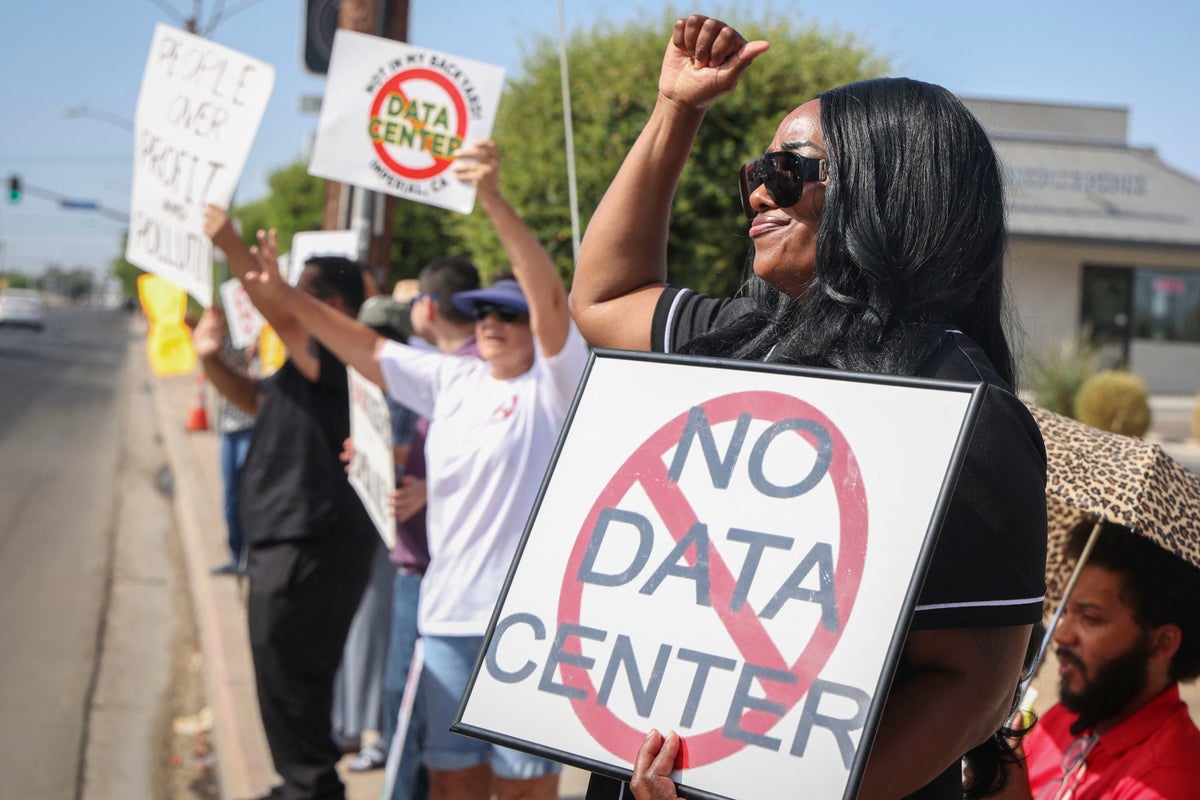
The political machinery of Davidson County moved swiftly once the threat materialized. Mayor Freddie O'Connell pursued municipal condemnation strategies, while the Metro Council introduced strict regulatory guardrails and a temporary moratorium on new permits. Public sentiment tilted decisively against the project, fueled by hundreds of thousands of digital petition signatures and packed public hearing rooms.
The rejected compromise reveals a core miscalculation by industrial developers. They treat community pushback as a pricing negotiation. They assume that if they shave off a few megawatts, hand over a sliver of land, or promise state-of-the-art acoustic baffling, local stakeholders will fold.
That playbook is burning out. Communities are realizing that once heavy server infrastructure drops into a neighborhood, the environmental baseline changes permanently. Water usage spikes for evaporative cooling. Electrical grids strain to feed uninterrupted power demands. Local roads face heavy construction burdens, and the promised high-wage permanent jobs rarely offset the operational disruption.
The Nashville Zoo stood its ground because the long-term cost of hosting industrial infrastructure outweighed any short-term corporate concession. Other cities watching this standoff now have a blueprint for how to say no to developers who underestimate the value of peace, quiet, and a community asset worth protecting.