Electric utility companies want to buy your home-generated solar power, but not because they are environmental altruists. They are doing it because their aging infrastructure is failing under the weight of surging demand, and turning your roof into a miniature power plant is the cheapest way for them to survive. This mechanism, known broadly as virtual power plants and net metering, allows utilities to tap into customer-owned solar panels and batteries to stabilize the electrical grid during peak demand. For the homeowner, it promises a paycheck. For the utility, it is a survival strategy funded by your capital expenditure.
The glossy marketing brochures from power companies paint a picture of a harmonious, decentralized green grid where everyone wins. The reality behind the curtain is far more cynical.
The Subsidized Crutch of an Aging Infrastructure
America’s electrical grid was never designed for the twenty-first century. It was built on a hub-and-spoke model, where massive coal, gas, or nuclear plants pushed electricity in one direction toward passive consumers. Today, that model is collapsing under the dual pressures of extreme weather and the rapid electrification of everything from heating to vehicles.
Building new centralized power plants and pulling hundreds of miles of high-voltage transmission lines takes decades and costs billions. Regulatory hurdles, eminent domain battles, and environmental lawsuits mean that a new transmission line proposed today might not deliver its first kilowatt until the late 2030s. Utilities are trapped in a bottleneck.
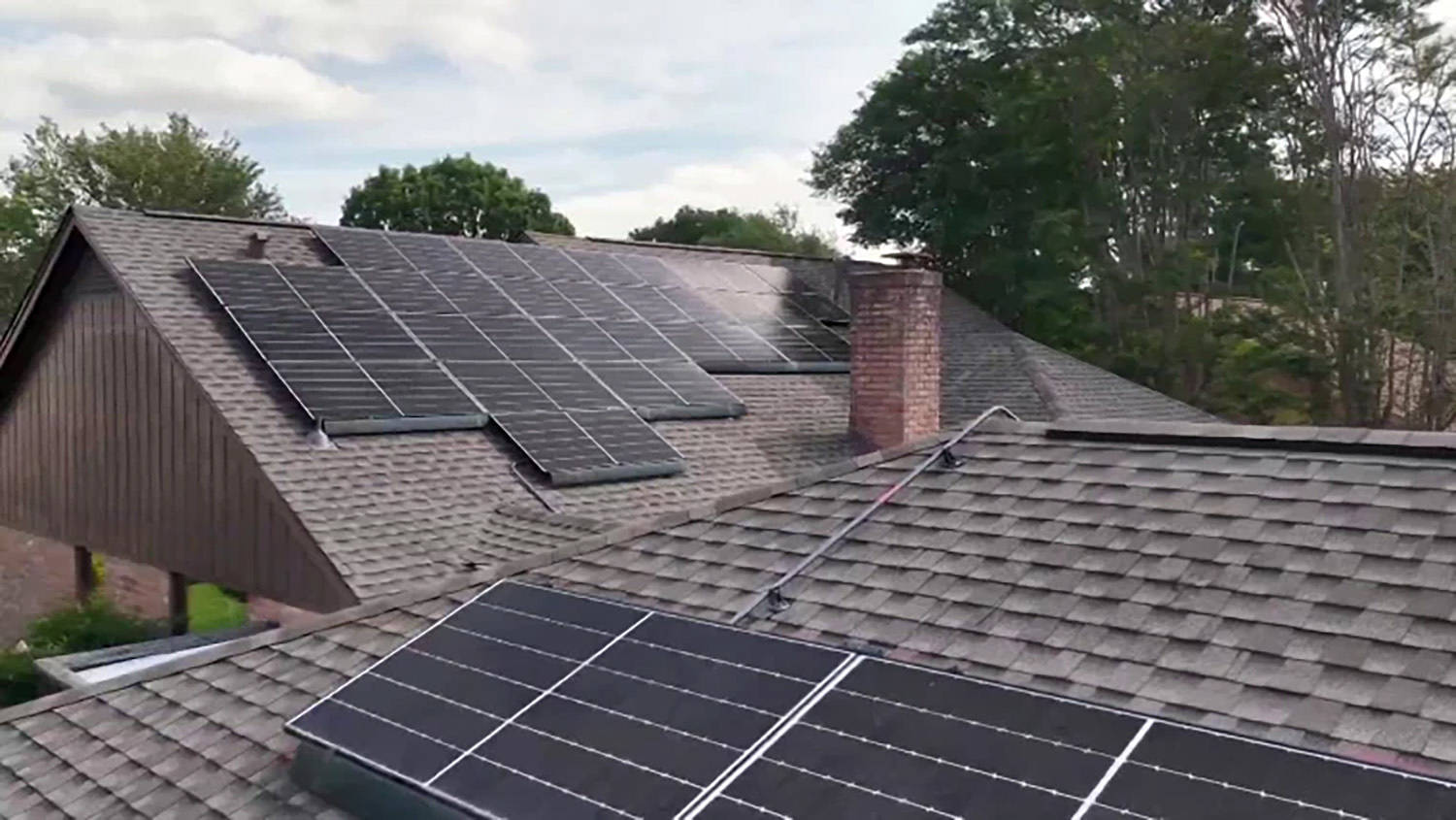
Enter the residential solar array. By incentivizing homeowners to install solar panels and localized battery storage, utilities effectively crowdsource their infrastructure upgrades. When thousands of homes generate their own electricity and feed the excess back into the local distribution lines, it reduces the strain on the substation down the street. The utility does not have to pay for the land, the permits, or the hardware. You do.
This strategy relies heavily on Virtual Power Plants, or VPPs. A VPP is a network of decentralized energy resources—like home batteries, solar inverters, and smart thermostats—linked together by software. During a heatwave, when air conditioners threaten to overwhelm the grid, a utility operator can send a digital signal to thousands of home batteries, drawing power from them simultaneously.
To the grid, this collective discharge looks exactly like a traditional gas-fired peaking plant turning on. The difference is that the utility did not spend $100 million to build it. They rented it from you for pennies on the dollar.
The Financial Meat Grinder of Net Metering Reductions
For years, the financial incentive for home solar was straightforward. It was called net energy metering, or NEM. Under traditional net metering laws, for every kilowatt-hour of electricity your panels sent to the grid, your meter ran backward, netting you a one-to-one credit against the electricity you consumed later. If you bought power at 15 cents a kilowatt-hour, you sold it back at 15 cents.
That deal is dying.
Monopoly utilities across the country have successfully lobbied state regulators to gut net metering frameworks. The most prominent casualty was California’s Net Billing Tariff, widely known as NEM 3.0, which took effect in 2023. Under these revised rules, the value of exported residential solar power was slashed by roughly 75 to 80 percent. Instead of receiving the retail rate for their excess electricity, homeowners are now compensated based on an "avoided cost" calculator, which reflects what the utility would have paid to buy that power on the wholesale market.
Consider the financial math of a hypothetical homeowner under this new regime. If you export power at noon when the sun is blazing and regional wholesale electricity prices are depressed, you might receive less than 5 cents per kilowatt-hour. Yet, when you come home at 6:00 PM and turn on your appliances, the utility charges you a premium time-of-use rate that can exceed 50 cents per kilowatt-hour.
The economic calculus has shifted violently. Selling power straight from your panels to the grid is no longer a viable path to a negative electricity bill. The financial return on investment for a standard solar installation has stretched from a manageable seven years to well over a decade in many jurisdictions.
The Battery Extortion Scheme
Because selling raw solar power to the grid is now a losing proposition, the industry has pivoted to a new narrative. You must buy a battery.
By adding a lithium-ion storage system to a residential solar setup, homeowners can store their daytime excess instead of selling it for pennies. They can then use that stored energy at night to avoid high retail rates, or export it during specific, high-value window frames when the utility is desperate enough to pay a premium.
This is where the VPP programs make their pitch. Programs like New England’s ConnectedSolutions or various utility-backed pilots in Texas offer direct financial payouts or performance incentives if you allow the utility to control your battery during emergencies. They promise hundreds of dollars a year in exchange for tapping your stored energy a few dozen times annually.
It sounds lucrative until you factor in equipment degradation.
Lithium-ion batteries are consumable goods. Every time a battery is charged and discharged—a process known as a cycle—its internal chemistry degrades slightly, permanently reducing its capacity to hold a charge. Most residential batteries are warrantied for 10 years or a specific number of total cycles, assuming normal household use.
When a utility company hooks your battery into a VPP, they are accelerating that degradation. They are using up the finite lifespan of your $10,000 asset to protect their corporate balance sheet. If the payouts from the VPP program do not exceed the accelerated depreciation of your hardware, you are actively losing money while saving the power company from a blackout.
Furthermore, these programs often feature complex terms of service that leave the homeowner holding the bag. If a grid emergency occurs and the utility drains your battery to zero, and a subsequent storm knocks out your local power lines an hour later, you are left sitting in the dark with an empty backup system. The utility protected the collective grid, but your individual household security was compromised.
The Distributed Generation Civil War
The battle over who owns and controls generation is creating an ideological schism within the energy sector. On one side are the investor-owned utilities, which operate on a guaranteed rate of return model. Under this regulatory framework, utilities make a guaranteed profit margin—typically around 9 to 10 percent—on the capital infrastructure they build, such as substations and transmission towers.
Residential solar is a direct existential threat to this profit model. When citizens build their own generation infrastructure, the utility cannot earn a guaranteed return on it. Worse, for every kilowatt-hour a homeowner generates internally, the utility loses a retail sale.
This explains the aggressive legal and lobbying campaigns waged by utility executives against rooftop solar. They argue that solar owners are freeloading on the grid, using the wires and poles without paying for their upkeep, which shifts the fixed costs of grid maintenance onto lower-income consumers who cannot afford solar.
There is a grain of truth to this cost-shifting argument, but the utilities' proposed solution is rarely equitable. Instead of reforming grid charges fairly, they push for high fixed monthly fees just to connect a solar system to the grid, regardless of how much power it produces or consumes. In some states, these fixed charges act as a punitive tax on self-generation, designed specifically to protect the centralized monopoly model.
The companies are attempting to have it both ways. They lobby to dismantle the fair compensation rates for individual solar production, while simultaneously designing VPP programs that requisition those same private assets to bail out the grid when demand spikes. They want your electrons, but they want them on their terms, at their price, under their total control.
Navigating the Corporate Power Trap
If you want to participate in this changing landscape without becoming an exploited asset of your local utility, the strategy must change from grid dependence to ruthless self-consumption.
The goal of a modern residential solar and storage system should not be to maximize exports to the grid. The goal should be zero export.
| Strategy | Action Mechanism | Financial Impact |
|---|---|---|
| Grid Exporting | Selling raw daytime solar back to the utility under new NEM rules. | Low return; extended payback periods; high reliance on shifting regulations. |
| VPP Participation | Allowing utility software to control your home battery during peak events. | Moderate short-term cash flow; accelerated battery degradation; potential loss of backup reserves. |
| Aggressive Self-Consumption | Storing all excess solar locally and shifting household loads to match production. | Maximum savings; insulates homeowner from utility rate hikes and regulatory changes. |
Achieving true economic efficiency requires deploying smart energy management systems that dynamically shift household loads. Instead of running your heat pump, water heater, and pool pump in the evening, these loads must be artificially pushed into the peak of the afternoon, matching the exact curve of your solar production.
If you do choose to enroll in a utility-backed virtual power plant program, scrutiny of the contract is vital. Homeowners must demand programs that offer guaranteed minimum reserve capacities. A contract should explicitly state that the utility cannot draw your battery below 20 or 30 percent capacity, ensuring that you maintain a baseline of emergency backup power for your own family. If a program does not offer a clear, contractually obligated floor for your storage capacity, walk away.
The electrical grid is going to continue to struggle. Blackouts will become more frequent, and retail electricity rates will continue their upward trajectory to fund capital infrastructure upgrades that are already decades overdue. The utility company will gladly offer to buy your power to solve their operational crises, but they will never offer a price that favors your pocketbook over their shareholders. Turn your roof into a power plant if the local math makes sense, but hoard the power you generate like the valuable commodity it is.