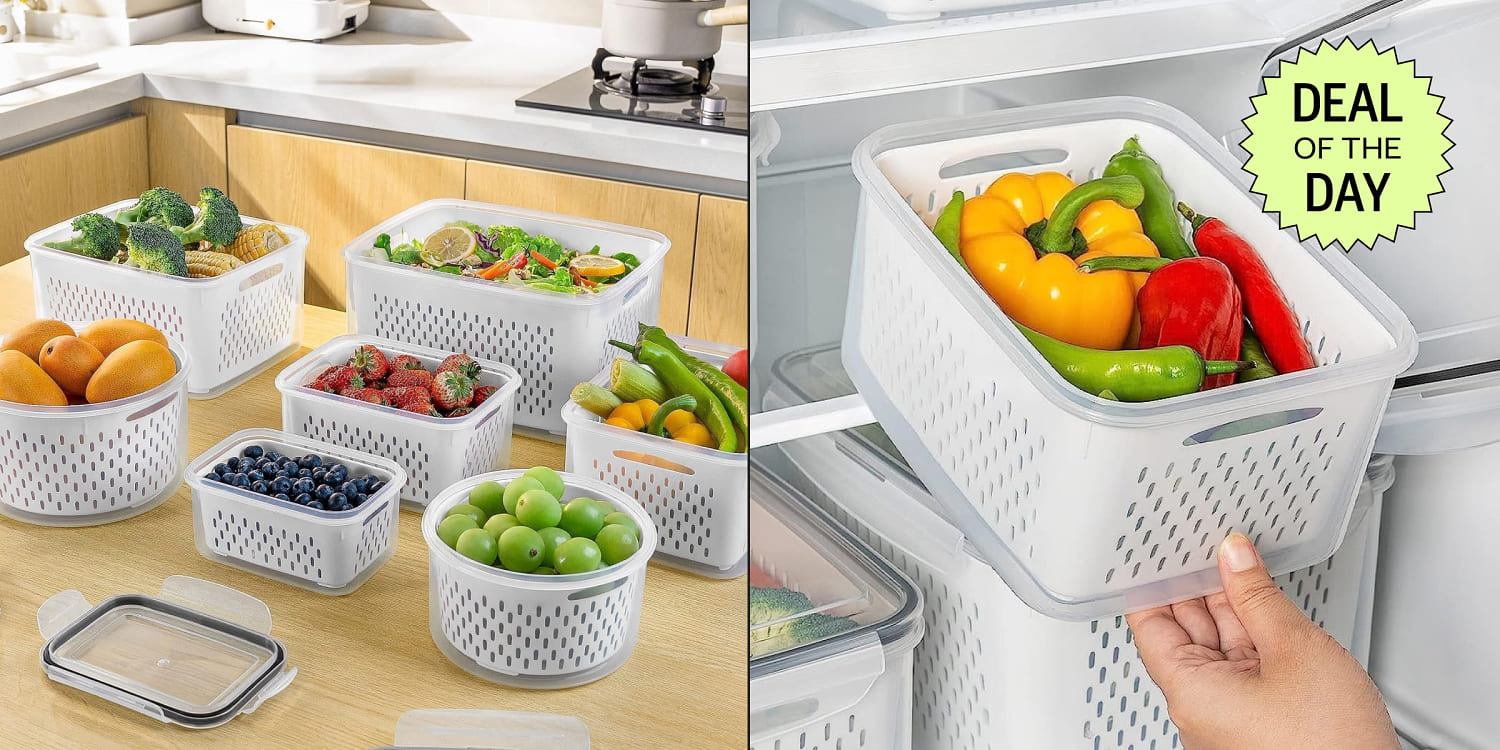
The average American household throws away roughly 30 percent of the food it buys. Most of that waste isn't canned beans or frozen meat; it is the $7 carton of organic raspberries that turned into a grey, fuzzy mess forty-eight hours after leaving the store. When a $19 plastic container promises to double the life of your fruit, it feels less like a kitchen gadget and more like an insurance policy. But the kitchenware industry has spent decades selling us "solutions" that often ignore the fundamental biology of how plants actually die.
To understand why your fruit fails, you have to view your refrigerator as a battlefield. From the moment a strawberry is picked, it begins a countdown. It is still breathing, consuming its own sugars, and emitting gases that hasten its own demise. Most storage containers fail because they try to treat every piece of fruit with a one-size-fits-all strategy. They focus on "freshness" as a vague marketing term rather than addressing the three Horsemen of Produce Decay: moisture, ethylene, and airflow. Don't miss our previous post on this related article.
The Ethylene Arms Race
The primary culprit in the premature death of your produce is ethylene gas. It is a natural ripening hormone produced by fruits like apples, pears, and bananas. In the wild, this gas ensures that fruit ripens in sync. In your refrigerator drawer, it is a chemical signal for everything nearby to start rotting.
Marketing for mid-range storage containers often highlights "carbon filters" or "venting systems" designed to manage this gas. However, the efficacy of these systems depends entirely on what you put inside them. If you place an ethylene-sensitive vegetable like broccoli next to a high-producer like an apple, no $19 container can bridge that gap. The gas will win. If you want more about the history of this, Glamour provides an informative summary.
The industry thrives on the idea that we can buy our way out of poor organization. High-end containers often feature elevated colanders to keep fruit away from its own moisture. This is effective for berries, which are essentially sponges for mold spores. But for thicker-skinned fruits, these containers are often overkill. The container isn't doing the magic; the simple act of keeping the fruit dry is.
The Humidity Trap
Moisture is a double-edged sword. Most refrigerators are incredibly dry environments. This leads to wilting and "shrivel." To combat this, we seal fruit in plastic, which creates a micro-climate of high humidity. The problem arises when that humidity turns into condensation.
When liquid water sits on the skin of a blueberry or a grape, it creates a bridge for bacteria and fungi. Most cheap "stay-fresh" containers solve for one side of this equation while ignoring the other. They trap moisture to prevent wilting but lack the internal drainage to prevent rot.
A truly effective system requires a balance that most consumers aren't prepared to manage manually. You need enough airflow to let ethylene escape, but not so much that the fruit dehydrates. This is why professional kitchens often rely on perforated pans and damp paper towels rather than expensive branded plastic sets. They understand that "breathability" is a moving target.
The Psychology of the Organized Fridge
There is a significant business undercurrent to the rise of specialized fruit storage. Brands like OXO, Rubbermaid, and various boutique labels have tapped into the "fridge porn" trend seen on social media. The visual appeal of uniform, clear containers is a powerful selling point that has nothing to do with food science.
People buy these sets because they want to feel in control of their lives. Seeing a pound of strawberries perfectly arranged in a sleek, vented box provides a dopamine hit. It masks the reality that the berries were likely already five days old when they were purchased. No amount of engineered plastic can reverse the clock on a supply chain that prioritizes durability over flavor during transport.
The Supply Chain Deception
We blame our containers when our fruit dies, but the failure often starts weeks before the product reaches your kitchen. Modern industrial agriculture breeds fruit for "shippability." Tomatoes are picked green and gassed with ethylene to turn red. Strawberries are bred for thick skins and white centers so they don't bruise in a truck.
By the time you place that fruit into a $19 container, it has already been through a gauntlet of temperature fluctuations. Each time the "cold chain" is broken—on a loading dock, in a hot car, or sitting on a grocery store floor—the fruit’s internal clock accelerates. The container is being asked to fix a broken system.
Investigative looks into grocery store waste show that "premium" produce often sits on the shelf longer because of its higher price point. You might be paying extra for "organic" berries that have already spent half their shelf life sitting in a warehouse.
Engineering the Perfect Environment
If you want to actually double the life of your fruit, you have to stop treating the container as a set-it-and-forget-it tool. Different fruits have different requirements that cannot be met by a single box design.
- Berries: They need zero surface moisture and high airflow. Washing them before storage is the fastest way to kill them unless you use a vinegar-water bath to kill mold spores and then dry them completely with a fan.
- Stone Fruits: Peaches and plums should never go in a sealed container until they are fully ripe. Cold temperatures kill their flavor and change their texture before they reach peak sweetness.
- Citrus: These are much heartier, but they benefit from airflow more than humidity. Putting them in a sealed "stay-fresh" box can actually make them ferment faster.
The $19 price point is the "sweet spot" for impulse buys. It is cheap enough to be an easy "fix" but expensive enough to feel like it must work. Yet, if you look at the materials, you are often paying for basic BPA-free plastic and a simple silicone valve. The intellectual property involved is minimal.
The False Promise of Tech-Enhanced Plastic
Some companies have attempted to integrate "active" technology into their containers, such as zeolite-infused plastics that supposedly absorb ethylene. While this works in a laboratory setting, the real-world application is often underwhelming. The surface area of the plastic in contact with the air is usually too small to make a meaningful dent in the gas levels of a crowded fridge.
Furthermore, these "active" components have a lifespan. Once the material is saturated, the container reverts to being just a regular plastic box. Most consumers never replace these items, meaning they are eventually using an overpriced Tupperware equivalent without realizing the "tech" has expired.
The industry also ignores the "cleanliness gap." A fruit container is only as good as its last wash. If a single moldy raspberry lived in that container last week, and you didn't sanitize it with boiling water or a bleach solution, the spores are still there. They are waiting for the next batch of fresh fruit. The "life-doubling" container can easily become a high-tech incubator for rot if not maintained with surgical precision.
Breaking the Cycle of Waste
The most effective way to save your fruit doesn't cost $19. It requires a shift in how you shop and store.
Stop buying "value-sized" containers of delicate fruits unless you plan to eat them within forty-eight hours. The physics of a large container work against you; the weight of the top fruit crushes the fruit at the bottom, releasing juices that trigger a rapid bacterial bloom. Smaller, shallow containers are always superior to deep, large ones.
If you must use specialized containers, use them as part of a broader strategy. Line them with a clean paper towel to wick away the inevitable condensation. Leave the vents open for everything except leafy greens. And most importantly, stop washing your fruit until the very second you are ready to put it in your mouth.
The marketing of fruit storage is built on the guilt of the consumer. We feel bad about the money we waste, so we spend more money to alleviate that feeling. It is a brilliant business model that relies on our misunderstanding of plant biology.
The real secret to produce longevity isn't found in a proprietary vent or a carbon filter. It is found in understanding that once fruit is harvested, it is in a state of controlled decay. You aren't "saving" it; you are merely slowing down its inevitable return to the earth.
Treat your fruit like a living thing that needs to breathe, stay dry, and be kept away from its "toxic" neighbors. If you do that, you don't need a special box to tell you how to keep things fresh. You just need to pay attention to what the fruit is telling you.
Buy less, shop more often, and keep the moisture at bay.