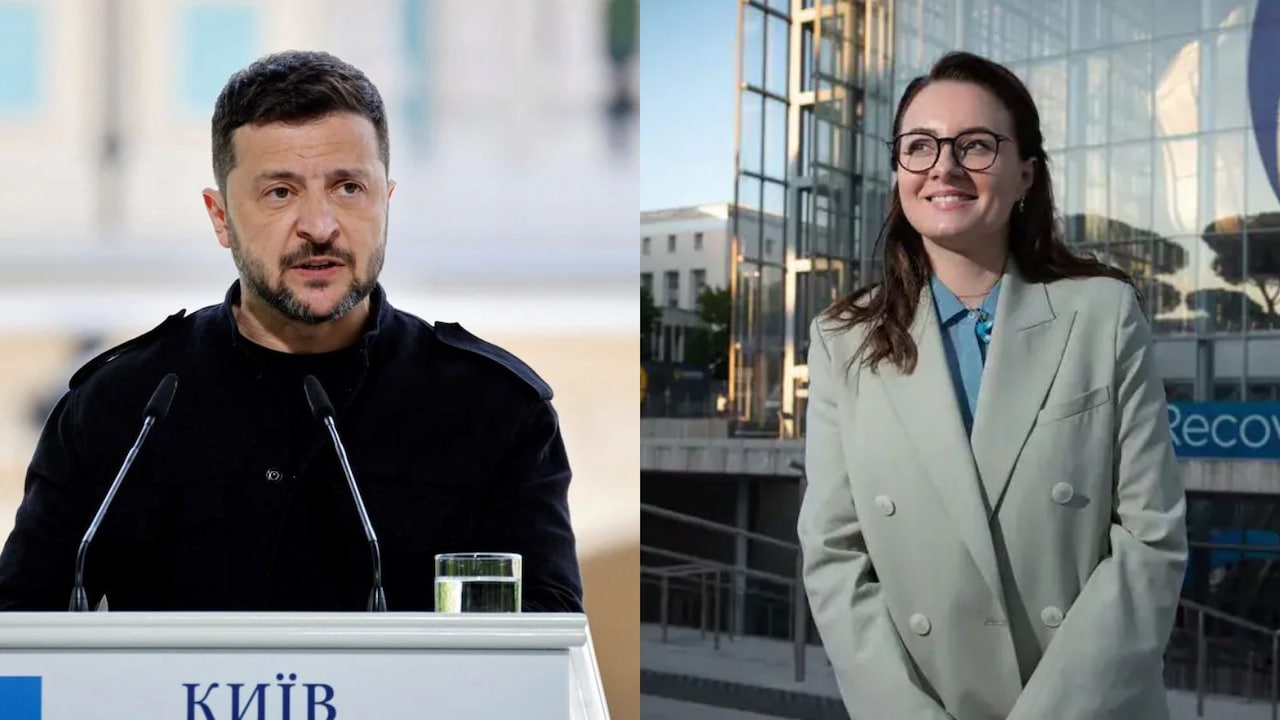
On Sunday, July 12, 2026, Ukrainian Prime Minister Yulia Svyrydenko announced her resignation. Two days later, on July 14, the Verkhovna Rada codified her exit with 258 votes. This marks the fourth major cabinet purge since Russia began its full-scale invasion in February 2022. While President Volodymyr Zelensky has framed this upheaval as an "updated political strategy" designed to streamline foreign policy and domestic defense, the reality is far more complex, exposing deep-seated tensions within the Ukrainian state. Under martial law, where national elections are prohibited, the cabinet of ministers is the only pressure valve for a political apparatus operating under immense pressure. Svyrydenko's sudden departure, just one year after she succeeded Denys Shmyhal in July 2025, is not merely a personnel change. It is a calculated pivot to realign Kyiv’s political elite with a changing global order and secure its survival through the winter.
A Blindsided Parliament and a One-Year Premier
The timing of Svyrydenko’s resignation caught Kyiv's political class off guard. Inside the Verkhovna Rada, members of Zelensky’s own Servant of the People party expressed shock. Cabinet overhauls are traditionally reserved for late autumn, aligning with the start of the political season and the preparation of the state budget. Moving in mid-July suggests a preemptive strike against internal dysfunction or a rapid reaction to external geopolitical pressures.
Svyrydenko did not fail in her duties. At 39, she was a capable economic administrator who successfully managed a highly complex, war-torn economy. Her downfall highlights a systemic issue in wartime Ukraine: the extreme centralization of authority within the Office of the President of Ukraine, led by Andriy Yermak. In Kyiv, the Prime Minister does not operate as an independent head of government. They function primarily as an chief operating officer executing directives from the presidential administration on Bankova Street.
When a policy falters, or when a diplomatic transition requires fresh faces, the Cabinet is sacrificed to protect the presidency. Svyrydenko’s departure fits this pattern. Despite Zelensky’s public offer for her to lead a "new and important area" of bilateral relations—widely understood to be the Ukrainian ambassadorship in Washington, D.C.—reports from Ukrainian media indicate she declined the post. This refusal points to significant friction behind closed doors. Svyrydenko likely recognized that the role would make her the scapegoat for any future breakdowns in Ukraine-U.S. relations.
The Scott Bessent Deal and the Washington Trap
To understand why Svyrydenko was sidelined, one must look back to April 30, 2025. As Economy Minister, she was the chief architect and signatory of the landmark Ukraine-United States Mineral Resources Agreement. Her counterpart was U.S. Treasury Secretary Scott Bessent.
The deal was born out of intense pressure from the Trump administration. President Donald Trump insisted that continued American military and financial assistance must be tied to economic reciprocity. The resulting agreement established the "United States-Ukraine Reconstruction Investment Fund". Under its terms, Ukraine agreed to split the profits from new extraction projects for critical materials—including titanium, lithium, and uranium—50-50 with the United States. In exchange, the valuation of future U.S. military aid, including weapons systems and training, would be counted as Washington’s capital contribution to the fund.
It was a diplomatic victory at the time, designed to show that Ukraine could "pay back" its aid and decrease U.S. supply chain reliance on China. Svyrydenko’s negotiating team managed to keep existing strategic enterprises, such as state-owned gas giant Naftogaz and oil producer Ukrnafta, exempt from the revenue-sharing model.
However, the economic promise of this deal remains mostly on paper. Many of Ukraine’s richest mineral deposits lie in contested or temporarily occupied territories in the east and south. Mining is highly energy-intensive, and Russian airstrikes have devastated nearly half of Ukraine's power grid. Without security guarantees or a stable energy supply, American mining companies have been hesitant to commit actual capital. The failure to turn the mineral deal into immediate, tangible resources for the front line has created frustration in both Kyiv and Washington. By replacing Svyrydenko, Zelensky is signaling to the Trump administration that he is willing to shake up the leadership to jumpstart these economic commitments.
Enter the Energy Tycoon
As the search for Svyrydenko’s permanent successor begins, the leading candidate is Sergii Koretskyi, the current CEO of Naftogaz. Koretskyi’s potential ascension represents a major shift in how the Ukrainian government intends to operate moving forward.
Koretskyi is not a career diplomat or politician. He is a corporate operator with over two decades of experience in oil refining, retail, and international finance. He previously ran Ukrnafta and Ukrtatnafta before taking over Naftogaz in May 2025. Under his leadership, Ukrnafta transitioned into a highly profitable state enterprise, and Naftogaz managed to secure the restructuring of approximately €1.2 billion in Eurobonds despite ongoing Russian missile strikes on its infrastructure.
Potential Candidates for Ukrainian Prime Minister (July 2026)
+-------------------+-----------------------------+------------------------------------+
| Candidate         | Current Role                | Key Strength                       |
+-------------------+-----------------------------+------------------------------------+
| Sergii Koretskyi  | CEO, Naftogaz               | Energy sector and corporate finance|
+-------------------+-----------------------------+------------------------------------+
| Denys Shmyhal     | First Deputy PM / Energy    | Longest-serving former PM (5 years)|
+-------------------+-----------------------------+------------------------------------+
| Mykhailo Fedorov  | Minister of Defense         | Digital defense and drone systems  |
+-------------------+-----------------------------+------------------------------------+
By positioning a corporate energy executive at the helm of the cabinet, Zelensky is prioritizing immediate survival. Ukraine’s energy infrastructure is under constant bombardment. The country faces a looming winter with severely diminished generating capacity. If Koretskyi takes the prime ministership, his primary mandate will not be broad social reforms or anti-corruption initiatives. His focus will be keeping the lights on, managing state-owned assets with corporate efficiency, and negotiating directly with international energy markets.
The Fragmented Diplomatic Board
The reshuffle also introduces a highly unorthodox structural change to Ukrainian foreign policy. Zelensky announced that Ukraine is moving away from centralized foreign affairs management toward a highly compartmentalized system.
Under this new strategy, specific foreign policy portfolios will be assigned to individual administrators with deep experience in those specific regions.
- The United States and Security Cooperation: A dedicated desk focused entirely on maintaining military aid and implementing the mineral resources agreement.
- The European Antiballistic Project: A portfolio tasked with integrating Ukraine into European air defense networks.
- EU Integration: Managed by a specialist focused solely on navigating the bureaucratic requirements for formal European Union membership.
- Regional Neighbors: A desk to manage increasingly complex bilateral relationships with critical transit hubs like Poland and Hungary.
- China, the Middle East, and the Gulf: A distinct diplomatic track aimed at engaging non-Western powers that have maintained neutral or supportive stances toward Moscow.
This fragmentation is a double-edged sword. On one hand, it allows for highly specialized, targeted diplomacy. A negotiator dealing with Beijing does not need to worry about the specific legalities of EU trade regulations. On the other hand, it dilutes the authority of the Ministry of Foreign Affairs. It also concentrates ultimate decision-making power even further within the Office of the President. Without a strong, unifying prime minister or foreign minister to coordinate these disparate tracks, Kyiv risks sending mixed signals to its partners.
A Cold Winter and the Reality of Air Defense
While the political maneuvering dominates headlines in Kyiv, the immediate driver of this reshuffle is a crisis of physical security. Ukraine's strategy of launching deep drone strikes against Russian oil refineries and fuel depots has successfully disrupted gasoline supplies and forced rationing within multiple Russian regions. However, the retaliation from Moscow has been severe.
Russian forces have intensified ballistic and cruise missile strikes against Kyiv, Odesa, and critical energy generation plants. The pressure on Ukraine’s air defense systems is reaching a breaking point. The country lacks the interceptor missiles necessary to protect both the front lines and its major civilian population centers.
Zelensky’s government overhaul is a direct acknowledgement that the current administrative structure cannot survive another winter under these conditions. The incoming cabinet must rapidly accelerate domestic weapons production, secure alternative energy imports from Europe, and convince Western allies to deploy air defense assets closer to Ukraine's western borders.
This is not a government designed for peacetime transition or long-term democratic consolidation. It is a crisis management board. By removing Svyrydenko, shifting diplomatic responsibilities, and positioning corporate energy executives in key roles, Zelensky is preparing the Ukrainian state for a prolonged war of attrition. The success of this reshuffle will not be measured by legislative achievements or democratic metrics. It will be measured in megawatts preserved, artillery shells delivered, and the ability to keep the cold from breaking the will of the population.