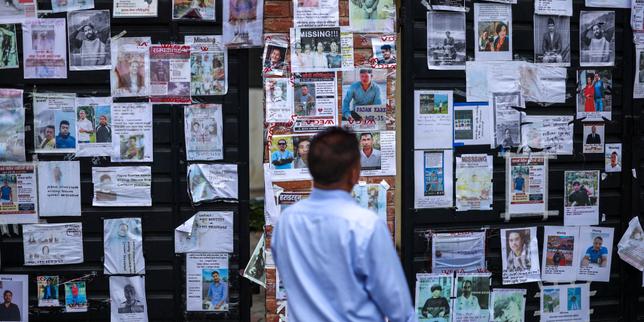
Every time a major disaster strikes the Himalayas, the humanitarian playbook gets dragged out of the filing cabinet, dusted off, and applied with religious fervor. The media focuses on the immediate tragedy, the international rescue teams fly in with their search dogs, and then comes the agonizing operational bottleneck: what to do with the hundreds of bodies that nobody can identify.
The standard humanitarian response is swift burial or rushed cremation to prevent disease outbreaks. It feels humane. It looks good on the evening news. It checks every box on the bureaucratic disaster management checklist. Learn more on a similar subject: this related article.
It is also completely wrong.
I have spent years analyzing post-crisis logistics and disaster zone forensics across South Asia. I have watched organizations panic over dead bodies under the false pretense of public health crises, bulldozing the very evidence needed to bring closure to grieving families. The conventional wisdom treats unidentified disaster victims as an immediate biological threat that needs to be disposed of as quickly as possible. This is a catastrophic error born of panic rather than science. Additional journalism by NPR highlights comparable perspectives on the subject.
Let us clear up the primary misunderstanding right out of the gate. Dead bodies from natural disasters do not cause epidemics. The World Health Organization and the Pan American Health Organization have stated this repeatedly, yet local authorities and panicked aid agencies ignore the data every single time. Pathogens require a living host to survive and multiply. Once a person dies from trauma, drowning, or hypothermia, the viruses and bacteria inside them die off or cannot jump to the living population through properly managed remains.
Yet, disaster responders still act like every unclaimed corpse is a walking biological weapon.
The Myth of the Contagious Corpse
The rush to clear morgues and mass gravesites in regions like Nepal is driven by optics, not epidemiology. When infrastructure collapses and temperatures rise, officials panic about putrefaction. They assume that the smell of decomposition equals disease. It does not.
By pushing for rapid, undocumented, or poorly documented burials to clear space, authorities commit a secondary tragedy. They permanently destroy DNA profiles, dental records, and forensic markers. In a country like Nepal, where seismic activity makes remote communities hard to reach and official registry systems are already fragile, losing that physical evidence means families will spend generations wondering what happened to their missing children, parents, and siblings.
Closure requires certainty. Mass graves built out of administrative convenience provide the exact opposite.
Imagine a scenario where a remote village is leveled by an earthquake, leaving dozens of bodies mangled beyond recognition. The district administration, overwhelmed and underfunded, decides to perform quick mass cremations to avoid local panic. To the untrained eye, this looks like decisive leadership. In reality, it is the permanent erasure of forensic identity. Those ashes cannot be exhumed for DNA matching when international labs finally offer assistance three months down the line. The evidence is gone forever.
Re-Engineering Disaster Forensics in High-Altitude Zones
If the old model of disaster management is broken, what should take its place? We need to stop treating body management as an emergency sanitation chore and start treating it as a high-stakes forensic investigation.
First, we need to decentralize DNA collection. International forensic teams often arrive with high-tech mobile laboratories that sit idle in Kathmandu because roads are washed out. The bottleneck is transport. Instead of moving bodies to central labs—which is logistically impossible when bridges are down—train local first responders to harvest buccal swabs and bone samples on-site before any movement happens. Store those samples properly. Freeze them if power permits, or use silica-gel preservation kits that function without electricity.
Second, utilize cold-chain logistics instead of rapid burial. Temporary refrigeration units or dry-ice protocols should be standard issue in disaster relief kits. Keeping remains intact buys precious weeks for relatives to travel from remote districts to provide familial DNA reference samples.
Third, digitize the intake process immediately. Every single unidentifiable remain needs a standardized digital profile: high-resolution dental photography, clothing tags, unique scars, tattoos, and precise GPS coordinates of where the body was recovered. This data needs to live on a secure, decentralized cloud ledger accessible to families and international NGOs, bypassing the red tape of local municipal offices that often lock down information to avoid political fallout.
The Cost of Inaction
Adopting a rigorous, forensic-first approach is not cheap, and it is not easy. It slows down the cleanup process. It forces local governments to look at unburied bodies for weeks instead of sweeping the problem under the rug. It invites intense public scrutiny and journalistic pressure while morgues remain visibly overwhelmed.
That is the downside of this method. It demands patience in an environment where everyone wants immediate closure.
But expediency without accuracy is just institutional negligence disguised as mercy. When we rush to bury the unidentified, we protect the comfort of the living at the permanent expense of the truth.
Stop treating disaster victims as garbage to be cleared from the streets. Preserve the evidence, secure the DNA, and let the science finish what the earthquake started.