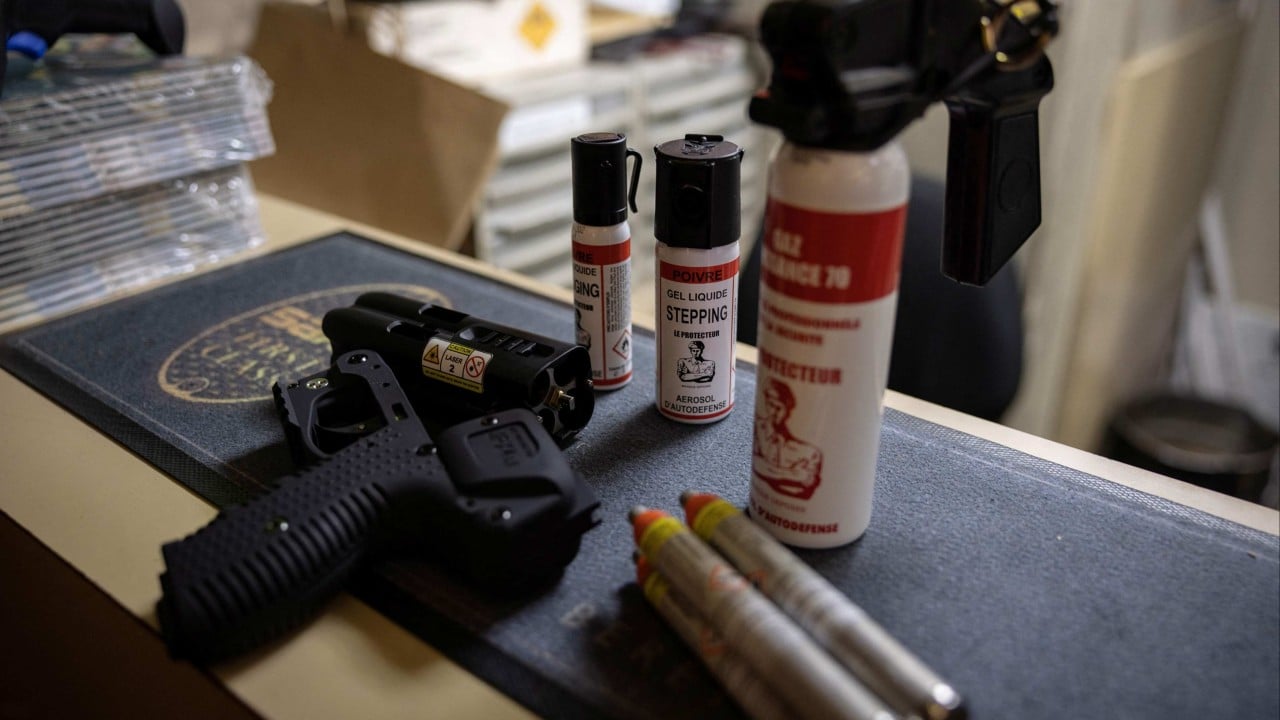
When shuttered storefronts line Paris boulevards ahead of another weekend demonstration, grabbing a canister of pepper spray or tear gas feels like common sense. Yet buying self-defence sprays during civil unrest in Paris creates a sharp trap between how people feel protected and what French law actually allows.
Walk into a Paris armoury after a weekend of broken glass and ransacked shops, and the mood is unmistakable. Following destructive clashes in October 2026 that left hundreds of businesses in the capital damaged or looted and drew thousands of arrests nationwide, merchants and everyday residents started rushing for non-lethal sprays. Yves Gollety, owner of Armurerie de la Bourse in central Paris and president of the national gunsmiths' association, told Le Parisien and Reuters that orders had jumped tenfold as people prepared for fresh demonstrations.
I've covered urban security and civil unrest long enough to know that panic spikes demand overnight. Still, a canister in your coat pocket isn't a free pass. In France, buying a small aerosol is one thing; carrying it into a tense street crowd or onto the metro is something else entirely.
Why Parisians Are Rushing to Buy Pepper Spray and Tear Gas
The surge didn't come out of nowhere. Demonstrations that began with student grievances over school conditions merged with broader anger over wages, cost of living, education budgets, and expanded police powers. When marches turned violent—including widespread looting and vandalism in mid-October and hundreds of shops hit across Paris—small business owners found themselves stuck between shuttering their doors and watching livelihoods vanish.
Take Hassan Rashdul, a 32-year-old shopkeeper who immigrated to France from Bangladesh and spent a decade building his electronics business, only to lose at least €70,000 in stock when looters stripped his shelves. Stories like his explain why a shop owner doesn't care about abstract legal debates when another protest is announced for Saturday. When police are stretched thin across dozens of flashpoints and curfews or demonstration bans are announced, people start asking a blunt question: Who's going to stop someone smashing my window or cornering me on the walk home?
Gollety warned on Europe 1 that he had seen shopkeepers arming themselves with baseball bats, crowbars, and shotguns—claims Reuters couldn't independently verify—calling it "extremely worrying" and urging caution so people don't add suffering on top of suffering. Honestly, that tension sums up the entire moment. Shopkeepers want to protect what they worked years to build. Authorities insist public order belongs to trained security forces.
How French Law Actually Treats Pepper Spray and Tear Gas
Here's where a lot of buyers get tripped up. In France, aerosols containing tear gas or incapacitating agents (such as CS or pepper sprays) up to 100 ml fall under Category D weapons. Adults 18 and older can legally buy them and keep them at home. Go above 100 ml, and you're crossing into Category B, which requires prefectoral authorization.
Buying it over the counter does not give you a blanket right to carry it around Paris. Under France's Internal Security Code (Article L317-8), carrying or transporting a Category D weapon outside your home without a "legitimate reason" (motif légitime) is a criminal offense. Police and courts judge that reason case by case based on where you are, when, and what's happening around you. Simply saying "I want it in case a fight breaks out" isn't automatically treated as a valid excuse.
Look at the numbers on the official Service-Public guide to Category D weapons and its rule sheet on carrying a weapon for self-defence:
- Carrying without a legitimate reason: Up to 1 year in prison and a €15,000 fine for an individual offense.
- Committed with others: Up to 2 years in prison and a €30,000 fine.
- Voluntary surrender to law enforcement: Typically carries a fixed fine of €500 (reduced to €400 or raised to €1,000 depending on payment timing).
- Public transport: Carrying certain sprays visibly on buses, trains, or the metro can bring a fine up to €750 and confiscation.
Even if you have a spray legally at home or in a permitted spot, using it has strict limits. Under Article 122-5 of the French Penal Code, lawful self-defence requires an immediate, proportionate response to an unlawful attack. Spraying someone in a chaotic crowd—or misjudging wind, distance, or intent—can turn a defensive tool into a serious legal problem fast.
What People Get Wrong About Protest Self-Defence
In my experience watching street clashes and crowd dynamics, people tend to overestimate what a small canister can do when thousands of people are moving at once.
First, tear gas and pepper spray aren't magic shields in a crowd. Wind shifts. Tight alleys trap fumes. If you're standing near a tense march or police line, blowing gas into a dense group can backfire on you, bystanders, or people nearby who aren't threatening you at all.
Second, protest zones change the legal math. When prefectures issue curfews, restrict assemblies, or deploy massive numbers of officers and gendarmes around flashpoints like Place de la République or Place de la Nation, being caught carrying an incapacitating spray near unrest can draw immediate scrutiny from police conducting checks.
Third, escalation is real. Shopkeepers who feel abandoned by the state sometimes think showing force will scare off looters. In reality, bringing improvised clubs, crowbars, or firearms into a volatile street scene raises the odds of a physical brawl or worse injury—often without stopping a coordinated smash-and-grab.
There's also a genuine debate here that shouldn't be brushed aside. Critics of heavy policing argue that aggressive crowd-control tactics inflame tensions and injure peaceful protesters, students, and bystanders. Meanwhile, business owners whose storefronts get wrecked point to real financial ruin and slow police response during peak chaos. Both frustrations exist at the exact same time in the exact same neighborhoods.
Practical Steps If You Live, Work, or Travel Near Paris Unrest
If you're a shop owner, commuter, or visitor in Paris during protest season, focus on practical steps that protect you without handing you a legal headache:
- Check official advisories and transit alerts before heading out: Routes near major squares and transport hubs can shift quickly during demonstrations and curfews.
- Know the exact capacity and transport rules: If you own a defence spray at home in France, verify it's 100 ml or less, keep it out of sight on public transit, and never assume carrying it into a protest area is safe from arrest or seizure.
- Prioritize physical barriers and distance over confrontation: For shops, sturdy shutters, lighting, removing high-value display items overnight, and coordinating with neighbors and insurers usually protect assets better than standing alone at the door.
- Leave the street early when tensions build: If a march starts turning toward clashes, bottle-throwing, or looting, putting distance between yourself and the crowd is still the smartest move you can make.
Paris Shopkeepers Prepare for Fresh Unrest After Store Looting
This video adds real-world context on why Paris shopkeepers began buying self-defence gear after October's protest looting and how businesses braced for further unrest.