When the White House replaced CNN with a conservative outlet for a presidential flight to Tennessee, it did more than shuffle seating charts on Air Force One. It exposed a fundamental structural vulnerability in how American journalism covers the executive branch. For decades, the pool system operated on an unwritten code of professional courtesy and constitutional recognition. That code is gone. Replaced by a system where physical access to the president functions as a political reward or punishment, the current standoff between the Trump administration and major news organizations represents an unprecedented expansion of executive control over information flow.
To understand why this matters, you have to look past the political theater and examine the architecture of the White House press corps. The pool is not a luxury perk handed out by gracious press secretaries. It is an operational necessity designed to ensure that the chief executive is never entirely unobserved. When a president boards Air Force One or enters the Oval Office, reporters are supposed to be there not because they are liked, but because they represent the public's right to witness power at close range.
The Architecture of the Presidential Pool
The modern press pool was born out of practicality rather than charity. Space is limited on presidential aircraft and inside secure government facilities, meaning individual news organizations cannot send every reporter they employ to every minor event. Instead, the industry pools its resources. A designated wire reporter, television crew, radio engineer, and print journalist rotate through assignments, generating reports and distributing footage to the entire global media ecosystem.
This arrangement creates a vital buffer between the state and the citizenry. When a reporter stands inside the press cabin of Air Force One, they are not there on behalf of their corporate masters alone. They carry the collective responsibility of the entire Fourth Estate. They watch who boards, note who is summoned to the executive cabin for private briefings, and record off-the-cuff remarks that reveal the true temperament and priorities of the leader of the free world.
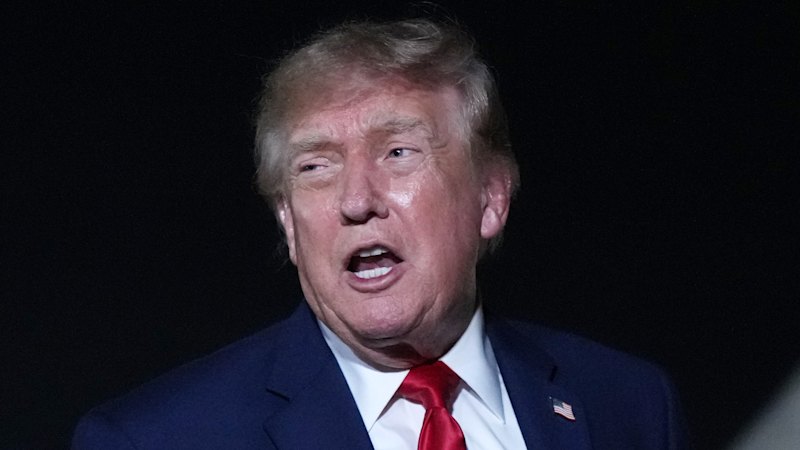
Yet the Trump administration has steadily dismantled the boundaries separating political communication from state administration. When President Donald Trump announced that CNN, MS NOW, and Politico were barred from the White House complex, the immediate reaction focused on hard passes and security gate access. Federal judges stepped in, issuing temporary injunctions to restore physical entry to the briefing rooms and workspace corridors. But executive power is slippery. While court orders can force open the doors of 1600 Pennsylvania Avenue, they stumble when confronted with the movable geometry of presidential travel.
Loopholes in the Judicial Safety Net
Air Force One is a federal asset funded by taxpayers, but it operates under the direct operational control of the executive branch. White House officials quickly discovered a loophole in judicial oversight. They could comply with orders regarding static office space while quietly freezing out targeted networks from aircraft manifests, state dinners, and specialized pool rotations. Each time CNN was slated to fill its standard rotation on the presidential jet, the name vanished from the list. No formal memo arrived explaining the omission. No detailed legal justification was offered. Just an empty seat where a pool reporter should have been sitting, filled instead by friendly commentators or alternative platforms willing to play ball.
This tactic relies on a clever administrative dodge. The administration argues that travel privileges and specialized event access remain entirely at the discretion of the executive. By drawing a sharp legal line between a permanent press badge and an invitation onto the presidential plane, government attorneys attempt to insulate political retaliation from constitutional scrutiny. It is an argument built on administrative technicalities designed to evade First Amendment protections against viewpoint discrimination.
Legal teams representing the barred networks have fought back with amended complaints and urgent letters warning of further court filings. Theodore Boutrous, representing the media coalition, laid out the stakes clearly in correspondence with the Department of Justice, pointing out that an administration cannot selectively open a public newsgathering forum to favored voices while locking out critics. But the wheels of justice grind slowly, and while federal courts deliberate over the nuances of travel manifests, the daily reality of reporting shifts.
The Fracture of Media Solidarity
The deeper crisis involves the erosion of collective media solidarity. Historically, the Washington press corps maintained a united front against executive overreach. If the government penalized one outlet, others threatened to pull their own coverage in a coordinated display of muscle. That solidarity has fractured. When major networks pulled back momentarily during the initial September standoff, alternative outfits stepped into the vacuum with remarkable speed. Real America's Voice and other partisan operations eagerly accepted the credentials surrendered or stripped from mainstream organizations, establishing a parallel media ecosystem that validates executive exclusions rather than challenging them.
This fragmentation changes the incentives entirely. A president who can easily replace critical mainstream journalists with sympathetic commentators faces zero penalty for restricting access. Instead of paying a political cost for shutting out hard-hitting reporters, the administration creates a curated environment where tough questions are replaced by softball inquiries and pre-packaged narratives. Over time, this normalizes a system where information is distributed based on ideological compliance rather than professional standing.
Consider the mechanics of how a pool report actually functions. When a president travels, a small handful of reporters from print, television, radio, and wire services share their notes, images, and observations with hundreds of other news organizations. If the television pool representative is barred, the entire industry loses its eyes and ears inside the cabin. When a friendly outlet takes that slot, the nature of the reporting shifts from independent observation to curated PR. The public is left with sanitized accounts that serve administrative messaging rather than objective reality.
Historical Precedents and Dangerous Futures
Past administrations certainly chafed under aggressive reporting. Richard Nixon famously compiled enemies lists and tried to exclude hostile correspondents. Barack Obama's administration tightly controlled imagery and bypassed traditional reporters by publishing official photographs directly on government platforms. Yet even during past flashpoints, the core machinery of the protective pool remained largely intact because subsequent White House teams recognized the dangerous precedent of breaking it. Once you establish the right of a president to handpick who travels on Air Force One based on editorial favor, you hand the exact same weapon to every future occupant of the Oval Office, regardless of party.
The long-term implications stretch far beyond the current occupants of the West Wing. American democracy relies on an adversarial press corps capable of pressing power for answers without asking for permission first. When physical access becomes contingent on editorial approval, journalism degrades into stenography. The ongoing legal battles will eventually yield judicial opinions on whether an airplane seat constitutes a public forum under the First Amendment, but the cultural shift has already outpaced the courts.
The strategy deployed against CNN and its peers is not an administrative quirk born of temporary irritation. It is a calculated stress test of institutional norms. By pushing the boundaries of executive discretion step by step, the administration maps out precisely how much control it can exert over the information environment before the system breaks entirely.
So far, the system has proven remarkably fragile. Watchdog organizations issue statements, attorneys file emergency motions, and networks issue formal protests, yet the plane takes off with a different passenger manifest. Every successful exclusion normalizes the next one, lowering the barrier for future crackdowns.
When the press corps cannot follow the president, the public is left behind in the dark. The fight over who sits in a cramped cabin at thirty thousand feet is not about corporate turf wars or journalistic vanity. It is about whether the presidency remains accountable to the citizenry or transforms into an insulated monarchy where only approved chroniclers are allowed to witness the exercise of power. Right now, that independence is slipping away, seat by empty seat.