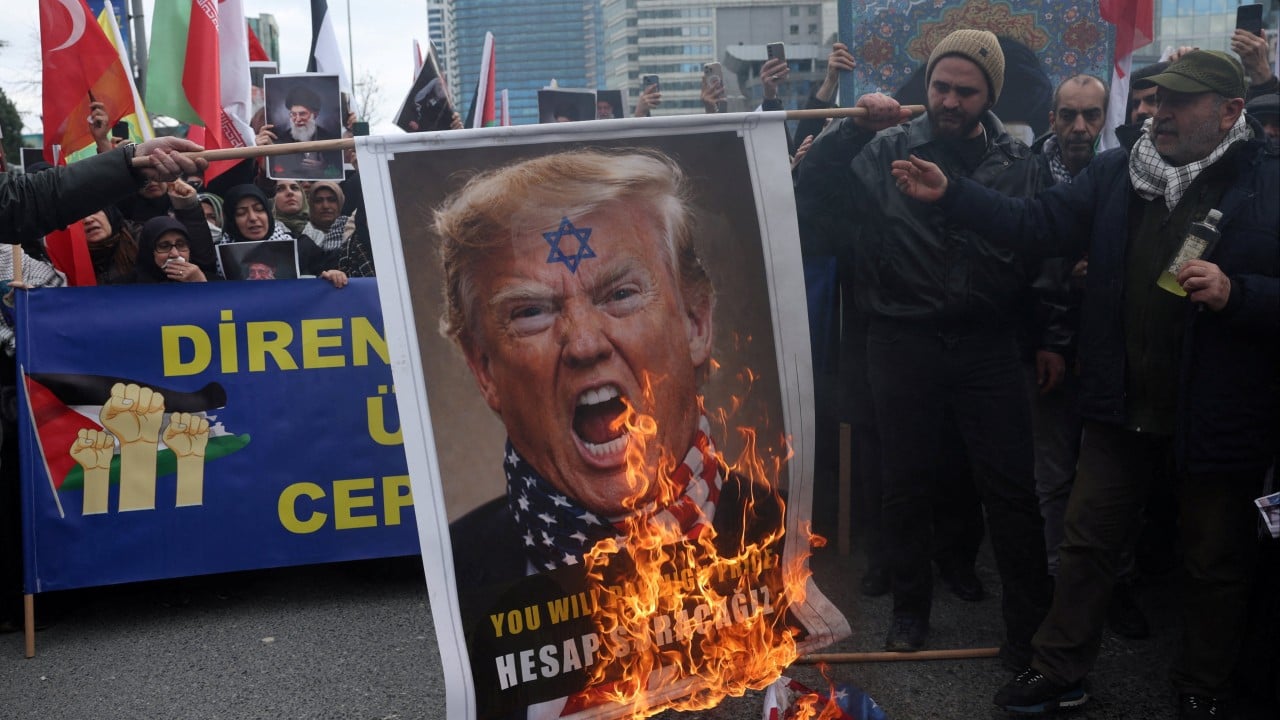
The concept of "unseen force" in modern geopolitical signaling is not a rhetorical flourish; it is a description of a specific shift in kinetic and non-kinetic doctrine. When the Trump administration or any high-level executive apparatus communicates threats of disproportionate retaliation to Iran, the objective is to move the conflict from a known theater of attrition—where proxy groups and regional militias dictate the tempo—to a multi-domain offensive that targets the structural integrity of the adversary's state. Traditional deterrence failed to prevent the ongoing West Asia crisis because the cost-benefit analysis for regional actors remained skewed toward low-level, persistent aggression. To reset this equilibrium, the strategy must pivot toward the "Cost-Exceedance Threshold," where the price of a single retaliatory act by an adversary is engineered to outweigh the entire strategic gain of their decade-long regional campaign.
The Architecture of Asymmetric Deterrence
Deterrence in the current Middle Eastern context operates on three distinct levels of engagement. Understanding why "unseen force" is now the primary verbal weapon requires an analysis of these layers:
- The Kinetic Proxy Layer: This is the most visible and least effective area of conflict. It involves drone strikes, rocket fire from non-state actors, and localized skirmishes. Retaliating only at this level creates a "wash" in strategic value, as the adversary views these assets as expendable.
- The Economic and Infrastructure Layer: This involves the targeting of energy exports, financial nodes, and logistical hubs. Threats directed here are designed to create internal political pressure within the adversary nation.
- The "Unseen" Multi-Domain Layer: This refers to cyber-electromagnetic activities (CEMA), the decapitation of command-and-control (C2) structures, and the neutralization of internal security apparatuses.
By shifting the narrative to the third layer, the strategy bypasses the "sunk cost" Iranian proxies are willing to pay. The "unseen" nature of the promised force implies that the retaliation will not come in the form of a predictable missile strike on a desert outpost, but rather as a systemic failure of the target’s ability to govern or communicate.
The Mathematics of Retaliation Risk
A rigorous analysis of the "unseen force" warning reveals a specific logic: the Retaliation-to-Ruin Ratio. For years, Iran has operated on a high-frequency, low-intensity model. This model assumes that the United States and its allies have a high threshold for pain and a low appetite for total war.
The strategic pivot currently being messaged changes the variables:
- Variable A (Attribution): In previous cycles, "plausible deniability" shielded the sovereign state from the actions of its proxies. The new doctrine removes this shield, holding the financier directly responsible for the operative's trigger pull.
- Variable B (Proportionality): International law often dictates proportional response. However, "unseen force" signals a move toward asymmetric disproportionality. If a proxy damages a vessel, the response might be the digital erasure of a port’s entire operating system.
- Variable C (Temporal Uncertainty): By not specifying the "where" or "how," the defender regains the initiative. The adversary must now spend finite resources defending every possible node of their infrastructure rather than focusing on a single front.
Structural Vulnerabilities in the West Asia Crisis
The crisis in West Asia is often mischaracterized as a series of disconnected religious or ethnic conflicts. Structurally, it is a competition for "Regional Hegemony via Denied Access." Iran’s strategy is to make the cost of Western presence in the region prohibitively expensive through the "thousand cuts" of militia activity.
The counter-strategy, signaled by the recent warnings, targets three specific Iranian vulnerabilities:
1. The Energy-Currency Bottleneck
Iran’s economy is sensitive to even minor disruptions in its ability to process and export petroleum products. While sanctions have already limited this, "unseen force" suggests physical or digital intervention in the physical flow of goods. If the Strait of Hormuz becomes a liability for the Iranian navy rather than a tool for leverage, the state's primary bargaining chip is neutralized.
2. Command-and-Control Fragility
The centralized nature of the Iranian Revolutionary Guard Corps (IRGC) creates a single point of failure. Modern electronic warfare allows for the isolation of specific units from their leadership. Without "The Center," the proxy network becomes a headless entity, prone to infighting and tactical errors.
3. Domestic Legitimacy and Information Flow
The Iranian state relies on a monopoly on internal information to maintain order during external crises. The application of "unseen force" in the digital realm—specifically the bypassing of state firewalls to communicate directly with a dissatisfied populace—represents a tier of warfare that the current regime is ill-equipped to handle.
The Strategic Failure of "Predictable Response"
The competitor's analysis of these warnings often focuses on the "toughness" of the rhetoric. This misses the technical reality: predictability is the enemy of deterrence. When the U.S. follows a standardized escalation ladder (Sanction -> Condemnation -> Limited Strike), the adversary can budget for those costs.
The "unseen force" doctrine relies on Stochastic Deterrence. By introducing a high degree of randomness regarding the timing and nature of the response, the adversary's risk-modeling software (both literal and metaphorical) fails. They can no longer calculate the ROI (Return on Investment) of an attack because the potential cost is now "infinite" or "undefined."
Operational Constraints and the Credibility Gap
For this strategy to work, the "unseen force" must be perceived as credible. There are two primary risks that could undermine this stance:
- The Over-Extension Trap: If the U.S. or its allies promise "unseen force" but only deliver standard kinetic strikes, the deterrence value resets to zero. The adversary learns that the "unseen" is actually "non-existent."
- The Escalation Spiral: If the force used is truly systemic—such as collapsing a national power grid—it may force the adversary into a "use it or lose it" scenario with their own high-end assets, such as their ballistic missile stockpile.
This necessitates a "Calibrated Precision" approach. The force must be unseen not because it is small, but because it is targeted at the invisible nervous system of the state rather than its visible muscle.
The Cost Function of Regional Proxies
To understand the impact of these warnings, we must quantify the value of the proxy network. Groups like Hezbollah and the Houthis function as "Externalized Defense Assets." They allow Iran to project power without the risk of direct invasion.
The "unseen force" rhetoric is a direct attempt to "internalize" those costs. The message is: We will no longer chase the proxy; we will degrade the source. This changes the IRGC's internal accounting. If maintaining a militia in Yemen results in a catastrophic failure of the banking system in Tehran, the militia becomes a liability.
Strategic Execution Framework
The path forward for a high-authority regional strategy involves three immediate phases:
- Node Identification: Mapping the critical "unseen" infrastructure of the adversary, specifically the digital and financial lifelines that sustain the IRGC.
- Psychological Priming: Using public statements to create a "gray zone" of fear. The goal is to make the adversary's leadership second-guess every technical glitch or market fluctuation as a potential act of "unseen force."
- The Demonstration Effect: A single, surgical application of non-kinetic force that produces a visible, undeniable result without loss of life. This could be the temporary, total shutdown of a military communications network during a period of high tension.
The objective is to establish a Cognitive Dominance where the adversary perceives the cost of aggression as being fundamentally unknowable and potentially total. The current warnings serve as the "opening of the aperture" for this new theater of operations.
The final strategic move is the decoupling of regional stability from "treaty-based" diplomacy, moving instead toward a "capability-based" peace. In this model, the absence of conflict is not maintained by a signed document, but by the continuous, silent presence of an overwhelming technological and operational advantage that remains largely invisible until the moment of impact. The focus must remain on the systematic degradation of the adversary's decision-making speed; when they cannot see the force that hits them, they cannot formulate a timely or effective response.