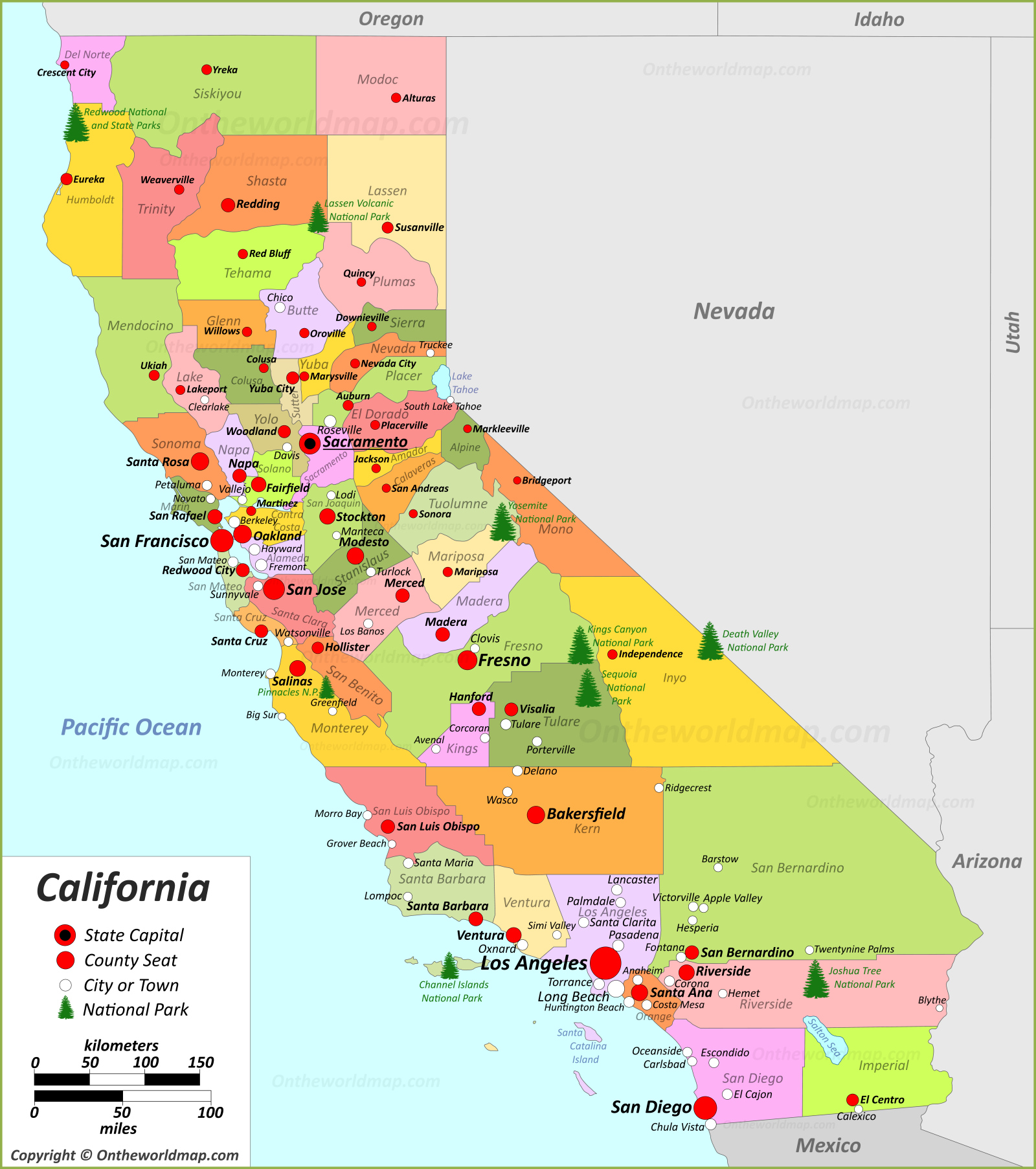
The geographic concentration of artificial intelligence development in California is governed by an economic feedback loop rather than historical accident. Capital availability, specialized compute clusters, and dense labor pools form a closed system that continually reinforces market dominance. Understanding the structural hierarchy of California artificial intelligence businesses requires moving past surface-level entity lists to examine the underlying mechanisms of capital allocation, compute economics, and architectural differentiation.
The ecosystem operates across three distinct operational layers. The foundational layer consists of frontier model developers requiring massive capital expenditure for training runs. The infrastructure layer provides the data pipelines, vector databases, and hardware optimization tools necessary to deploy those models. The application layer builds vertical workflows for specific enterprise domains, capturing economic value by integrating directly into corporate workflows.
Capital concentration within the California corridor is heavily skewed toward the foundational and infrastructure layers due to high fixed costs and steep barriers to entry.
The Economics of Frontier Model Development
Foundational model development in Silicon Valley is defined by extreme capital intensity and scaling laws that demand continuous increases in parameter size and training compute. Organizations such as OpenAI, Anthropic, and xAI operate under a financial model where cash burn is directly proportional to compute acquisition.
The primary cost drivers in this tier include:
- Cluster Procurement: Securing tens of thousands of specialized accelerators, predominantly graphics processing units and custom tensor processors, under multi-year supply agreements.
- Energy Consumption: Powering data centers at scale, which introduces physical constraints related to grid capacity and localized cooling infrastructure.
- Talent Acquisition: Compensating rare research engineers capable of advancing algorithmic architectures, transformer variations, and reinforcement learning techniques.
Operating margins for foundational providers are compressed during training phases, shifting profitability expectations to inference monetization. Enterprises utilizing these models pay per token or through dedicated instance hosting, transferring the capital expenditure of raw compute into operational expenditure for the end consumer.
Infrastructure and Data Logistics
Model capability is bounded by data quality and retrieval speed. This structural reality has elevated California infrastructure providers into critical market positions. Scale AI, Databricks, and Glean address the friction points of data ingestion, labeling, and enterprise search.
The enterprise data problem centers on unstructured information silos. Standard corporate databases are optimized for relational queries, not semantic retrieval. Infrastructure startups resolve this mismatch by constructing vector embeddings and real-time indexing pipelines.
Data defensibility operates through proprietary feedback loops. As users interact with enterprise search or annotation platforms, the resulting preference data trains auxiliary alignment models. This creates a moat that generic open-source alternatives cannot easily replicate without equivalent interaction volume.
Vertical Application Specialization
Generic chat interfaces face severe margin pressures due to low product differentiation. Consequently, the most viable application-layer businesses in California target high-stakes, regulated domains where error rates carry quantifiable financial or legal costs. Legal automation platforms such as Harvey and clinical documentation systems such as Ambience Healthcare illustrate this shift.
The economic mechanics of vertical artificial intelligence rely on workflow capture rather than software-as-a-service seat counts. By replacing manual paralegal research or medical scribing hours, these platforms price their products against human labor replacement value.
Adoption barriers in these sectors are governed by strict compliance frameworks. Trust is established through deterministic grounding mechanisms, such as exact citation retrieval and verifiable output guardrails, minimizing hallucinations in professional environments.
Compute Constraints and Hardware Diversification
The physical bottleneck of the California artificial intelligence market remains silicon availability and thermal limits. Heavy reliance on centralized hardware manufacturers exposes the ecosystem to supply chain vulnerabilities.
In response, specialized hardware startups like Groq and SambaNova Systems have engineered application-specific integrated circuits designed to optimize inference latency over generalized training flexibility. These architectures restructure memory bandwidth allocation, bypassing the traditional bottlenecks of von Neumann architecture limitations.
Decentralized compute marketplaces and server rental providers, such as Lambda Labs, bridge the gap for mid-tier enterprise developers who cannot secure primary allocations of frontier hardware. This tiered distribution of compute resources maintains innovation velocity across smaller entities while foundational giants absorb primary capital reserves.
Evaluate prospective market entries not by brand visibility or raw model benchmark scores, but by proprietary data access, inference cost efficiency, and structural integration into legacy workflows. Capital allocation should follow entities that control either the underlying compute bottleneck or the irreplaceable domain-specific feedback loop.