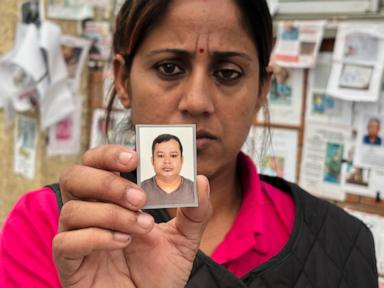
The headlines always run the same play. When a government or disaster response agency calls off the search for missing victims after a catastrophic flood, the moral outrage machinery instantly shifts into high gear. Families rage. Pious commentators shake their heads at the callousness of bureaucrats. The narrative writes itself: cold officials abandoning desperate families, trading human lives for administrative closure and budget sheets.
It makes for emotionally charged television. It also fundamentally misunderstands how disaster triage works, what physical reality demands, and why endless searching creates a secondary humanitarian disaster. Building on this topic, you can find more in: Inside the Track and Threat of Hurricane Isaias.
Let us strip away the sentimentality and look at what is actually happening on the ground when rescue turns to recovery, and recovery turns to closure.
The Myth of Indefinite Search
Every time a river overflows its banks or a hillside gives way, sweeping away homes and human lives, the public expects an open-ended search. People imagine tireless crews turning over every stone until every missing person is accounted for. Analysts at USA Today have provided expertise on this trend.
Physics does not care about public sentiment.
In major flash floods and debris flows, thousands of tons of sediment, boulders, and organic debris churn through valleys at highway speeds. Human remains are rarely deposited neatly under a branch a mile downstream. They are buried under meters of compacted silt, swept out to deep marine environments, or fragmented beyond immediate visual recognition.
When emergency management teams pull the plug after days or weeks of sifting through mud, they are not acting out of malice or budget fatigue. They are yielding to the law of diminishing returns and escalating risk. Every day a search crew spends combing a devastated floodplain with heavy machinery is a day seasoned engineers and rescue personnel are exposed to secondary hazards like unstable riverbanks, toxic stagnation, waterborne pathogens, and structural collapses.
Insisting that operations continue indefinitely because a grieving family demands closure is an emotional argument masquerading as morality. It sacrifices living first responders on the altar of a statistical impossibility.
The True Cost of Performing Empathy
Governments and disaster response agencies face an impossible choice, but they compound the error by framing their decisions around public relations rather than brutal honesty. When authorities apologize for ending a search, they validate the false premise that a search can or should go on forever.
This appeasement backfires. It turns every transition from rescue to recovery into a political battleground. Families are left swinging wildly between anger and relief—anger that the state has given up, and quiet relief that the agonizing limbo of waiting by a riverbank might finally end.
The real failure here is not the termination of the search. The failure is the psychological expectation that the state can manufacture closure.
Closure does not come from a recovery team pulling a body from the mud. If it did, the rate of unresolved trauma in post-disaster zones would be far lower than it is. Closure is an internal, agonizing reconciliation with absence. Relying on an army of searchers to validate a loss delegates a deeply personal human burden to emergency services.
Shifting From Body Recovery to Structural Resilience
While the news cycle obsesses over the emotional theatre of ending search operations, it completely ignores the systemic rot that caused the casualties in the first place.
We do not have a search-and-rescue crisis. We have a land-use and infrastructure crisis.
When unregulated construction chokes natural floodplains, when deforestation turns modest seasonal rains into battering rams of mud and debris, and when early warning systems fail to reach rural communities, disasters are locked in long before the first drop of rain falls. Yet, the media and the public focus exclusively on the aftermath—the dramatic footage of rescue dogs, weeping relatives, and tense press conferences.
It is the classic displacement of attention. It is much easier to fund a two-week search operation with flashing lights and helicopters than it is to zone rivers properly, evict illegal settlements from high-risk flood paths, and invest in resilient infrastructure that keeps people alive in the first place.
When a government finally ends a search, they are mopping up the floor while the tap is still running wide open.
The Uncomfortable Road Ahead
We need to stop pretending that ending a search is an act of betrayal. It is a mathematical and logistical necessity.
Emergency planners must drop the defensive posture when calls are made to halt operations. Stop apologizing for reality. Reallocate those millions of dollars directly toward post-disaster psychological support, community rebuilding, and retrofitting vulnerable zones so that the next heavy downpour does not require a desperate search party to begin with.
Grief is permanent. The illusion that a government can dig through an entire province to soothe it needs to end today.