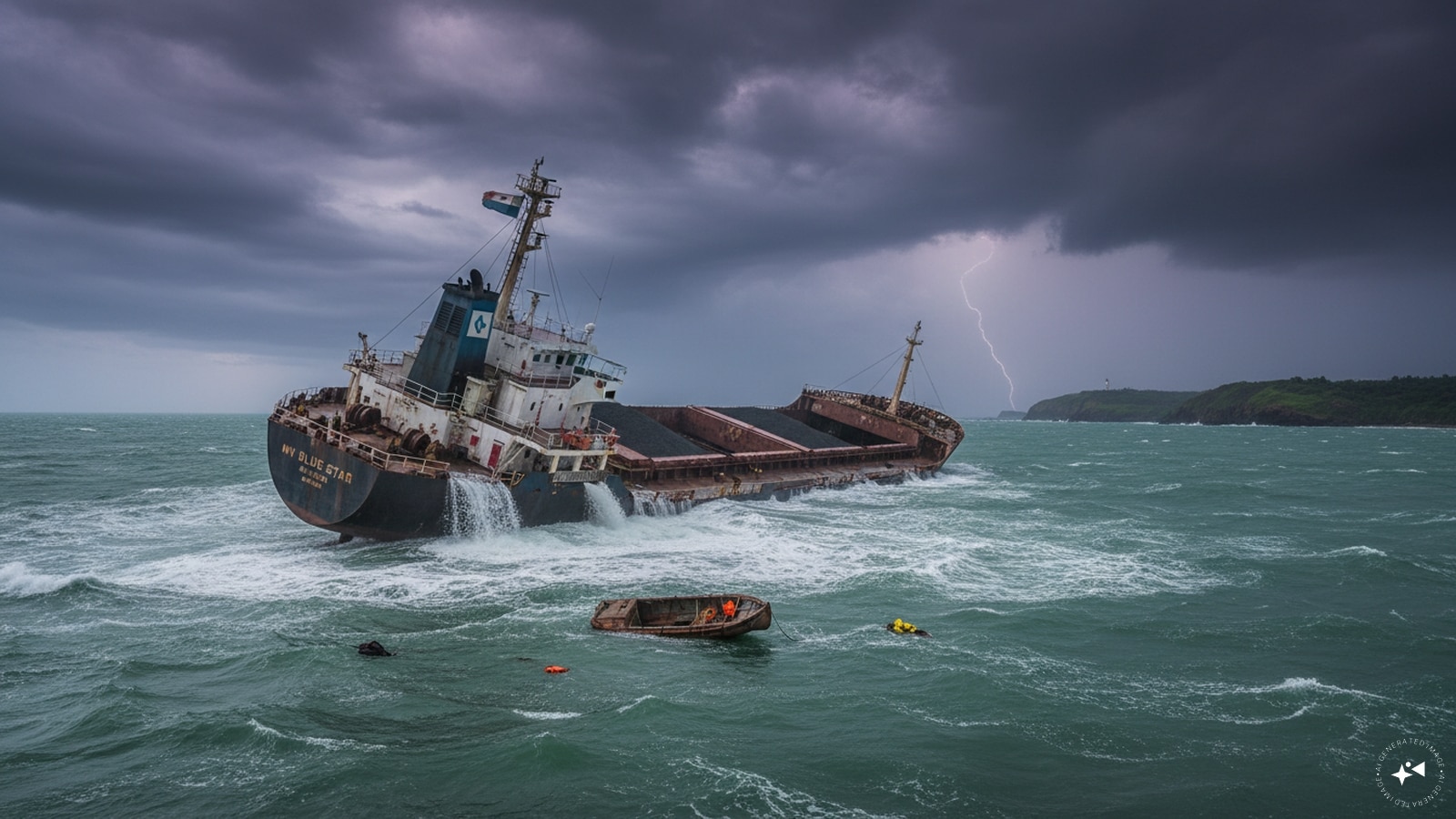
A massive 225-meter bulk carrier vanishes from tracking screens. Twenty-four souls are thrown into the violent swells of the Bay of Bengal. Only two make it to liferafts.
When the Panama-flagged MV Ocean Winner went down roughly 240 nautical miles off the Paradip coast in Odisha, it wasn't just another routine maritime accident. It exposed the brutal, unforgiving reality of open-ocean bulk cargo transit. Bound for Singapore with a heavy load of iron ore pulled straight from Odisha's ports, the ship disappeared before anyone on land could process a proper Mayday call.
If you're wondering how a massive commercial vessel simply drops off the radar, you have to look at the unique hazards of this specific maritime corridor and the physics of moving dense mineral cargo.
The Anatomy of a Midnight Maritime Disaster
The timeline of the MV Ocean Winner disaster highlights how fast things fall apart offshore. The Maritime Rescue Coordination Centre picked up distress signals after communication flatlined. The ship had departed Paradip Port carrying roughly 1,700 tonnes of iron ore—though bulk carriers of this scale can haul massive tonnages, shifting dense mineral loads present a legendary danger in rough seas.
When cargo shifts, a ship can capsize with terrifying speed. There is no time to broadcast coordinates. There is barely time to pull a release cord on a inflatable life raft.
The crew composition tells an international story common to modern merchant shipping: twenty Chinese nationals, three individuals from Myanmar, and one from Bangladesh. They were operating far from home in waters known for sudden squalls and unpredictable deep-sea currents.
The High-Stakes Race Against Time in Open Waters
Finding survivors 240 nautical miles offshore is like hunting for a needle in a watery haystack. That distance pushes local Coast Guard assets to their absolute mechanical limits.
The Indian Coast Guard and Indian Navy launched an aggressive multi-pronged recovery mission. They activated the International Safety Net and diverted a commercial merchant ship, the MT Aisopos, which happened to be cruising nearby. That tactical diversion saved lives. The merchant tanker managed to pluck two survivors out of separate liferafts around 8 PM.
Meanwhile, dedicated patrol vessels like the ICGS Varad, ICGS Anmol, and the long-range deployment ICGS Vijit steamed out from Sri Vijaya Puram to reinforce the sweep. Aircraft and ships continue to grid the zone, scanning the grey horizons for the remaining twenty-two missing crew members.
What Most People Get Wrong About Bulk Carrier Safety
Outsiders often assume modern cargo ships are unsinkable fortresses. They look at satellite navigation, automated identification systems, and massive steel hulls and think technology has conquered the ocean.
It hasn't.
Iron ore cargo is notoriously deceptive. If moisture levels in the ore exceed safe transportable limits, the solid cargo can liquefy under the constant vibration of the ship's engines. It turns into a liquid slurry that rushes to one side of the hold when the ship rolls. Once that happens, the vessel loses its restoring moment. It flips before the captain can even bark an order.
We don't yet have an official verdict on whether cargo liquefaction or structural failure doomed the MV Ocean Winner. Maritime investigators from flag states and classification societies will spend months analyzing weather reports, maintenance logs, and communication transcripts. But the danger remains constant.
Keep a close eye on official maritime safety bulletins over the coming weeks as the investigation crawls forward. Support coastal search operations by staying informed on how international shipping corridors regulate cargo moisture thresholds.