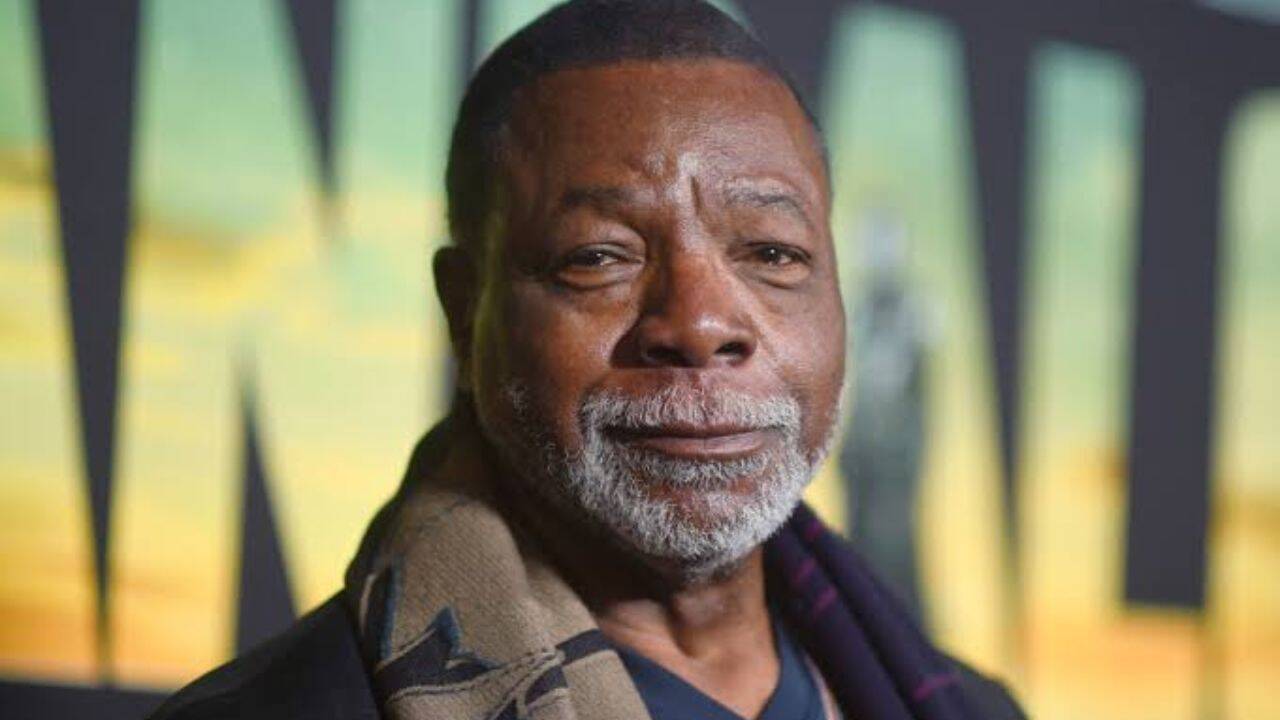
The quote often attributed to Carl Weathers—referencing how he majored in theater at San Diego State while splitting his focus between the gridiron and the stage—captures the essence of a rare breed of multi-hyphenate talent. Long before he stepped into the ring as Apollo Creed or barked orders at Jesse Ventura in the jungle, Weathers was navigating a high-stakes balancing act. Most modern commentators treat his transition from professional athlete to dramatic actor as a lucky twist of fate. That narrative is lazy. It ignores the strategic discipline required to survive in two notoriously brutal industries.
Athletics and acting share a common currency. Both demand physical command, emotional resilience, and an absolute tolerance for rejection. When Weathers laced up his cleats for the San Diego Aztecs and later for the Oakland Raiders, he was not merely playing a game. He was acquiring the raw psychological armor that would later define his cinematic presence.
The Gridiron Foundation
To understand the weight Weathers brought to the screen, one must look closely at the physical culture of 1960s and 1970s football. It was an era of brutal hits, minimal safety protocols, and a hyper-masculine locker room culture that left little room for sensitivity. Yet, Weathers pursued theater simultaneously. This juxtaposition tells you everything about his internal drive.
Surviving the Trenches
Playing linebacker and defensive end requires an analytical mind disguised as brute force. You study film, anticipate opponent tendencies, and execute assignments under extreme duress. Weathers applied these exact tactical skills to character analysis.
- Spatial Awareness: On the field, knowing where every player is located prevents catastrophic failure. On a soundstage, hitting your mark while maintaining eye contact and emotional resonance requires the exact same peripheral mastery.
- Resilience to Pain: Football teaches athletes to normalize physical discomfort. Acting in physically demanding action sequences without looking winded or compromised stems directly from athletic conditioning.
- The Locker Room Ego: Professional sports humble you quickly. A star player can be benched or cut in a single afternoon. This conditioning inoculated Weathers against the fragility that often destroys young actors upon facing their first wave of rejection.
When his professional football career ended after a brief stint in the Oakland organization and the Canadian Football League, Weathers did not experience the existential crisis that plagues many retired athletes. He already had a backup plan. More accurately, he had a parallel career waiting for its primary spotlight.
The Art of the Transition
Crossing the invisible barrier from jock to serious actor is historically difficult. Hollywood loves to box people into categories. If you are large, athletic, and imposing, casting directors want you to break doors down, not recite Shakespeare. Weathers understood this pigeonholing immediately and fought against it with quiet efficiency.
He took background work, bit parts in blaxploitation films, and guest spots on episodic television. He studied the craft with the same methodical intensity he brought to the playbook. By the time he walked into the audition room for a low-budget boxing movie in 1976, he was no longer just a former football player trying out a hobby. He was a trained stage actor possessing the physical stature of a heavyweight contender.
Creating Apollo Creed
The creation of Apollo Creed remains a masterclass in screen presence. Sylvester Stallone initially envisioned a standard, intimidating antagonist. Weathers injected swagger, intellect, and political consciousness into the role, heavily modeling Creed's charisma after Muhammad Ali.
"You've got to dance, man. You've got to have style."
💡 You might also like: The Brigitte Bardot Velvet Coat Auction and the Economics of Iconography
That philosophy separated Creed from generic cinematic bullies. Weathers brought the tactical mindset of a defensive linebacker to a theatrical rivalry. He understood how to make his opponent look good while maintaining his own dominance, a subtle psychological trick known only to elite competitors.
The Evolution Beyond the Ring
Typecasting is a heavy anchor. Many actors who achieve iconic status in a single role spend the rest of their lives running from it or chasing diminishing returns. Weathers avoided this trap by refusing to take himself too seriously while taking his work extremely seriously.
Consider his trajectory through the 1980s and 1990s.
- Action Ensemble Work: In Predator, he held his own against a literal Austrian oak and a collection of hardened screen fighters, bringing a corporate-military sleekness that contrasted sharply with Arnold Schwarzenegger's raw power.
- Comedic Subversion: In Happy Gilmore, he played Chubbs Peterson, a fictionalized, one-handed golf mentor who leaned entirely into self-parody. It was a brilliant pivot. Only an actor utterly secure in his dramatic chops could lampoon his own tough-guy persona with such warmth and comedic timing.
- Voice and Directing: Later in life, he expanded into voice work and episodic television direction, proving that his understanding of the medium extended far beyond standing in front of a camera.
This longevity proves that his dual focus at San Diego State was not a distraction. It was a comprehensive education in human behavior, physical performance, and industry survival.
The legacy of Carl Weathers extends far beyond a famous quote about divided attention. It serves as a blueprint for anyone attempting to bridge disparate worlds. While others saw a contradiction between sports and art, he saw a continuum. Talent opens doors, but discipline keeps you in the room. Whether studying scripts under the stadium lights or analyzing film room strategy while memorizing lines, Weathers treated his entire life as a masterclass in execution.