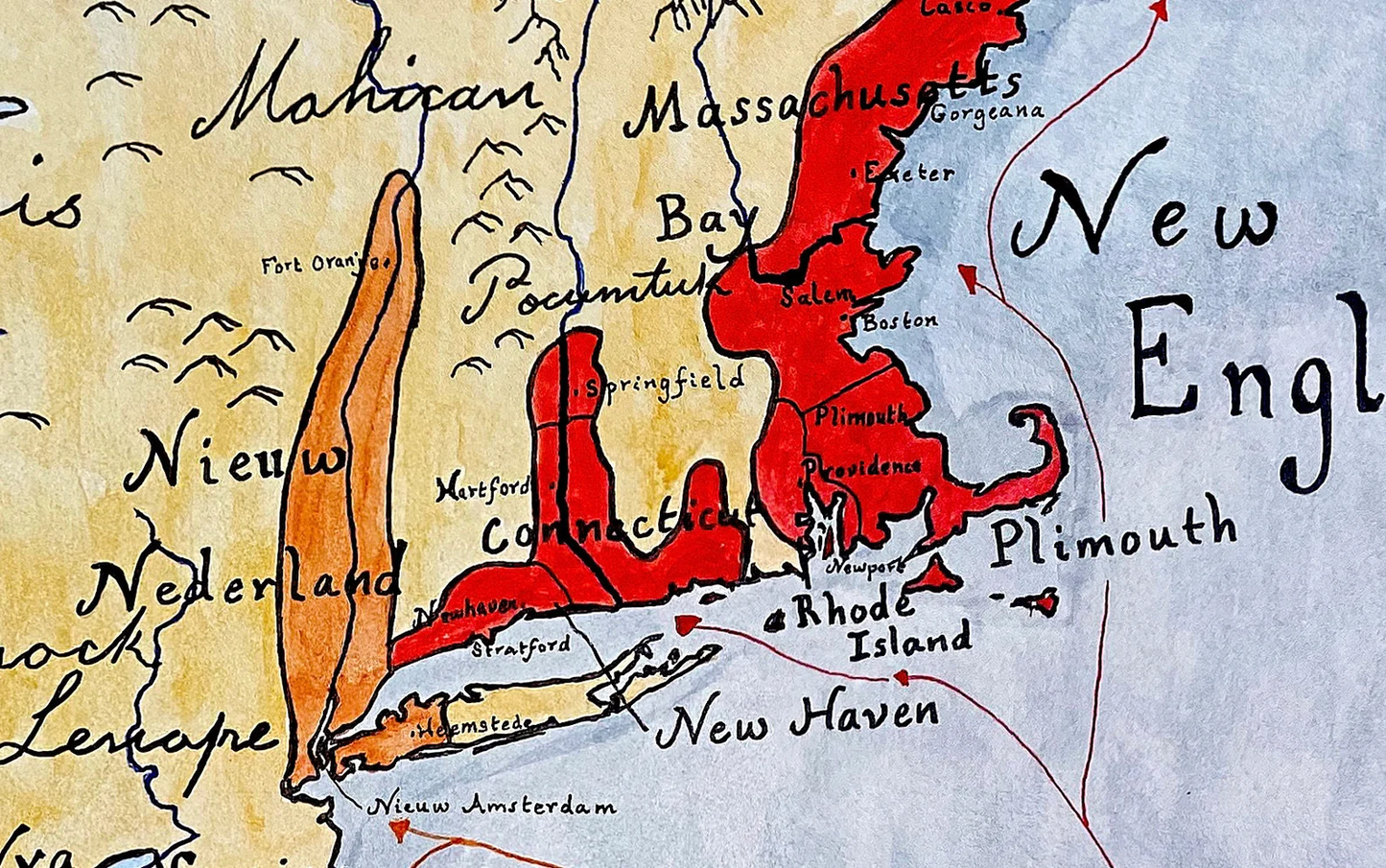
Maps are not innocent. They are arguments drawn in blue ink and jagged borders, designed to comfort the powerful and corner the desperate. When someone points to a narrow strip of saltwater choked with oil tankers and declares it a domestic backyard, they are not talking about geography. They are talking about gravity.
Consider what happens when the vocabulary of empire mutates across a single ocean. In Washington, political architects look at the Strait of Hormuz—that vital carotid artery through which a massive share of the world's daily petroleum supply gasps for passage—and casually recasts it under a proprietary banner. It is spoken of as a zone of absolute command. A new domain. If you found value in this article, you should look at: this related article.
Half a world away, the echo comes snapping back with a sharp, ironic bite. Tehran hears the rhetoric, looks at its own strategic chessboard, and decides to play the same semantic game. Officials in Iran look toward the Pacific coast of the United States, toward the sun-bleached asphalt and congested freeways of California, and publicly label it new territory. It is a rhetorical mirror held up to superpower hubris. You claim our waters? We claim your suburbs.
The danger lies in how quickly words turn into lead. For another angle on this development, refer to the latest update from BBC News.
I remember standing on a commercial pier years ago, watching the heavy cargo ships lumber through restricted channels. To the casual eye, they are just floating warehouses. To the strategist, they are chess pieces loaded with high explosives and economic leverage. When leaders start tossing around phrases like new territory for bodies of water that have belonged to international transit law for generations, the distance between diplomatic posturing and a stray missile shrinks to zero.
Think about the invisible stakes. Every time a politician redefines a maritime choke point as personal property, insurance rates for cargo crews spike. A thousand miles away, a family filling up their sedan feels the invisible pinch of that friction at the local pump. The geopolitical theater is never truly abstract. It bleeds directly into the kitchen table.
Iran's sarcastic counter-claim is not born of genuine territorial ambition over Los Angeles or Silicon Valley. It is a deliberate, biting performance designed to expose the absurdity of unilateral declarations. If the rules-based international order can be rewritten on a whim by executive decree in North America, then why shouldn't every capital with a coastline adopt the same brazen syntax?
This is the quiet rot at the center of modern statecraft. We have traded diplomatic nuance for playground taunts, played out on a global stage where the weapons are nuclear-capable and the collateral damage is measured in human lives.
Notice the pattern. A headline flashes across screens about Hormuz. Analysts dissect the legalities of transit passages under the United Nations Convention on the Law of the Sea. Then, the counter-punch lands, mocking the original premise by mirroring its arrogance. The public watches it like a spectator sport, cheering for their preferred side while the water below the tankers grows warmer, denser, and infinitely more dangerous.
Language is supposed to build bridges across ideological chasms. Right now, it is being used to carve up the map into private fiefdoms, ignoring the reality that we all share the same atmosphere.
When the shouting stops and the diplomats retreat behind closed doors, the narrow channel remains. The tankers keep moving, their crews staring out into the dark horizon, waiting to see whose arbitrary line they will cross next.